Image credits
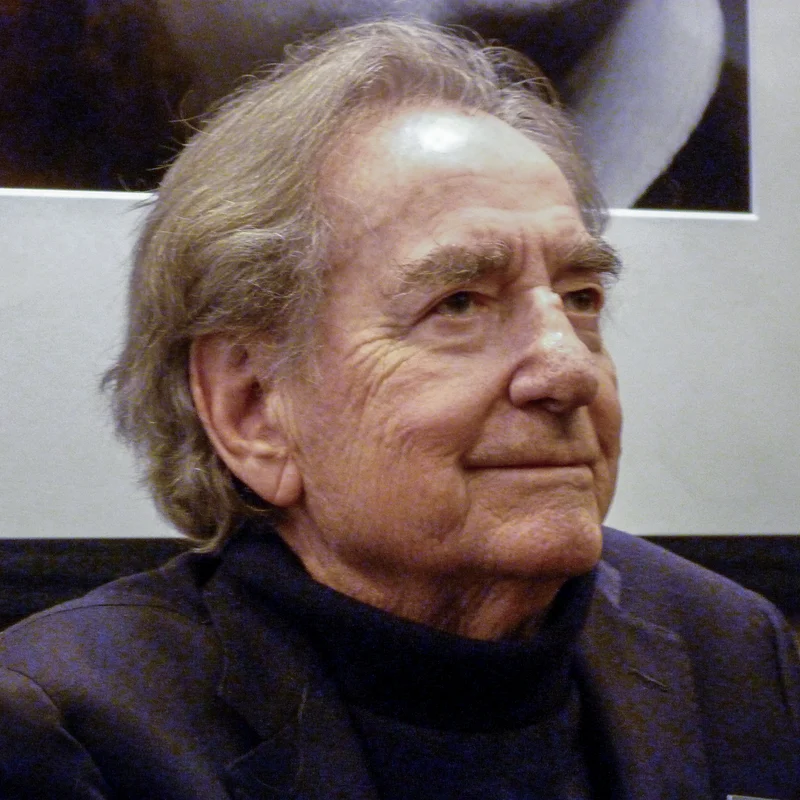
Siren-Com, CC BY-SA 3.0, cropped
Willy Rizzo
Willy Rizzo was first a renowned photographer, portraitist of celebrities for Paris Match. It was while furnishing his own home in Rome in the late 1960s that he began designing furniture, then founded his own production company in response to demand.
His vocabulary is instantly recognisable: chromed steel, brass, lacquer, travertine, reflective tops. Rich materials, low and elongated volumes, and a nocturnal elegance highly characteristic of the 1970s.
Long undervalued, his pieces have been sharply reappraised. His coffee tables, especially those combining chrome with precious materials, are now among the most sought-after designs of the period.
Our pieces
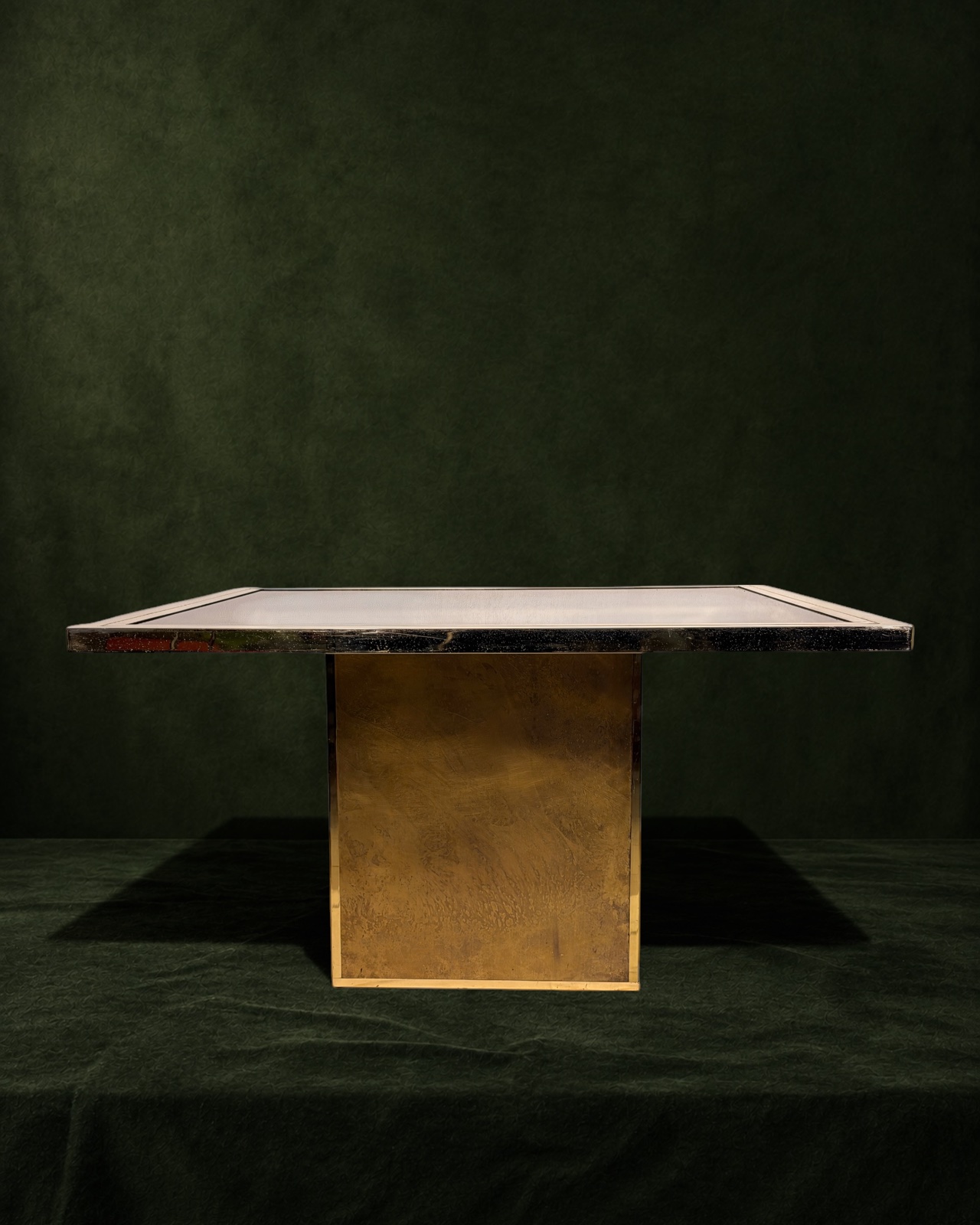
Square brass-plated steel and smoked glass dining table, attr. Willy Rizzo
Willy Rizzo
2 700 €
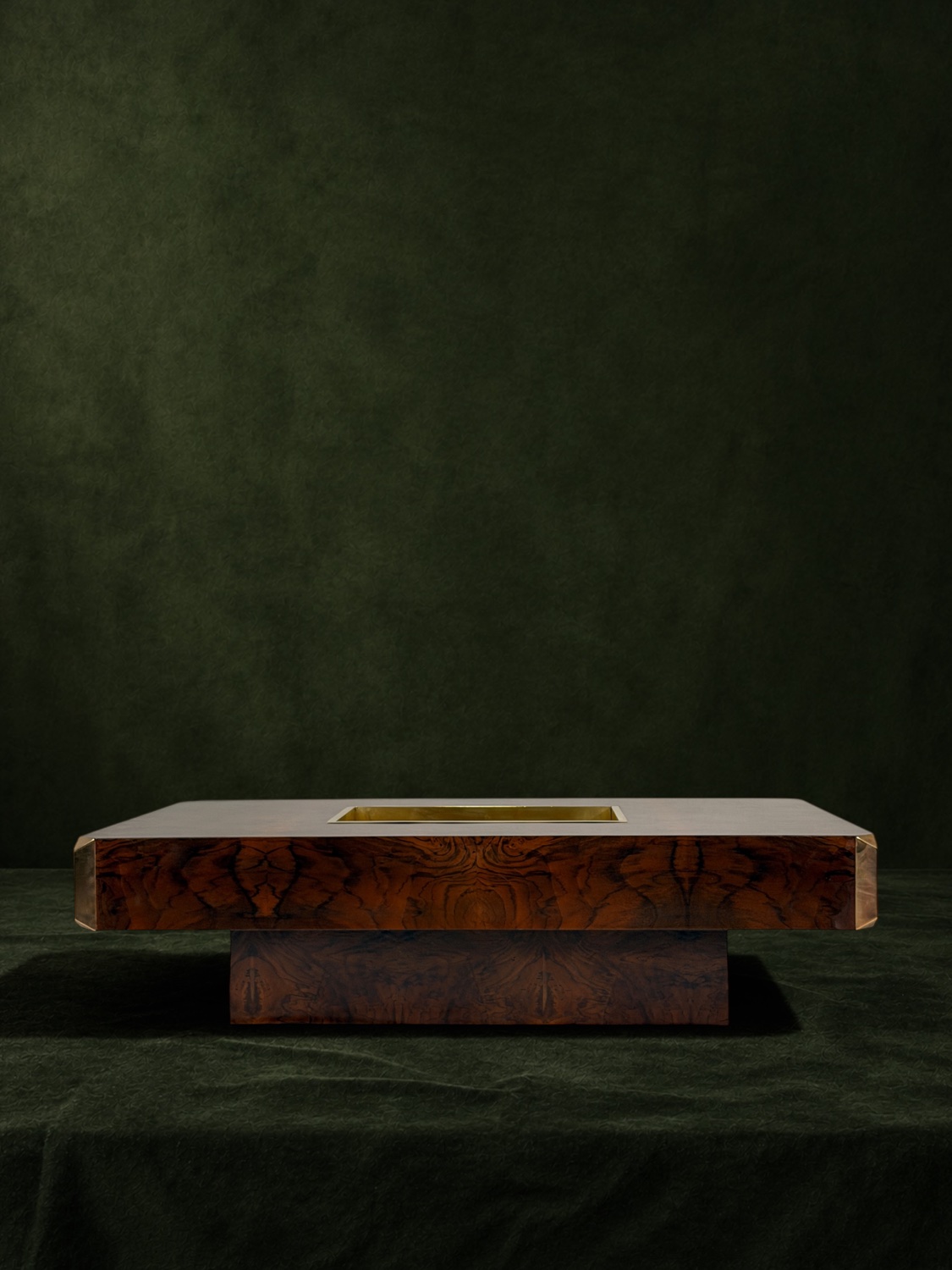
Willy Rizzo Alveo coffee table, elm burl and solid brass, 1970s
Willy Rizzo
5 000 €
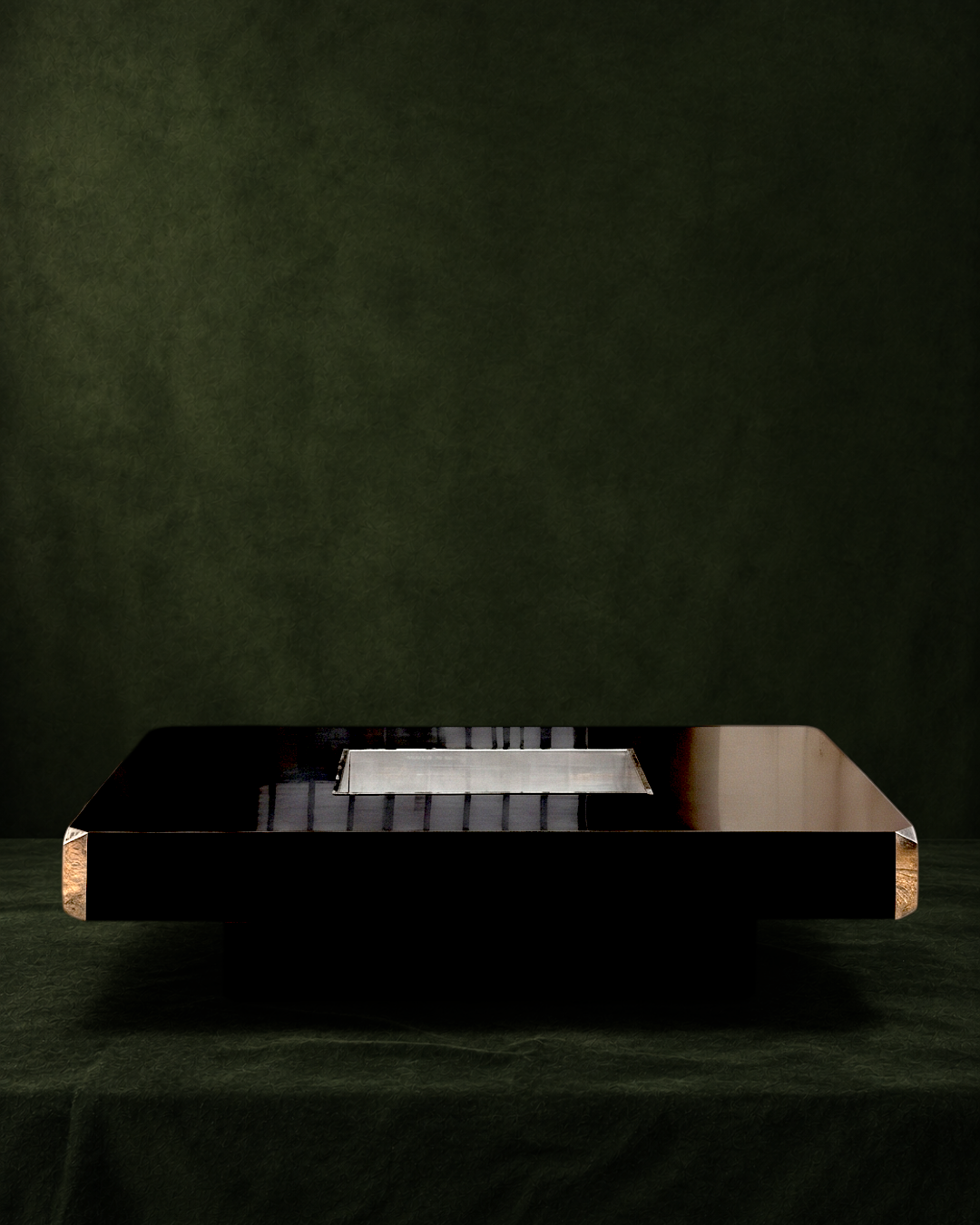
Alveo Coffee Table by Willy Rizzo, Black Lacquer and Steel, 1970s
Willy Rizzo
4 000 €
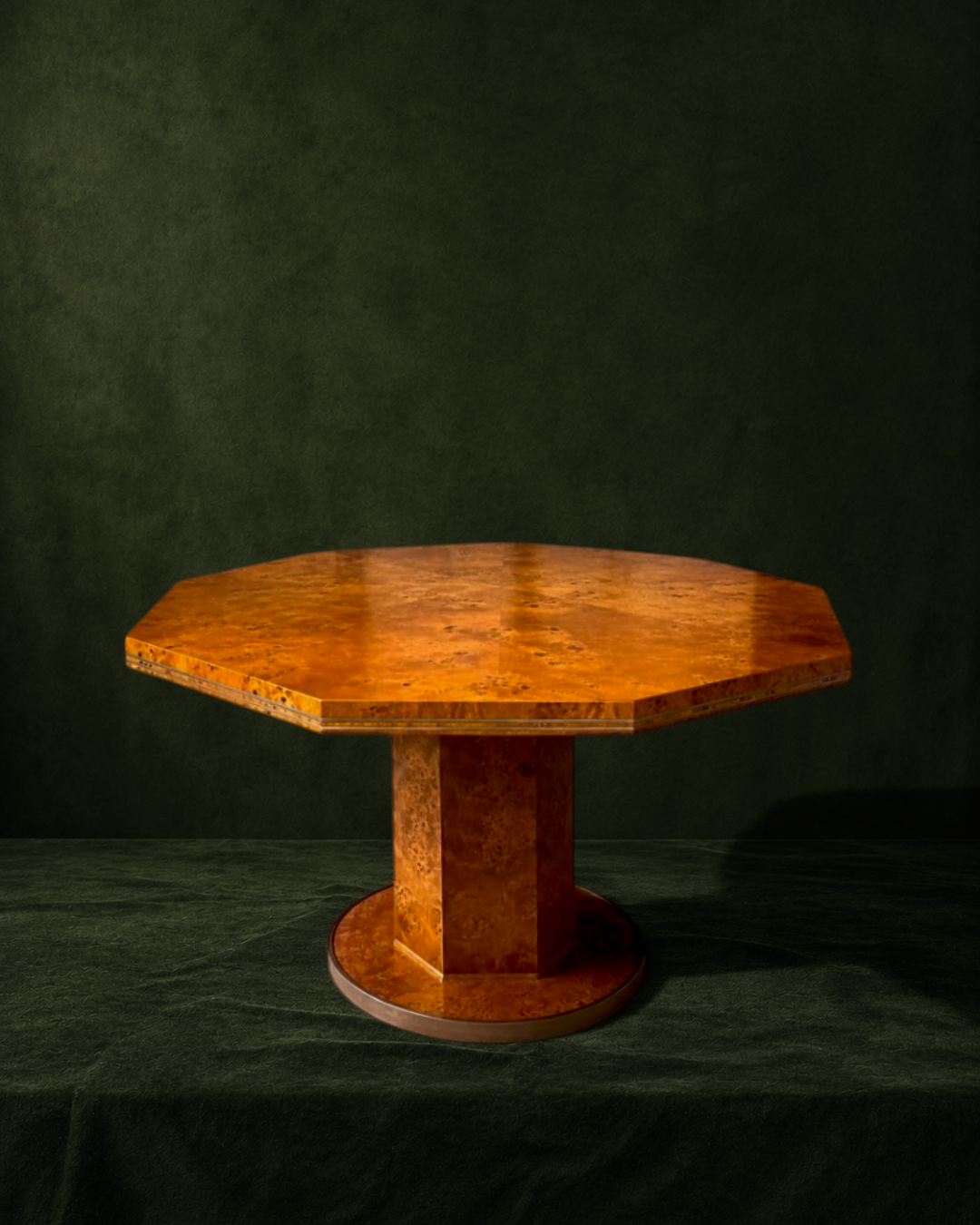
Octagonal Extendable Dining Table, Mario Sabot (Circa 1970)
Willy Rizzo
3 400 €
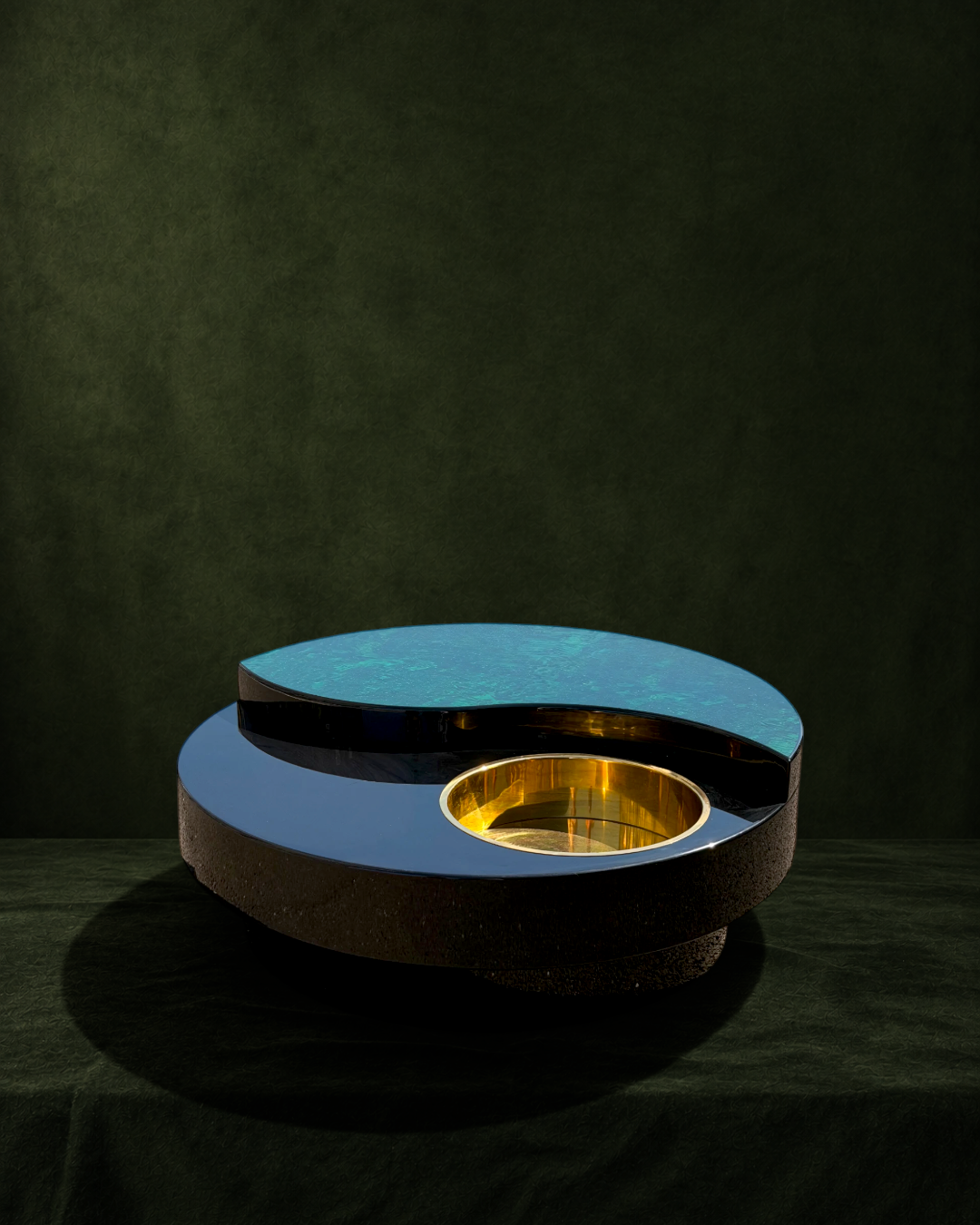
Yin Yang rotating coffee table by Willy Rizzo – 1970s
Willy Rizzo
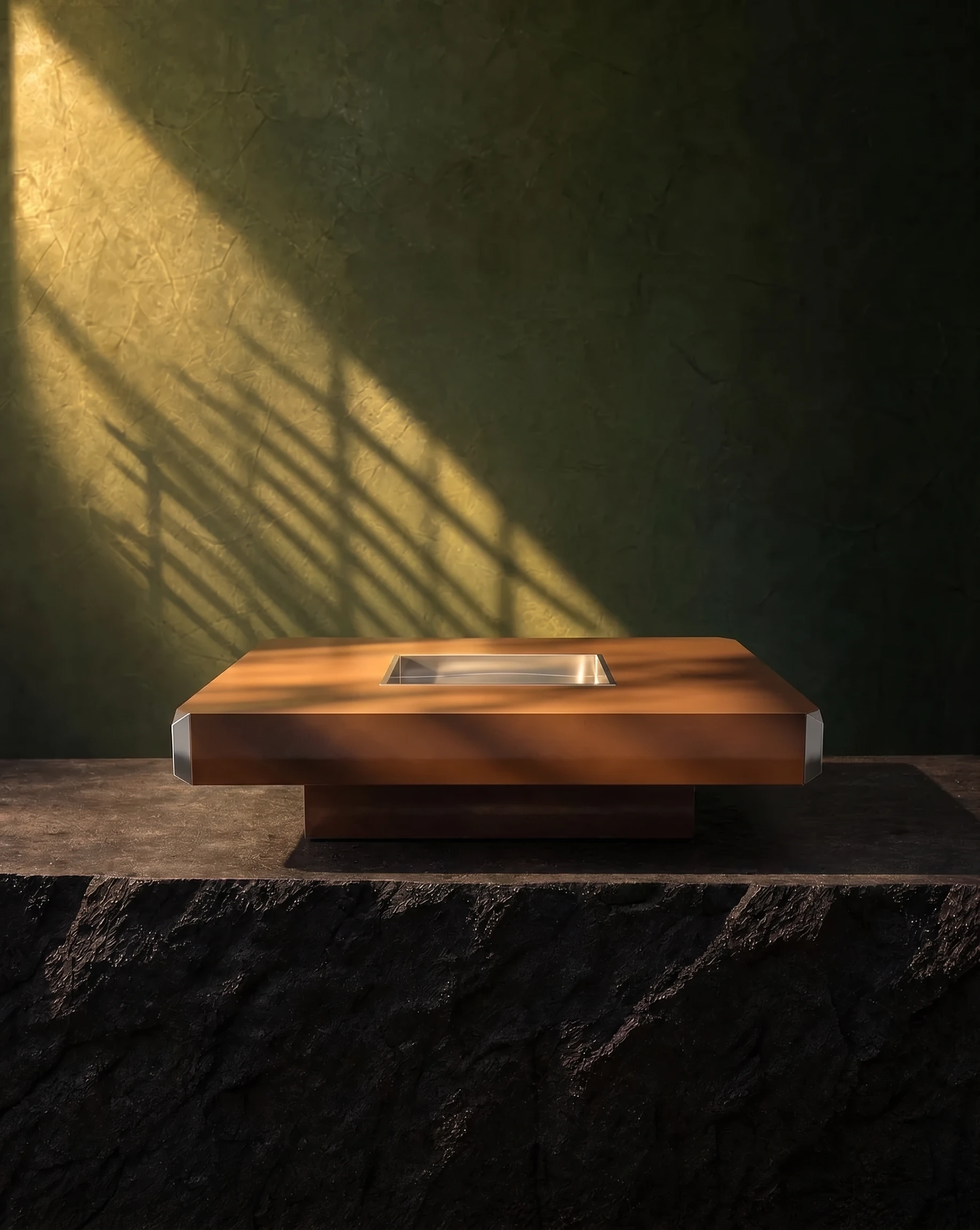
Iconic Vintage "Alveo" Coffee Table by Willy Rizzo for Mario Sabot – Chocolate Lacquer & Aluminum (1970s)
Willy Rizzo
Signature models
TRG
Created in 1969 for Igor Cassini's apartment in Palazzo Torlonia, the TRG (Tavolo Rotondo Girevole) has a round top that swivels a full 360° and hides a stainless steel or brass bar well.
Alveo
Produced by Mario Sabot and published in Casa Vogue in 1972, the Alveo is recognisable by its central metal well and its faceted corners in brass or chrome.
Yin Yang
The market's name for a round swivelling variant with a two-level top, part of it a half-moon, and a brass bar compartment.
Sliding-top bar table
Produced by Cidue in the 1970s, these rectangular tables have a smoked glass or mirrored top, edged in chrome, that slides apart to reveal a mirrored bar.
Recognising an authentic piece
The checks we systematically carry out before acquiring a piece.
Attribution: the trickiest point
- This is the main difficulty with this name: a large share of 1970s chrome furniture is offered “in the manner of” Rizzo without being by him. Ask for material evidence, not a stylistic resemblance.
- Some pieces bear a signature or a manufacturer's plaque: their presence changes the value dramatically.
- Failing that, a body of evidence (documented provenance, original invoice, period publication) is worth more than a verbal attribution.
Condition of materials
- Chrome is decisive for value. Re-chroming, even when well executed, can be detected by its overly cold shine and the softening of sharp edges.
- On travertine or marble tops, inspect the edges and corners: a chip there is hard to repair and always shows.
- Original brass develops a warm, uneven patina; uniformly shiny brass has usually been repolished, which removes material.
Expert guides
Looking for a specific piece from this signature?
L’Œil is our bespoke sourcing service. Tell us which piece you are looking for, and we will help you find it.
Join us
Our pieces, before anyone else
Exclusive offers, pieces in preview and many other surprises, reserved for our subscribers.