Rizzo's DNA
Rizzo combined precious woods (burl, walnut crotch), metals (brushed or polished stainless steel, chrome, brass), marble, travertine and leather. He also made wide use of laminate, Formica and lacquered chipboard: a TRG in black laminate can be perfectly period. According to Dominique Rizzo, his widow, high-quality lacquer polished in seven layers only became the norm in the mid-1970s; a flawless lacquer can also point to a restoration or a reissue. Black dominates, alongside “Rizzo blue”, red and other colours. Neither a material nor a colour is enough to authenticate a piece.
The Circular Models (TRG and Yin Yang)
- The TRG
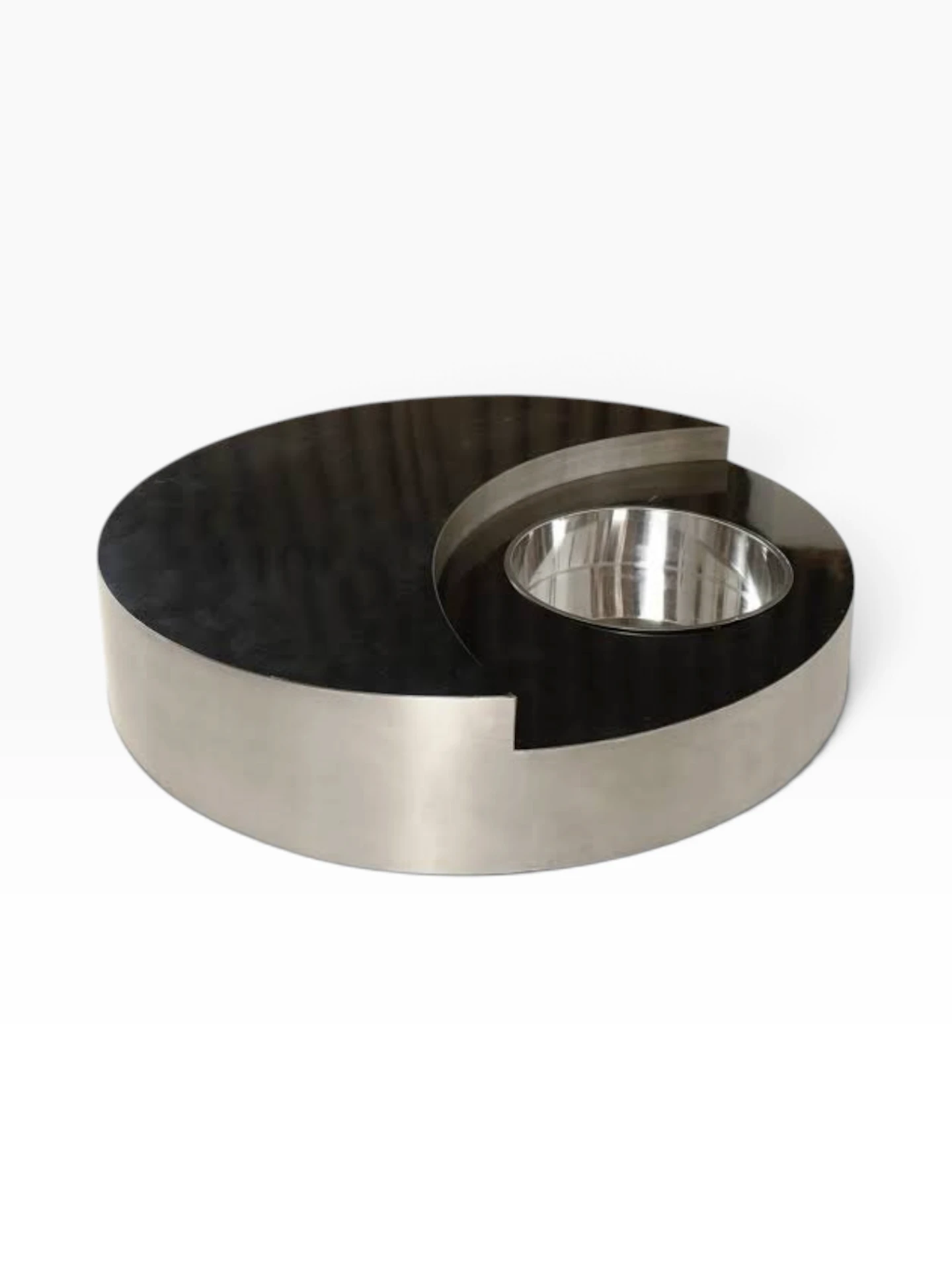
- The TRG (Tavolo Rotondo Girevole, “revolving round table”) is one of Rizzo's first pieces: he created it in 1969 for Igor Cassini's apartment in the Palazzo Torlonia, whose room was round. Its whole circular top rotates 360° on a recessed base and holds a stainless steel or brass tray that serves as a bar. Produced by the Studio Willy Rizzo, it is reissued today, signed and numbered.
- The Yin Yang
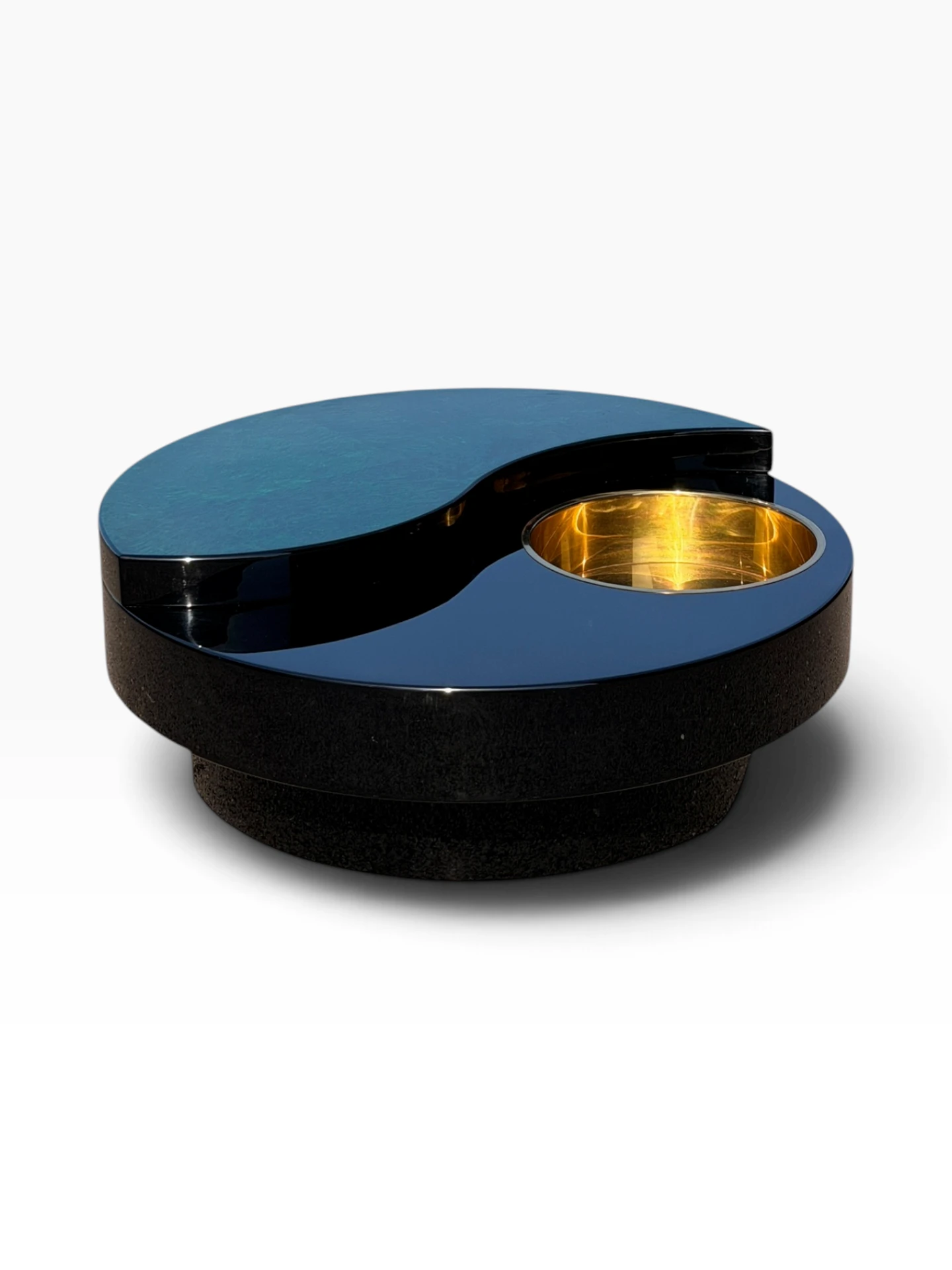
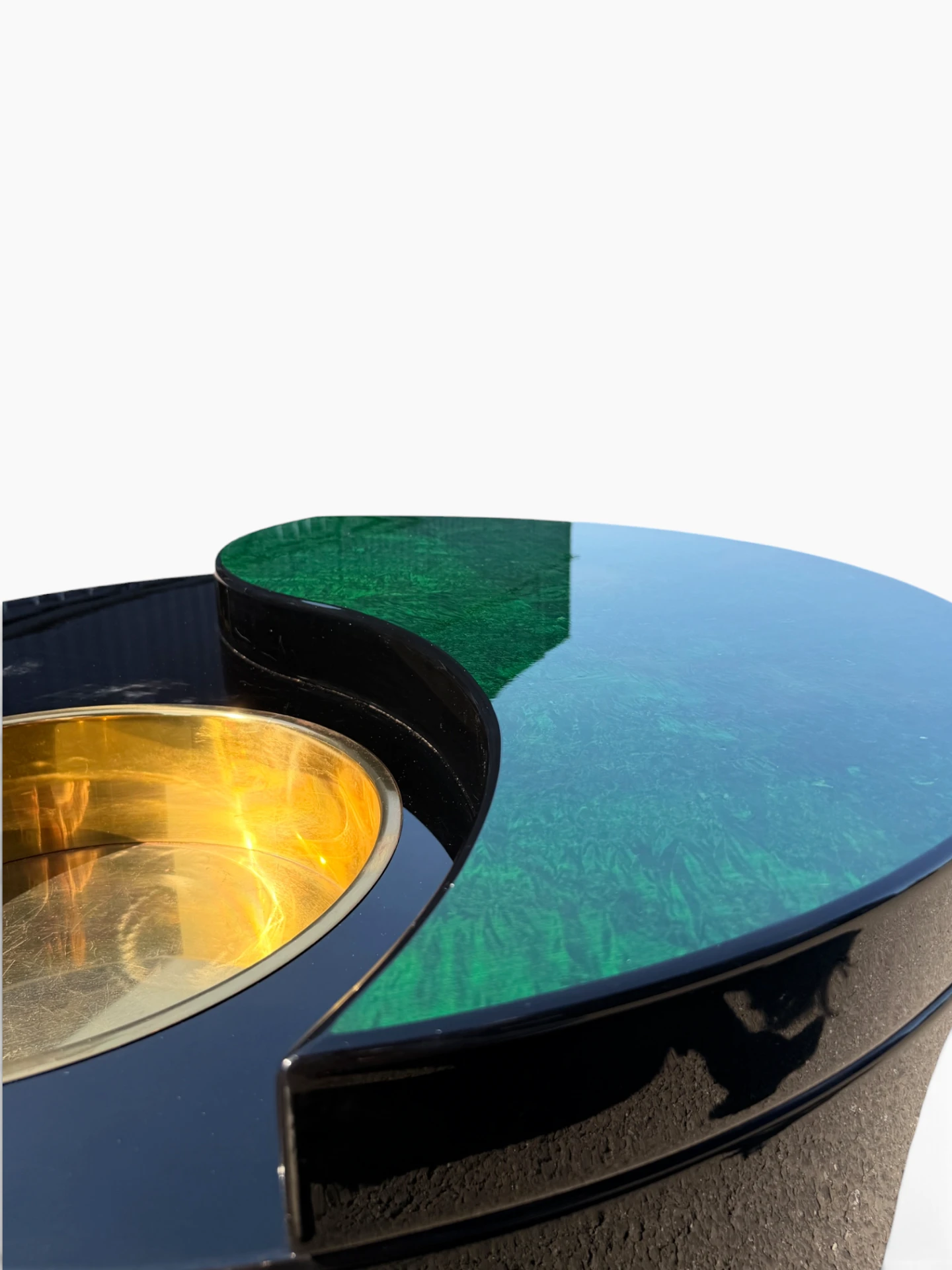
- “Yin Yang” is the name the market gives to a round, revolving variant with a two-level top, part of it a half-moon, and a brass-lined bar compartment. Its maker, Mario Sabot or the Studio Willy Rizzo, varies from source to source.
The Architectural Models (Alveo and Sliding-Top Table)
- Sliding top
- The rectangular bar tables produced by Cidue in the 1970s have a smoked-glass or mirrored top framed in chromed metal, which slides apart to reveal a mirrored bar with Perspex bottle holders.
- The Alveo
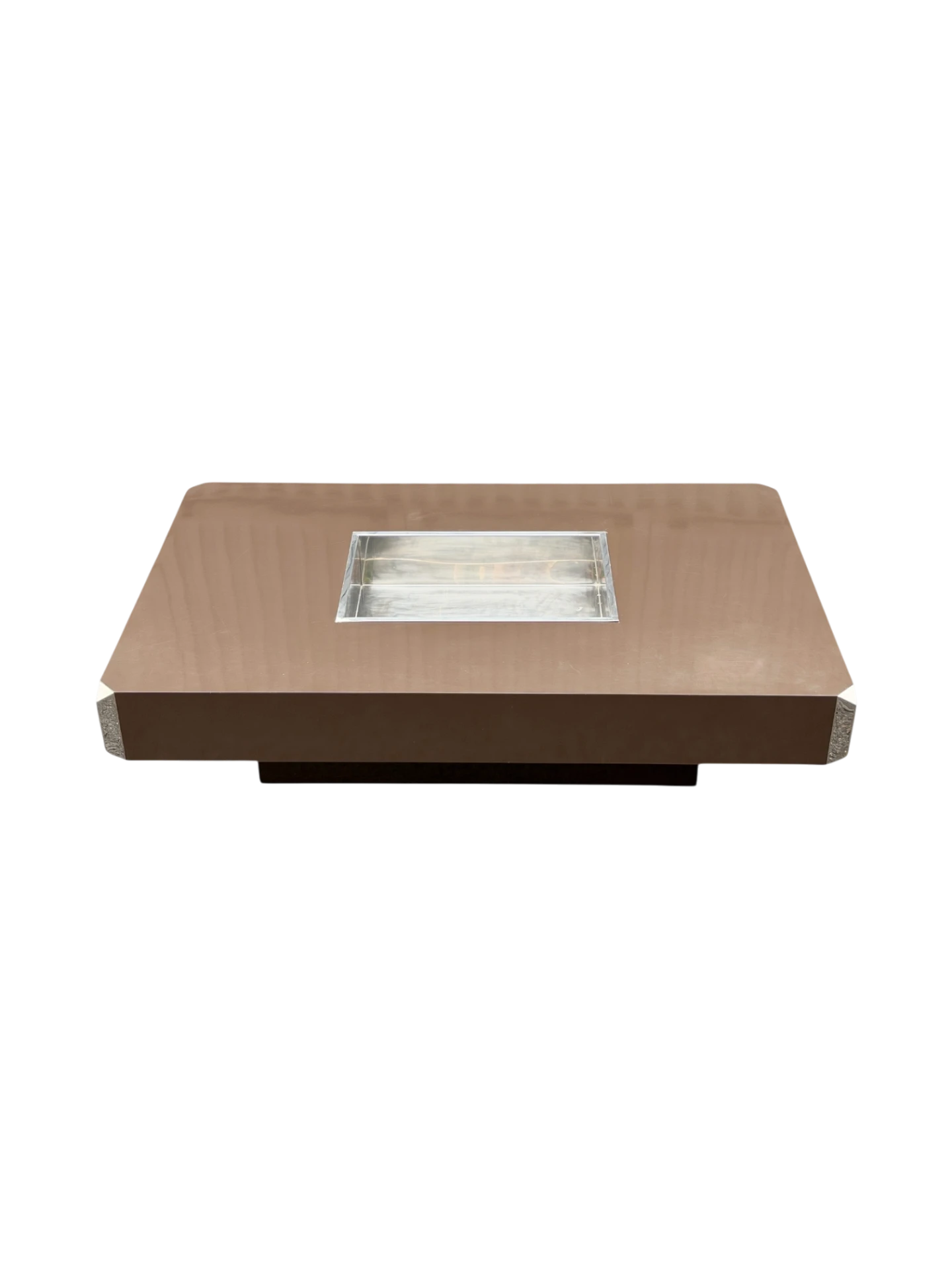
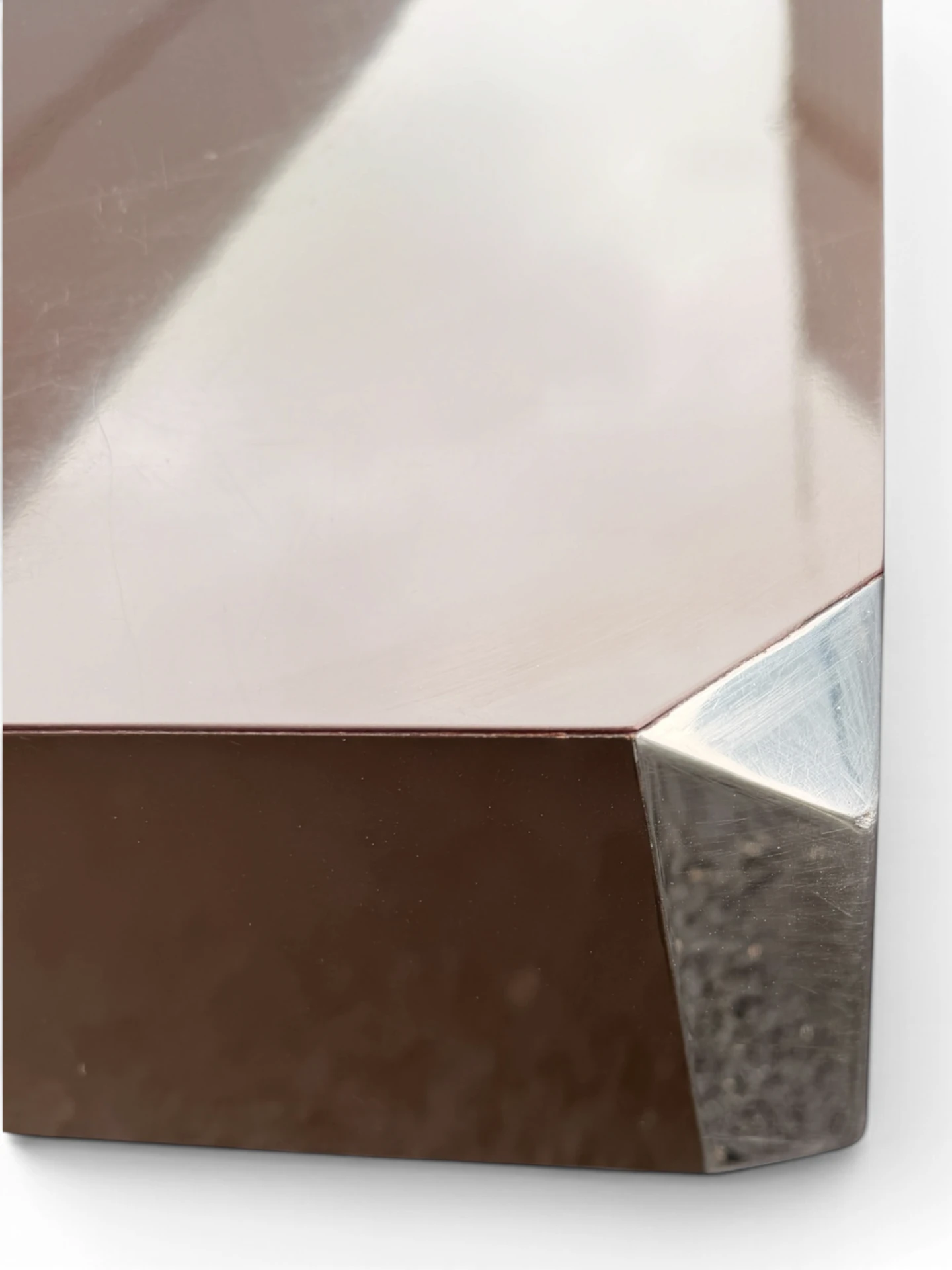
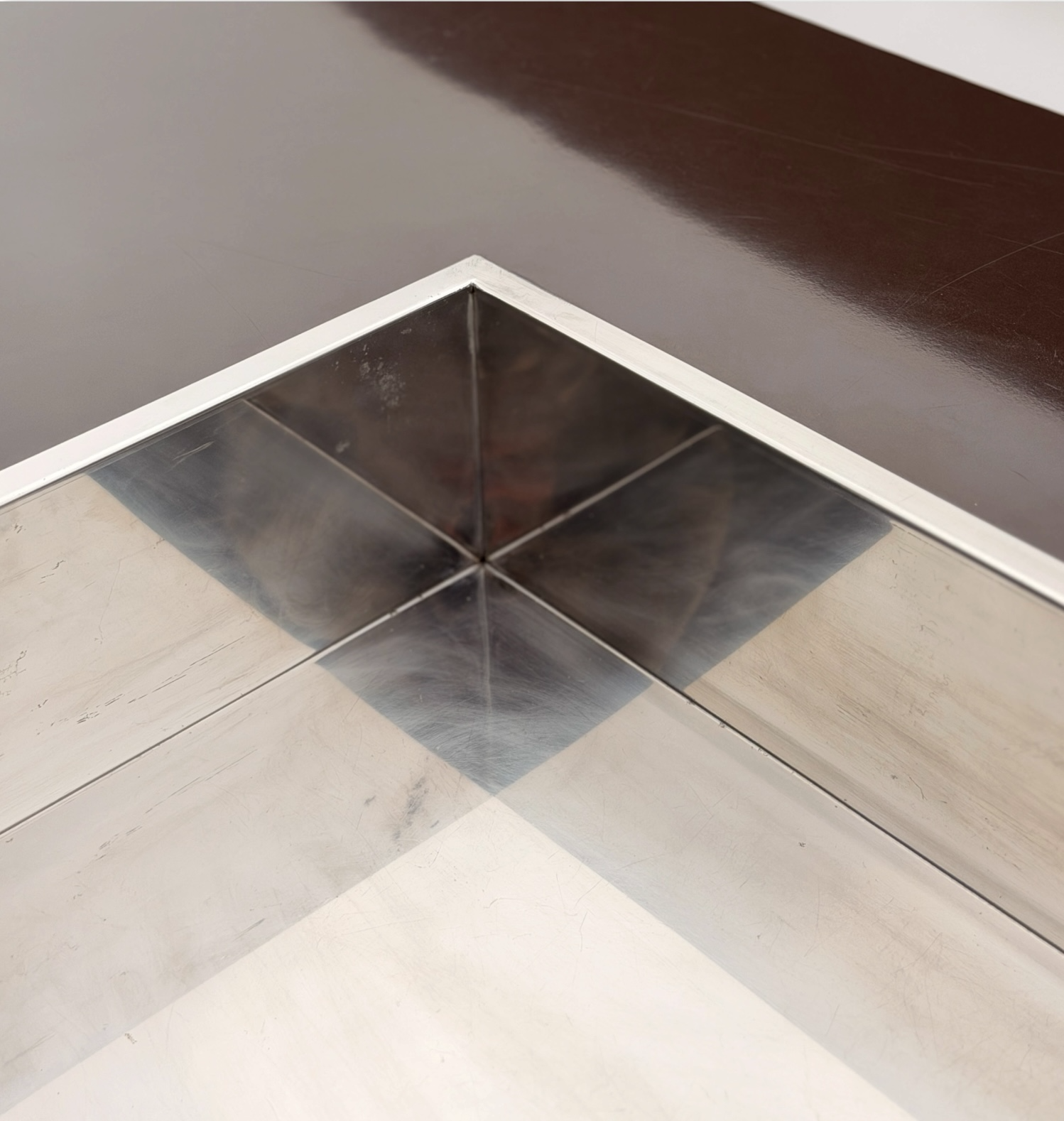
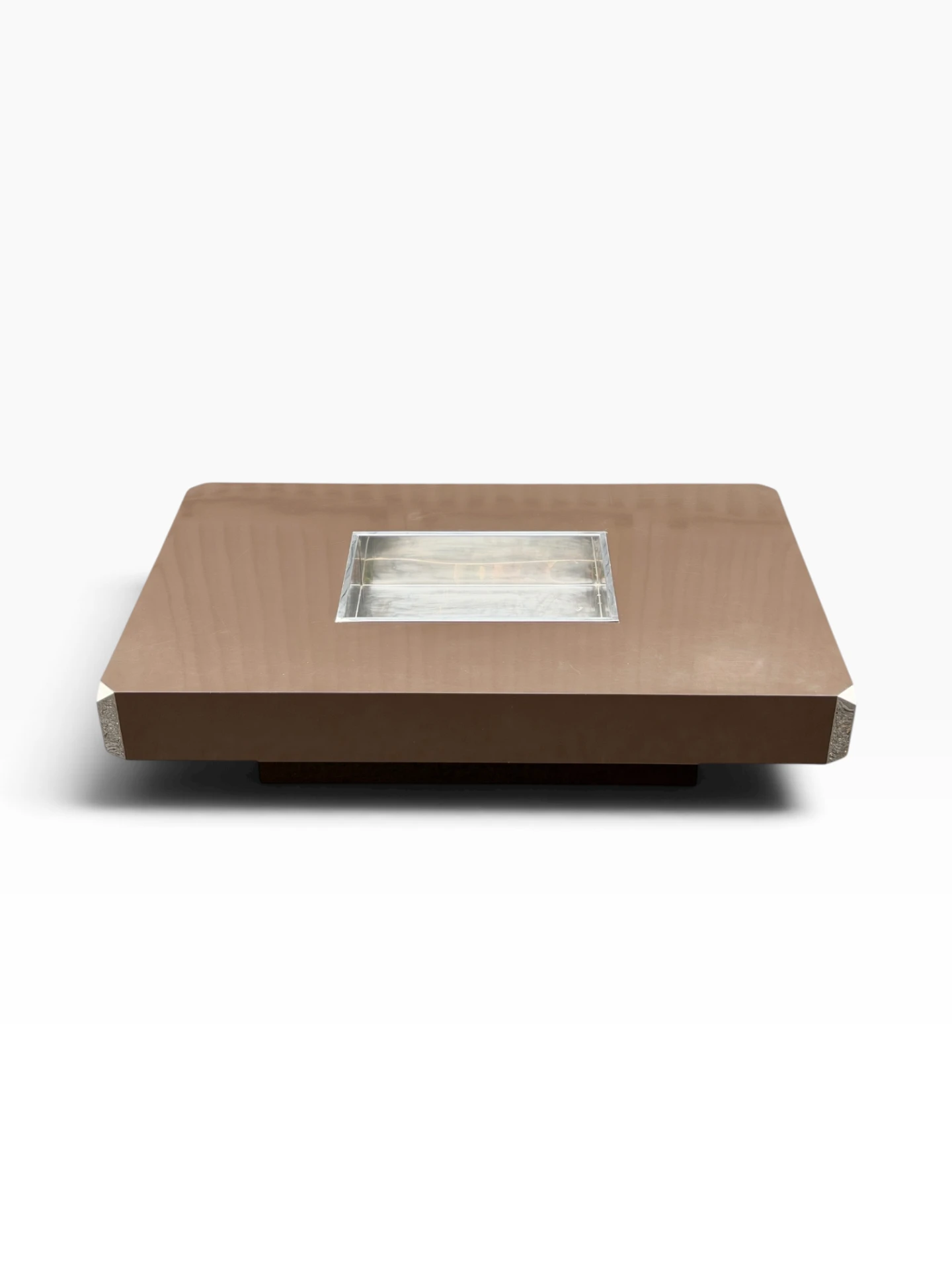
- The Alveo (“riverbed”), produced by Mario Sabot and published in Casa Vogue in 1972, is recognisable by its central metal tray and its faceted brass or chrome corners. It exists in burr wood, laminate and lacquer.
Manufacturers, Labels and Attribution (Mario Sabot, Cidue)
Rizzo had his furniture made by his own studio, in his Tivoli workshops, and in parallel by Mario Sabot and Cidue. Depending on the piece, you may find a “Willy Rizzo” signature painted, often in white, on the edge, a “Handcrafted in Italy” label, a signed metal plaque or a Cidue label. An unmarked table is not necessarily a fake, but it remains an attribution until a provenance or a period publication confirms it. Beware too of the official reissues of the Studio Willy Rizzo, opened in Paris in 2009: they are signed and numbered, whereas a period piece carries no number. Finally, Paul Michel's bar tables, sold by Roche Bobois, with two sliding L-shaped tops and a mirrored base, are sometimes wrongly attributed to Rizzo; some are marked “Paul Michel” on the inside rim.
Frequently asked questions
How can I recognise a genuine Willy Rizzo Alveo coffee table?
The Alveo is distinguished by its recessed central metal tray and its faceted brass or chrome corners. It exists in burr wood, laminate and lacquer, black or coloured. These features can be copied: a mark, a provenance or a period publication (Casa Vogue, 1972) remain the best evidence.
How does Willy Rizzo's round TRG table work?
Created in 1969, the TRG has a circular top that rotates as a whole 360° on a recessed base, with its built-in stainless steel or brass tray. There is no fixed ice bucket and no separate ring.
Are Willy Rizzo tables always signed?
No. Depending on the piece, you may find a signature painted on the edge, a “Handcrafted in Italy” label, a signed metal plaque or a Cidue label, but many have been lost. Neither the lacquer, the weight nor a smooth mechanism is enough: a restoration or a reissue reproduces them. The mark, the provenance and period publications are what count; an official Studio reissue also carries a number.
Looking for a specific piece from this signature?
L’Œil is our bespoke sourcing service. Tell us which piece you are looking for, and we will help you find it.
Our other authentication guides
 Guide Charles PollockHow to authenticate and choose a vintage Knoll Executive Chair.Read the guide
 Pierre Chapo Furniture GuideRead the solid elm, the 48x72 joinery and the S15, S22 and S31 models.Read the guide
 LC Collection Guide · CassinaRecognise authentic LC1, LC2, LC3 and LC4 editions.Read the guide
 Harry Bertoia Seating GuideExamine the wires, welds and markings of the Diamond, Bird and Side Chair.Read the guide
 Pierre Paulin Furniture GuideRecognise authentic Pumpkin, Ribbon, Mushroom and Groovy pieces.Read the guide
 Tulip Collection Guide · Eero SaarinenIdentify the Pedestal chairs and tables made by Knoll.Read the guide
 EA Collection Guide · VitraAssess Vitra's Aluminium Group and Soft Pad chairs.Read the guide