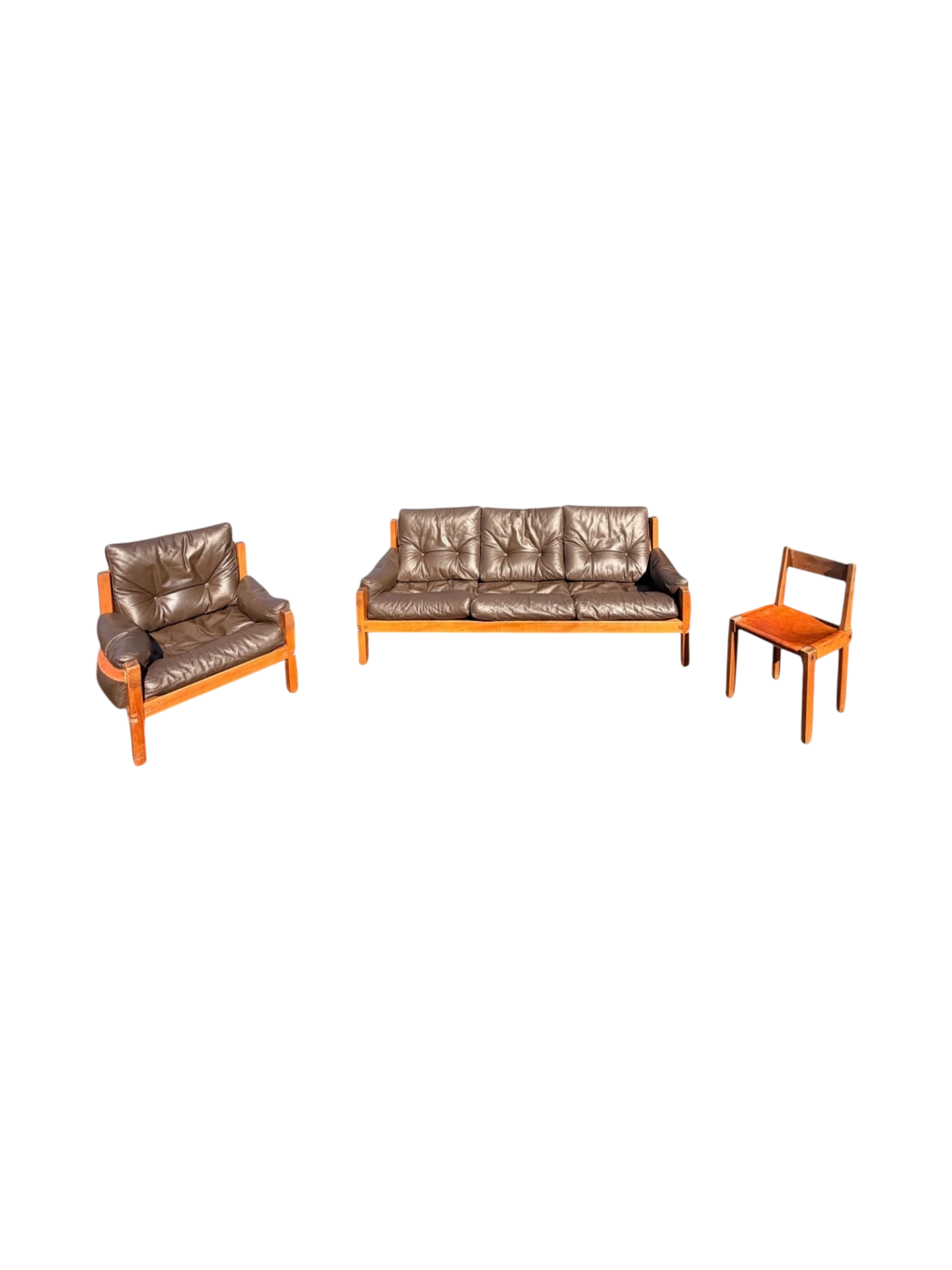
Solid elm
Pierre Chapo's material of choice was solid elm: it makes up the vast majority of the furniture produced in his lifetime, with oak and ash appearing only occasionally. Elm is recognisable by its pronounced grain, contrasting veining and interlocked fibres, which resist splitting. The workshop finished it with a natural blend of linseed oil and turpentine, which over time gives it a warm, matt patina ranging from golden to brown that is hard to imitate convincingly. These clues are not enough on their own: the family workshop Chapo Création, which today works mostly in oak and ash, and in elm on request, still applies the same finish, and an old piece may since have been sanded or revarnished.
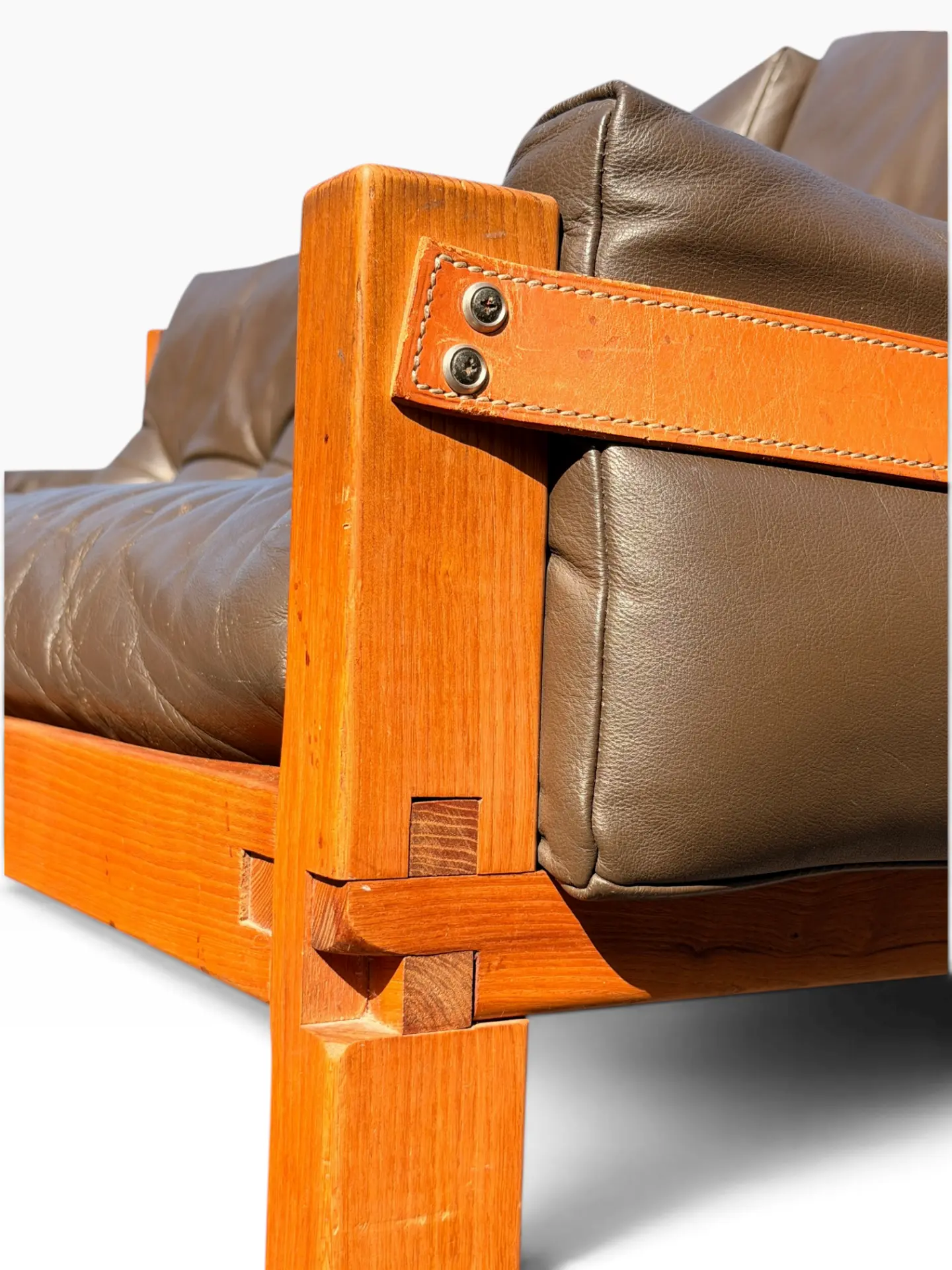
The “48x72” Joint
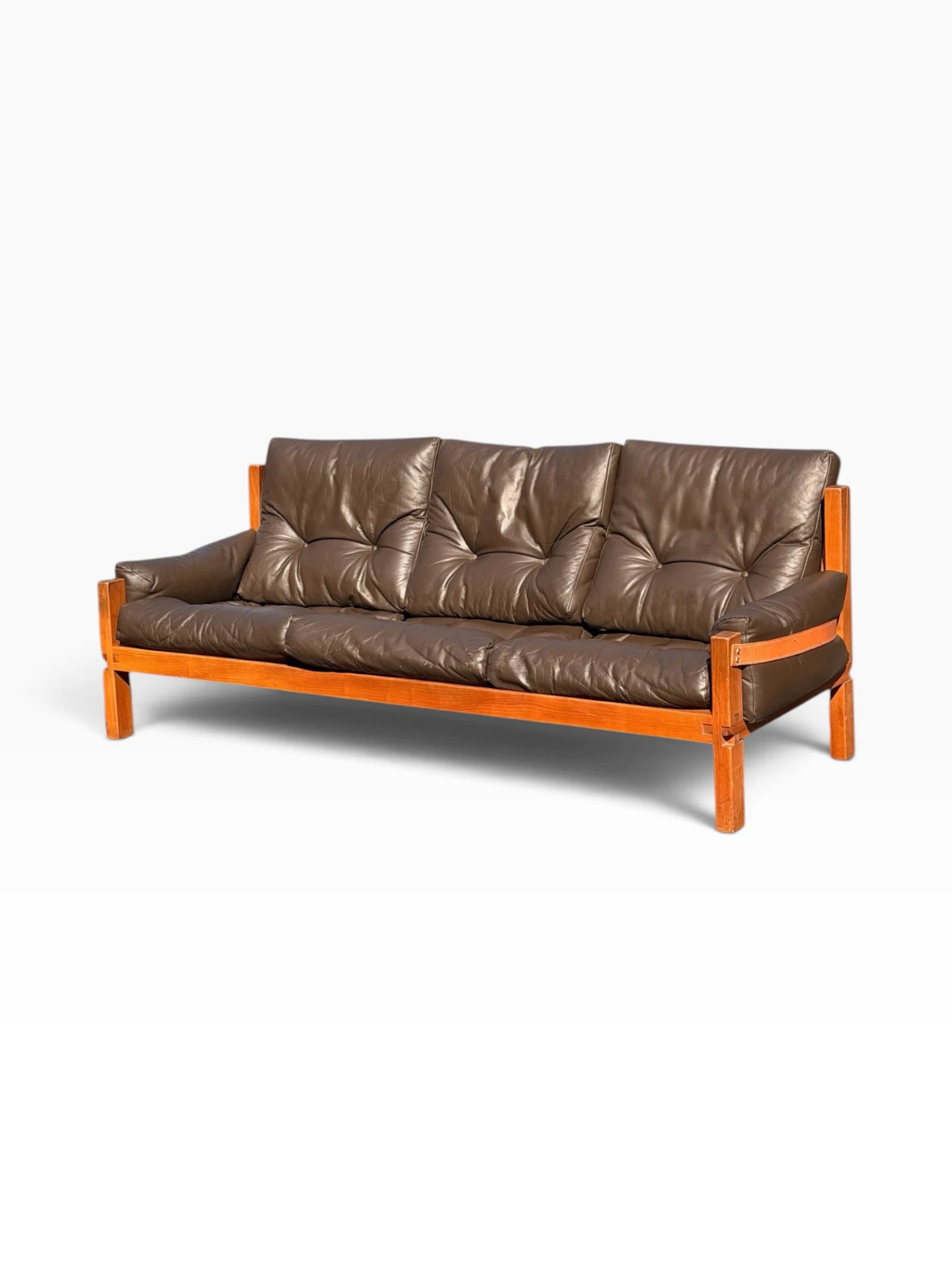
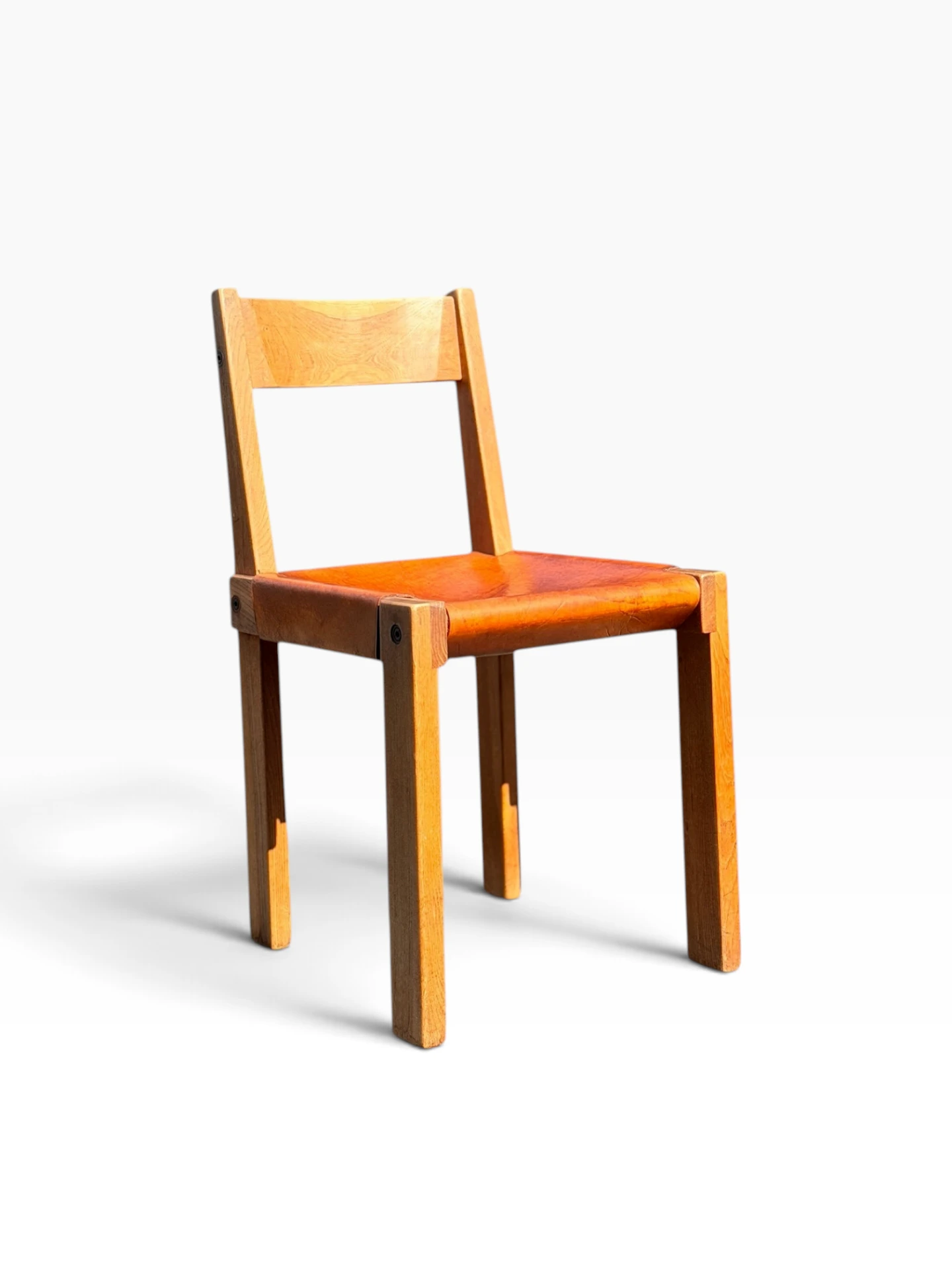
This is the true signature of Pierre Chapo's seating. The so-called “48x72” joint, patented in 1964 according to the Magen H Gallery monograph, is based on standardised timber sections of 48 × 72 mm, used as modules with identical ends. On the S10, S11, S15, S20 and S22 seats, the parts interlock through visible through-tenons, without glue or metal parts: cross-head screws or brackets on a frame of this type are suspect. The system does not cover the whole body of work: not the pillar tables, not the bundled-leg bases, and not the 1979 Chlacc process (S45 chair), which is glued and nailed by design. Finally, a skilled joiner can copy a visible joint: it is a necessary criterion, not proof.
Iconic pieces
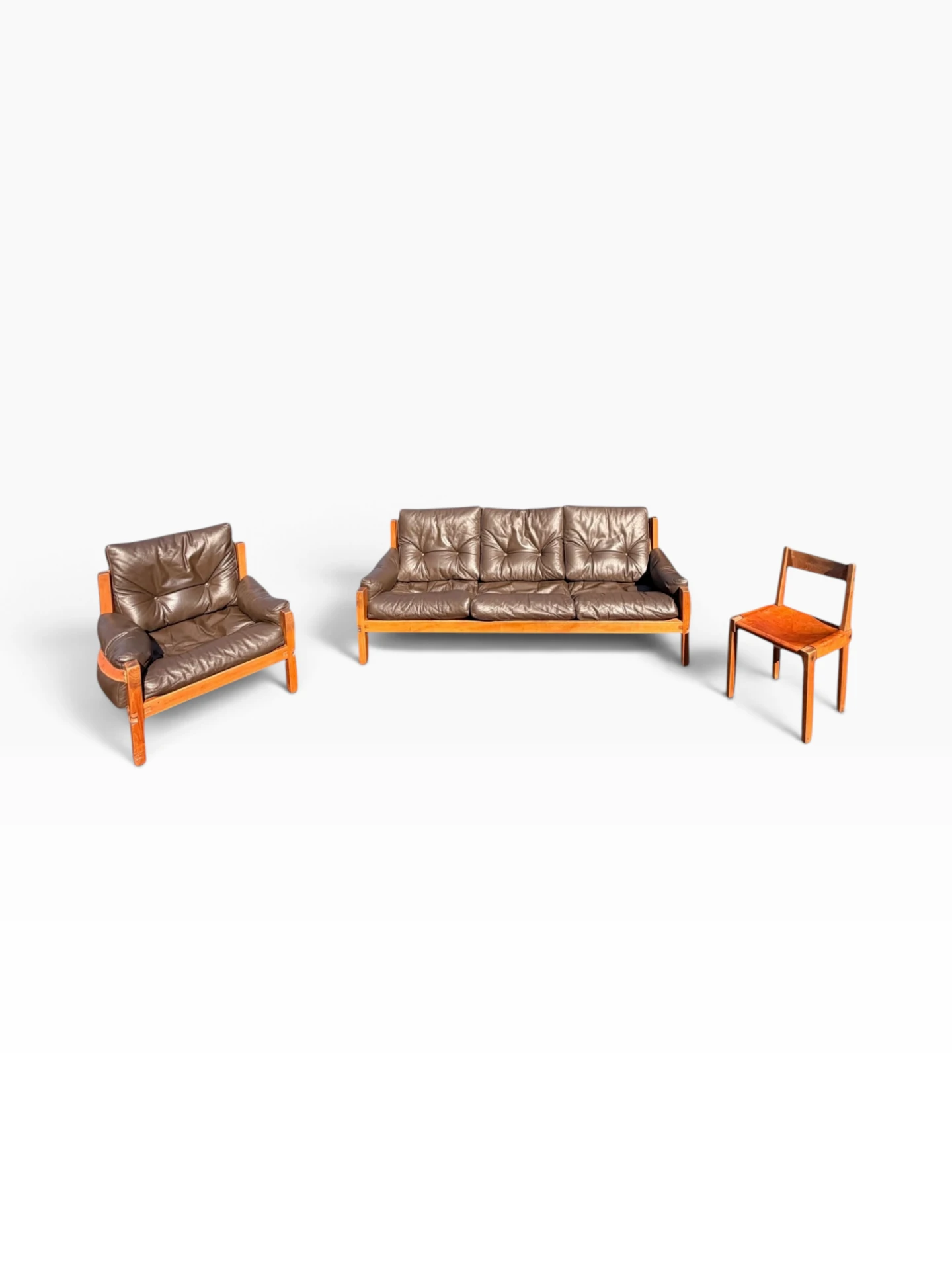
- S15 armchair
- Designed in 1966 out of the research on the 48x72 joint, it pairs a fully exposed solid elm frame with an elastic platform, a belt and four cushions: seat, back and two armrests. Early examples are found in thick, grained leather, but also in fabric.
- S22 sofa
- Designed in 1967 as an extension of the S15, this two-seater sofa doubles its floor area while keeping the same principle: nothing is attached outside the 48x72 frame. It also exists as a three-seater (S22R).
- S31 stool
- This round stool, dated 1974 by Chapo Création, stands on three converging legs gathered in a bundle and comes in three heights (45, 55 and 73 cm). It is the Chapo piece most often seen at auction, and it is reissued today: the height should match a recorded version, and the period is confirmed by marks and provenance.
Marks, Editions and Reissues
Unlike Knoll or Cassina, most period Pierre Chapo pieces carry neither signature nor stamp: the absence of a mark is not a warning sign. When there is a mark, it is a branded stamp on the back or under a top, a date on the underside, or a label from the manufacturer Seltz, an Alsatian cabinetmaking firm Chapo worked with for about ten years from 1968. A round stamp reading “Meubles CHAPO Gordes 84220 France”, on the other hand, indicates a contemporary edition: after 1987, the family workshop resumed production in Gordes, with the same designs and the same finish. Authentication therefore rests on identifying the model and its dimensions in the Chapo catalogues, then on the joinery, the marks and the provenance (invoices, order forms). Finally, be wary of “attributed to” or “in the style of”: furniture from Maison Regain, a neighbouring Provençal workshop, often circulates under Chapo's name.
Frequently asked questions
How can I recognise genuine Pierre Chapo furniture?
Through a body of evidence. First identify the model and its dimensions in the Chapo catalogues, then examine the joinery: on the seating, the 48x72 joint holds without glue or metal parts. Solid elm dominates period production, but elm and a linseed-oil finish prove nothing on their own, since the family workshop still uses them. Marks and provenance then make it possible to tell a period piece from a reissue.
How can I tell a period Chapo piece from a reissue?
Since 1987, the family workshop Chapo Création has been making the same designs in Gordes, with the same linseed-oil finish: design and patina are therefore not enough. A round “Meubles CHAPO Gordes 84220 France” stamp signals a contemporary edition, whereas a label from the manufacturer Seltz points to the 1970s collaboration. The wood is also a clue: elm dominates period production, while reissues are more often in oak or ash, though this is not a rule. Original invoices and order forms remain the most reliable proof.
Is vintage Pierre Chapo furniture always signed?
No. Most period pieces carry neither signature nor stamp. When there is a mark, it may be a branded stamp, a date or a Seltz label; a round “Meubles CHAPO Gordes” stamp, on the other hand, signals a contemporary edition. The model, the joinery and the provenance are what count.
Looking for a specific piece from this signature?
L’Œil is our bespoke sourcing service. Tell us which piece you are looking for, and we will help you find it.
Our other authentication guides
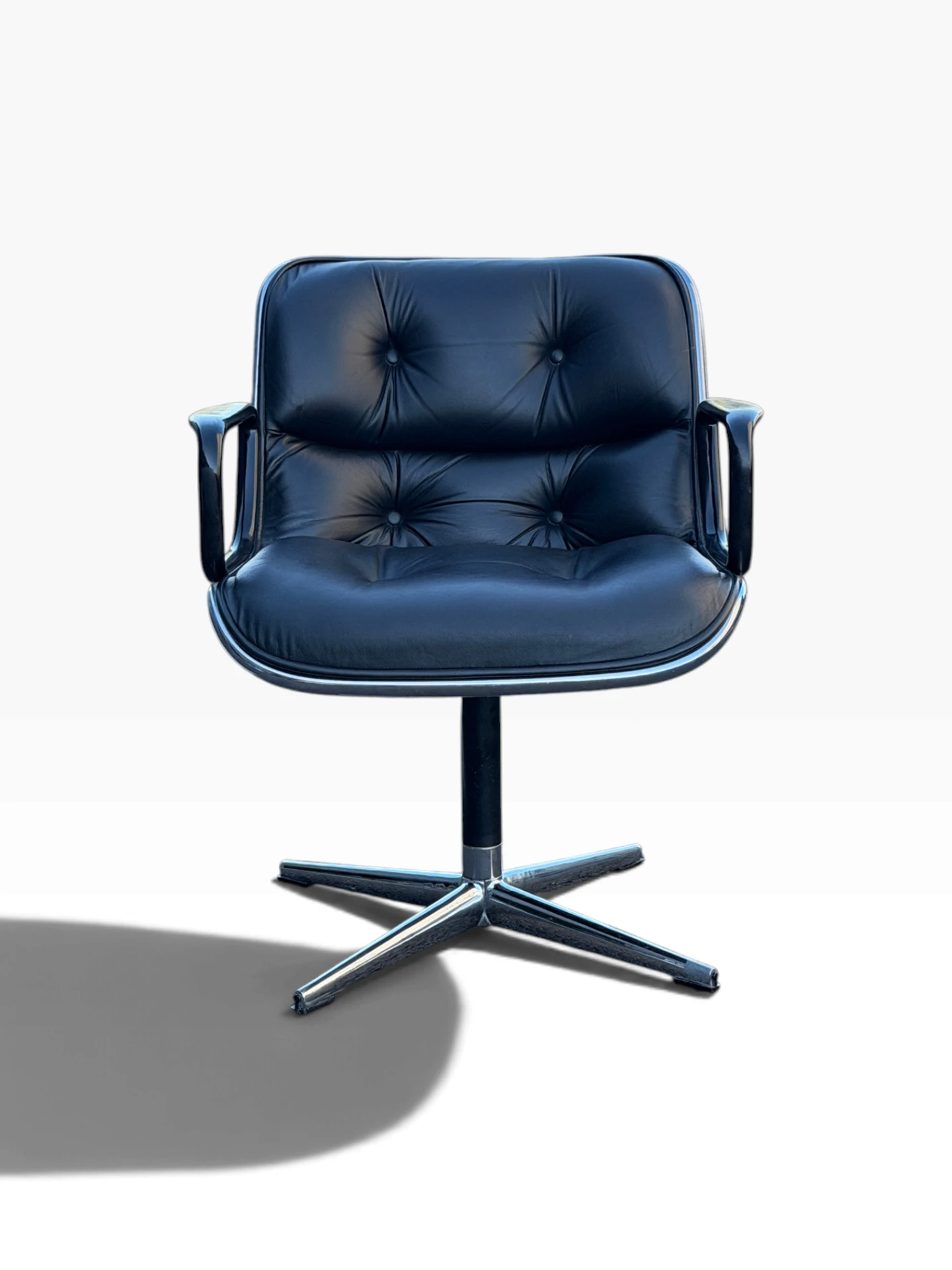 Guide Charles PollockHow to authenticate and choose a vintage Knoll Executive Chair.Read the guide
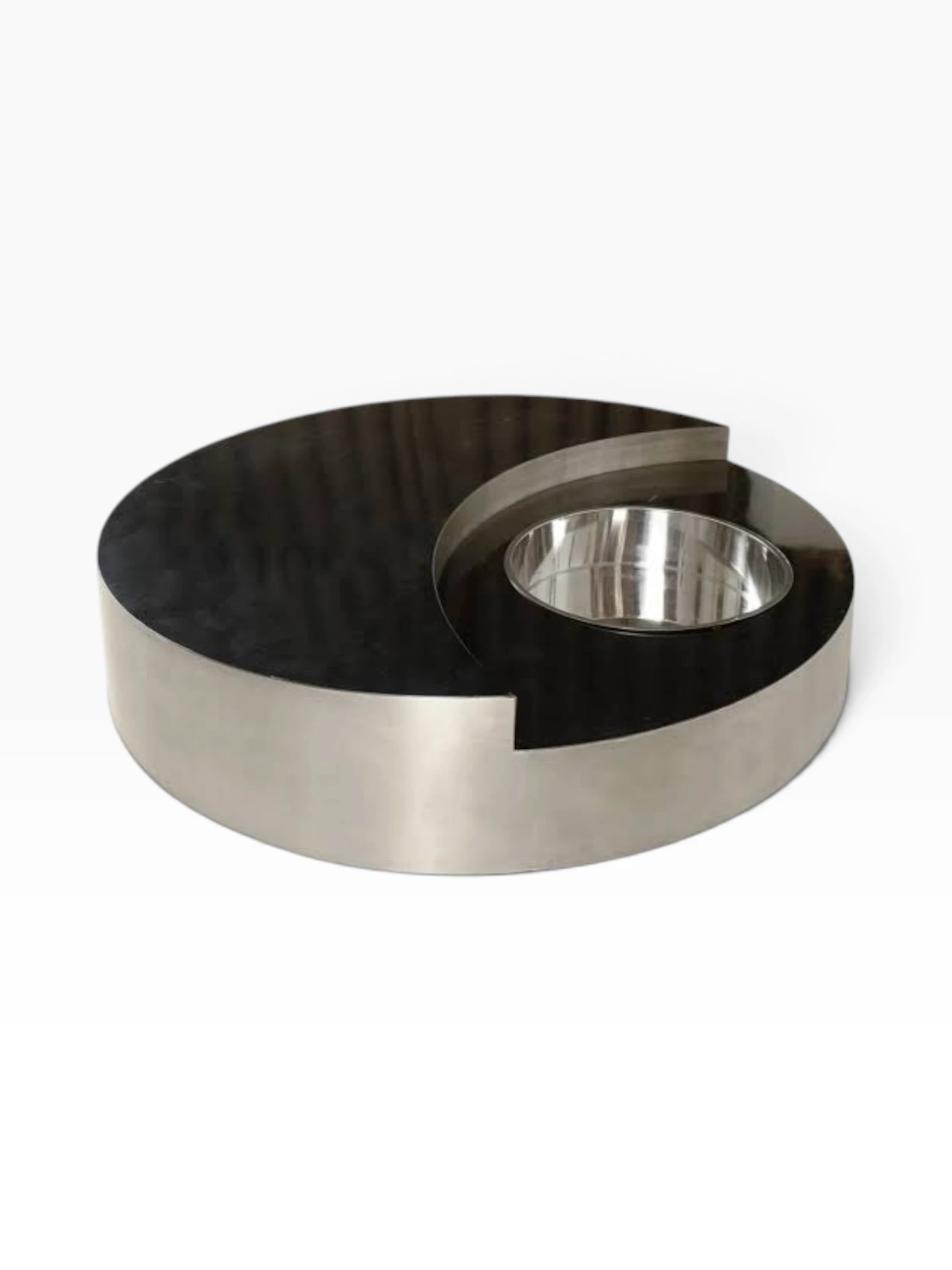 Willy Rizzo Coffee Tables GuideAuthenticate the Alveo, TRG, Yin Yang and sliding models.Read the guide
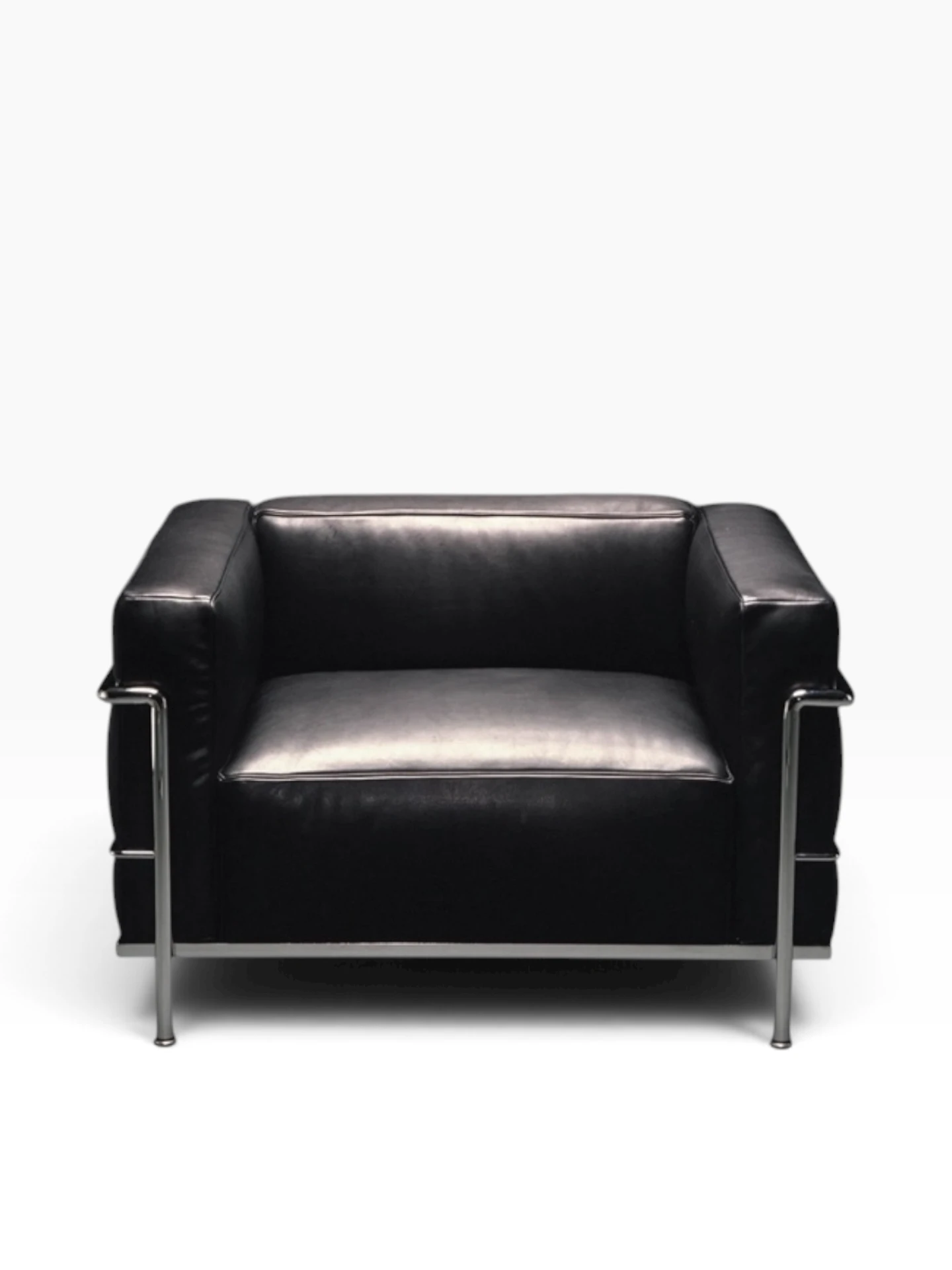 LC Collection Guide · CassinaRecognise authentic LC1, LC2, LC3 and LC4 editions.Read the guide
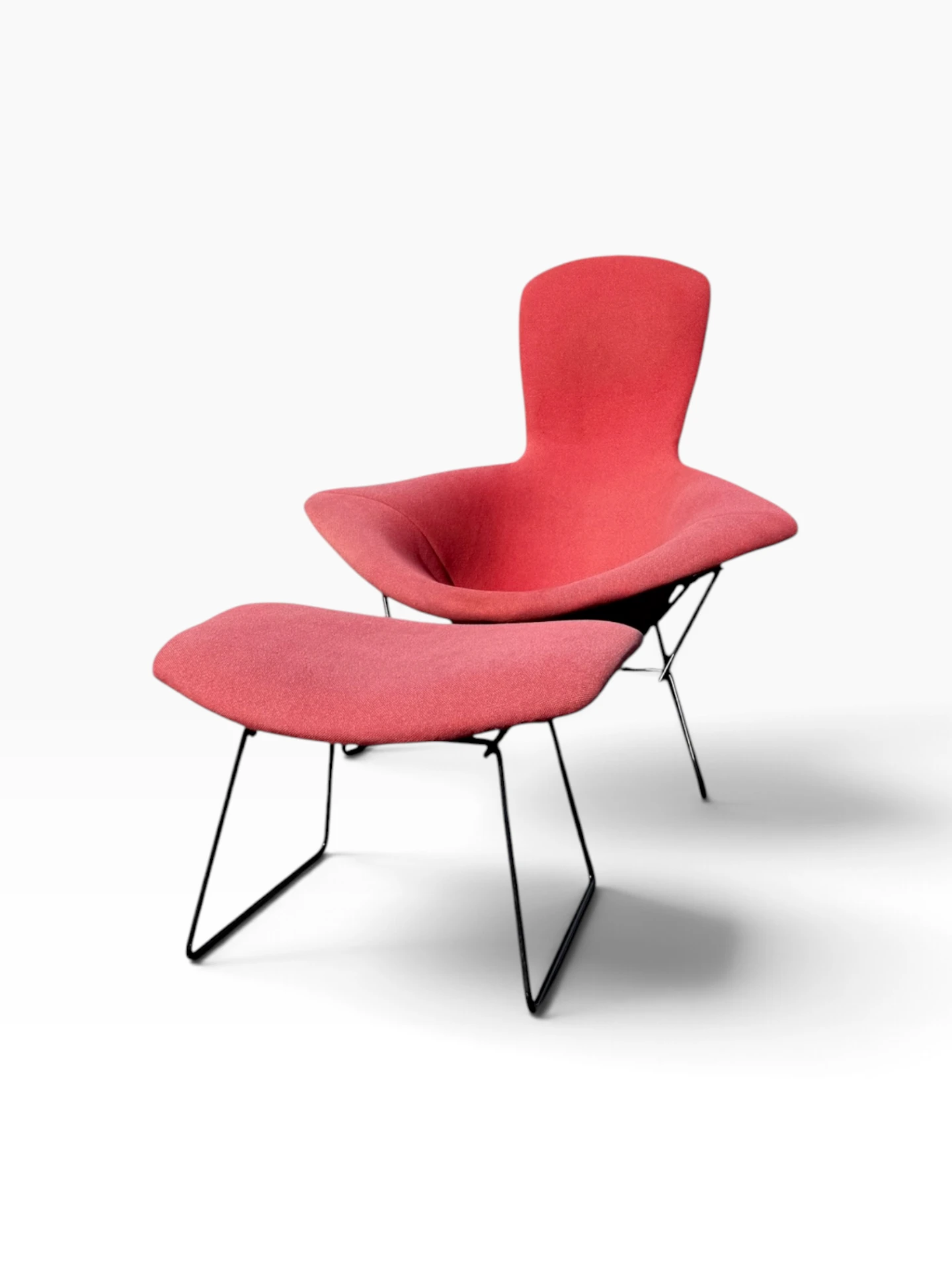 Harry Bertoia Seating GuideExamine the wires, welds and markings of the Diamond, Bird and Side Chair.Read the guide
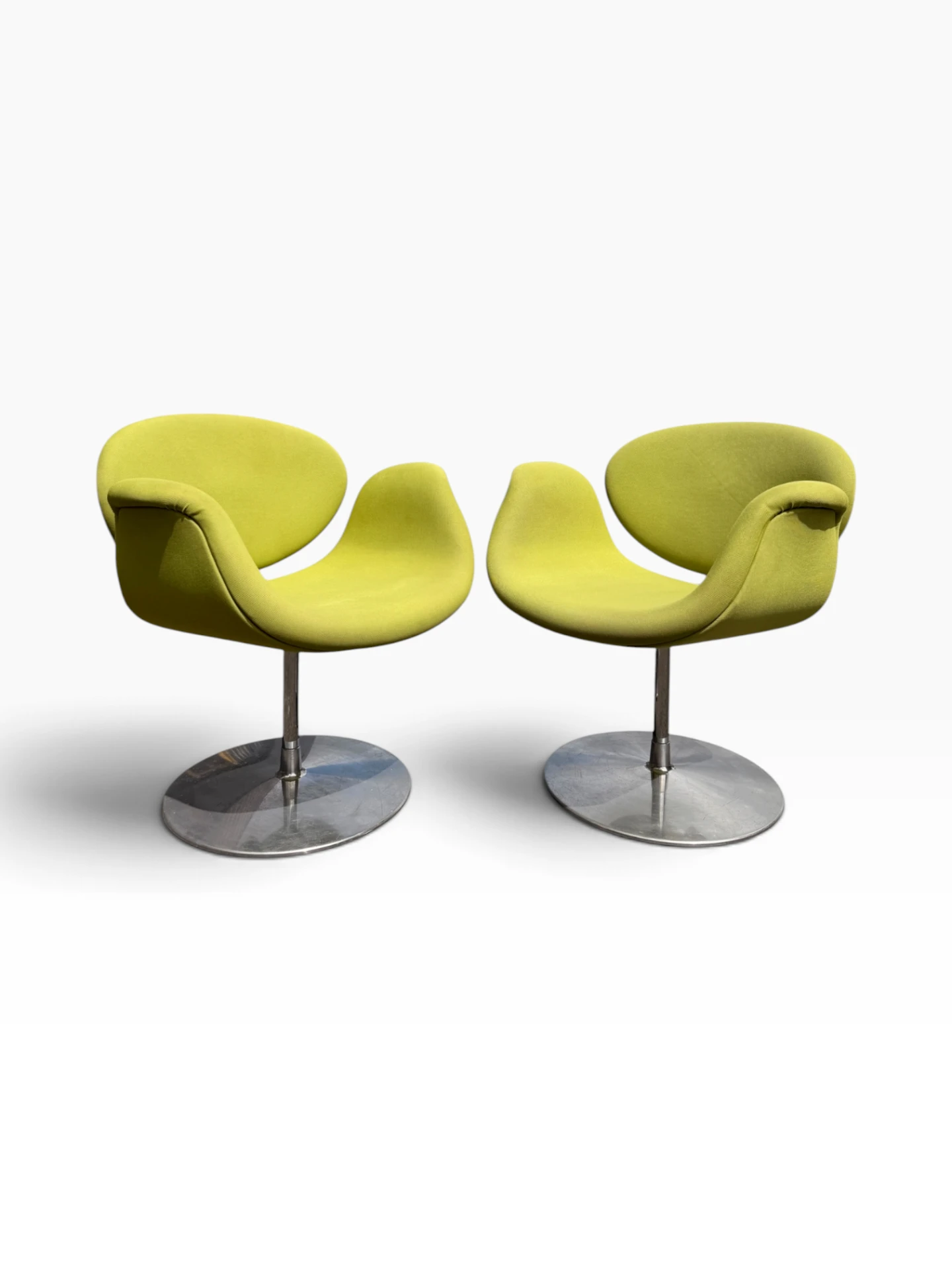 Pierre Paulin Furniture GuideRecognise authentic Pumpkin, Ribbon, Mushroom and Groovy pieces.Read the guide
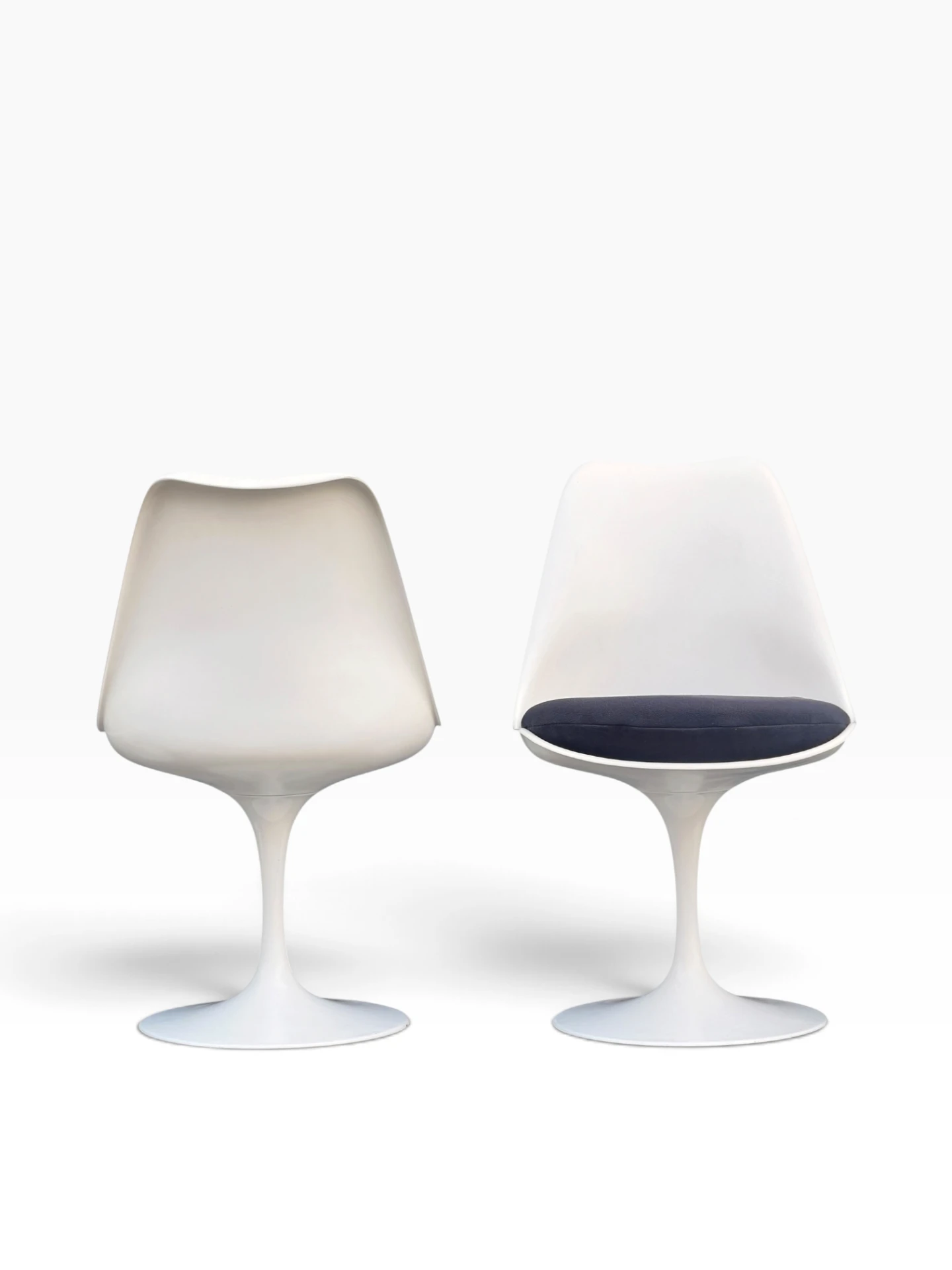 Tulip Collection Guide · Eero SaarinenIdentify the Pedestal chairs and tables made by Knoll.Read the guide
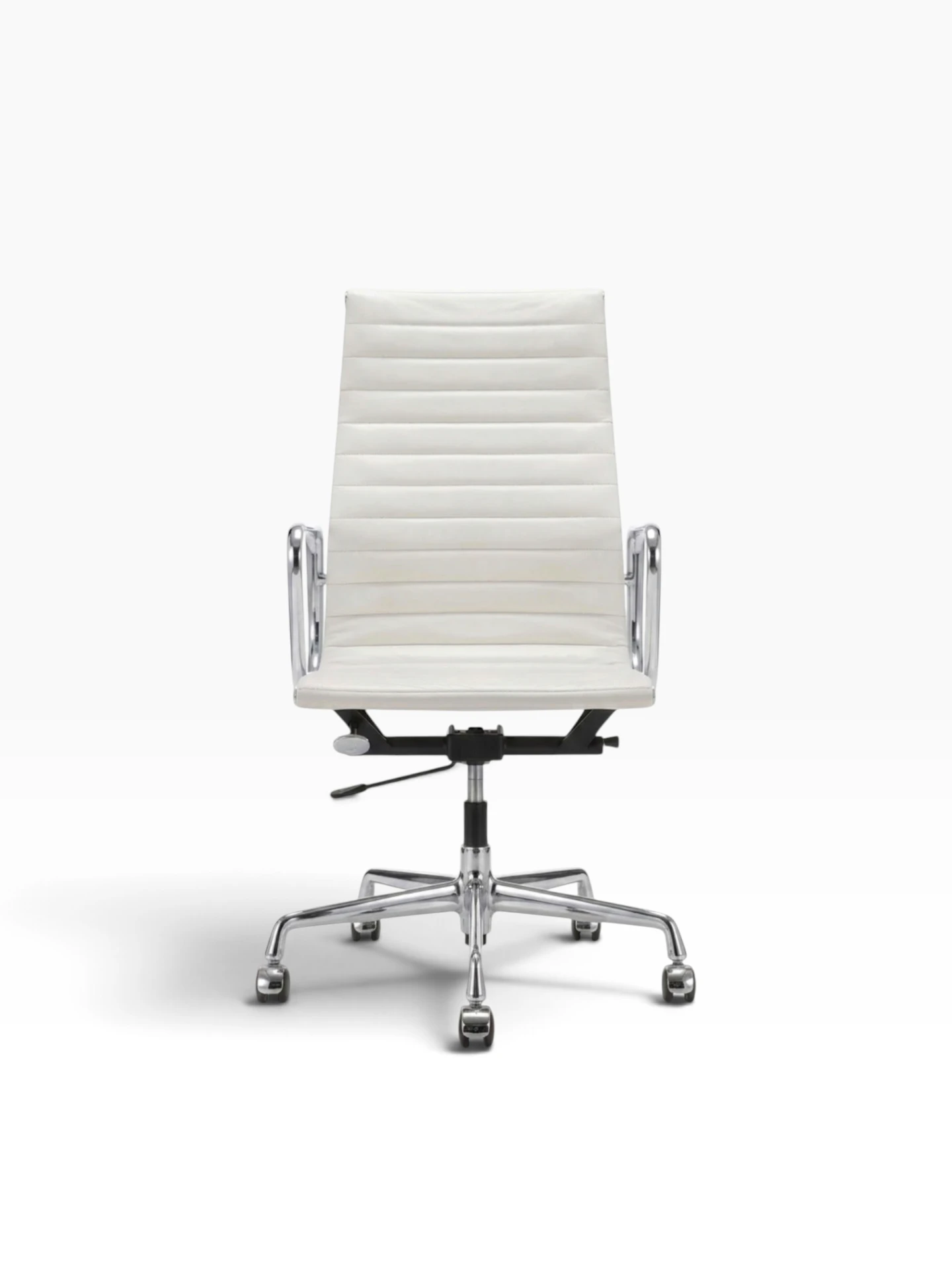 EA Collection Guide · VitraAssess Vitra's Aluminium Group and Soft Pad chairs.Read the guide