Rim technology
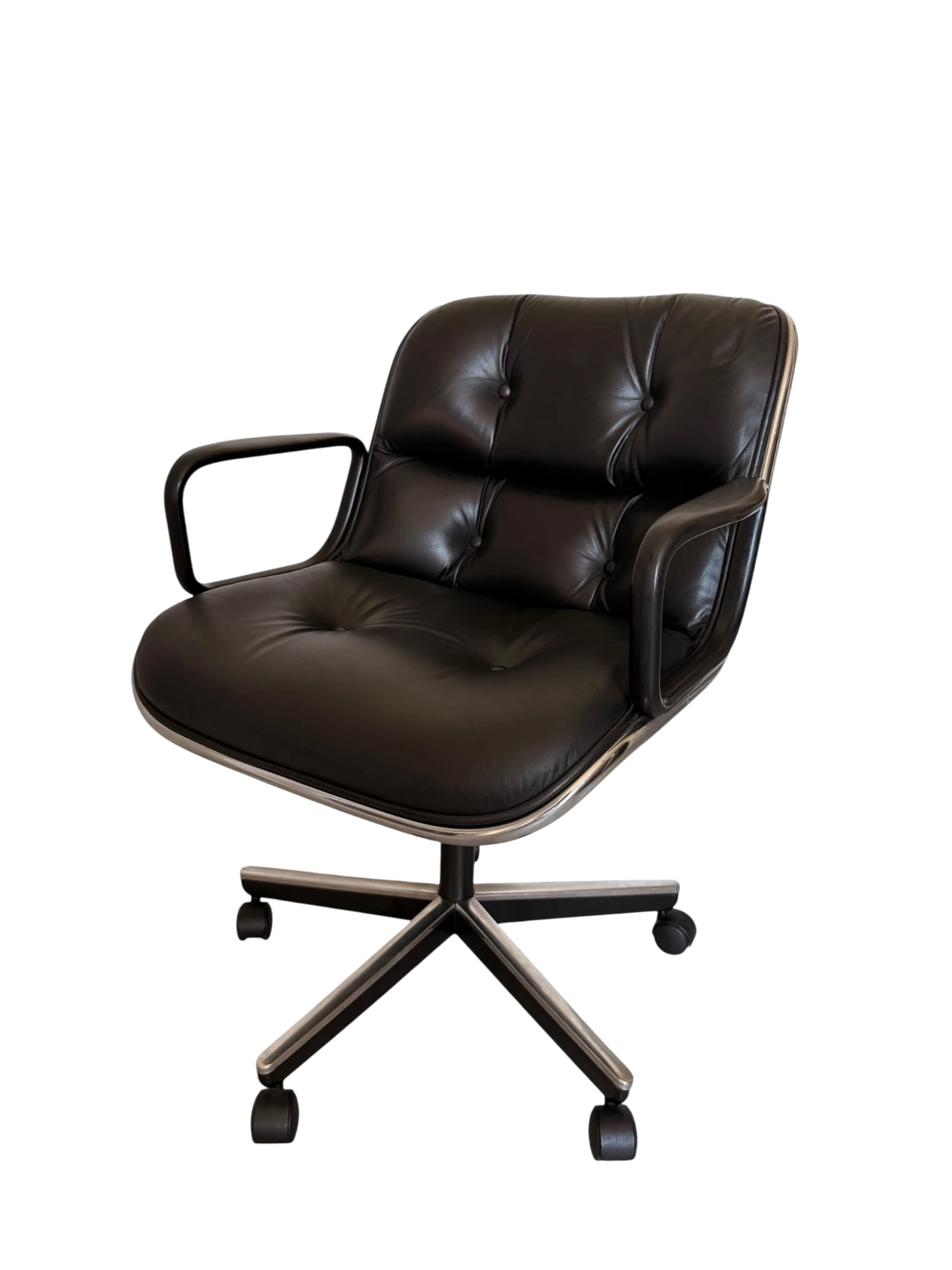
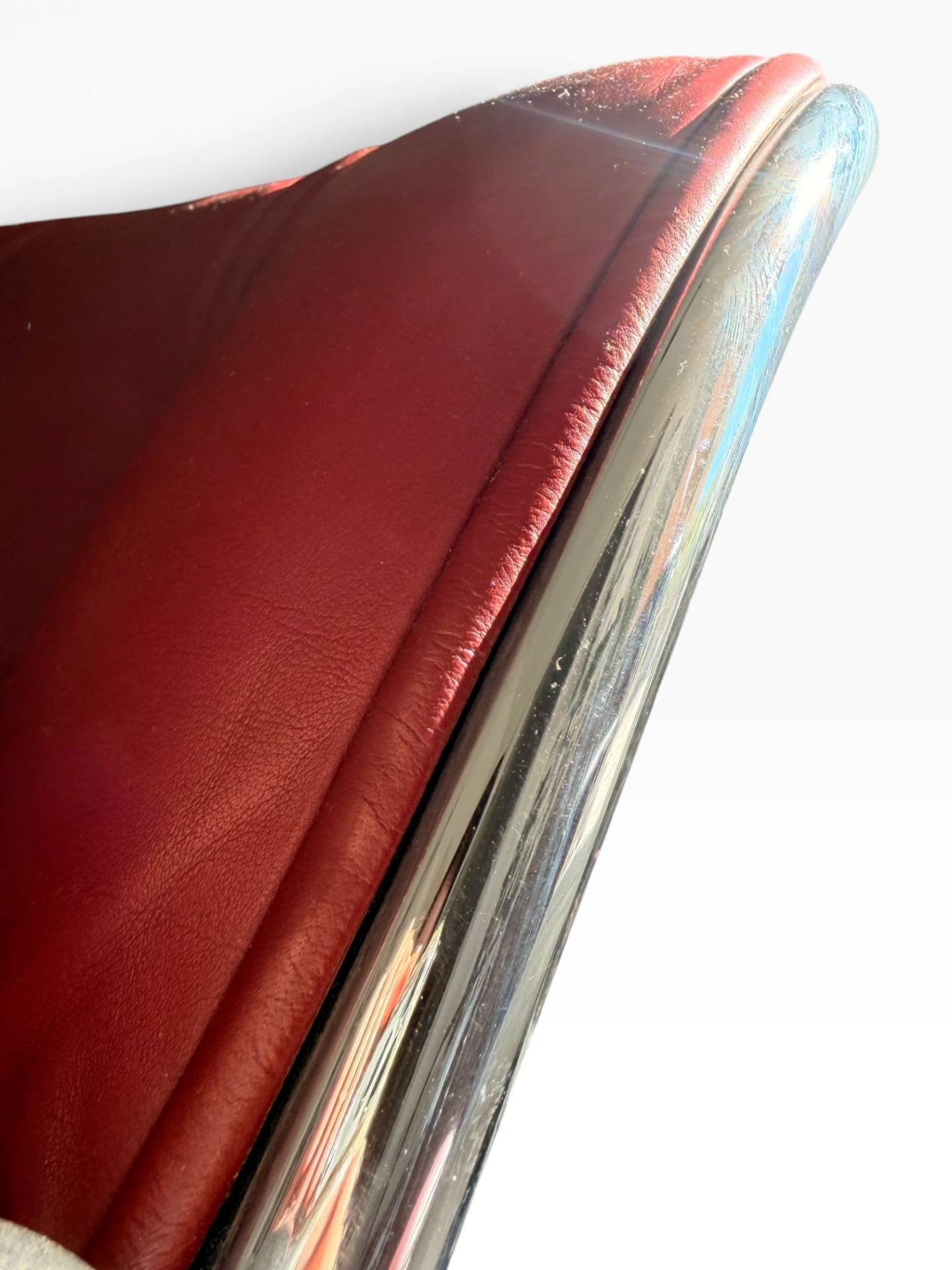
Charles Pollock's key innovation lies in the very structure of the chair. Pollock wanted to create “a chair born of a single line”.
Instead of visible screws, he devised a perimeter structure in extruded aluminium, polished or chrome-plated. This metal rim is more than an aesthetic bumper: it physically holds together the back shell and the front upholstery. The chair thus appears suspended within its own metal outline, a technical feat that drastically reduces the number of visible components.
Telling a vintage model from a recent edition
The Pollock Executive Chair has never left the Knoll catalogue since 1965. It has, however, gone through several technical changes that make it possible to date an example.
- 1965 – 1970
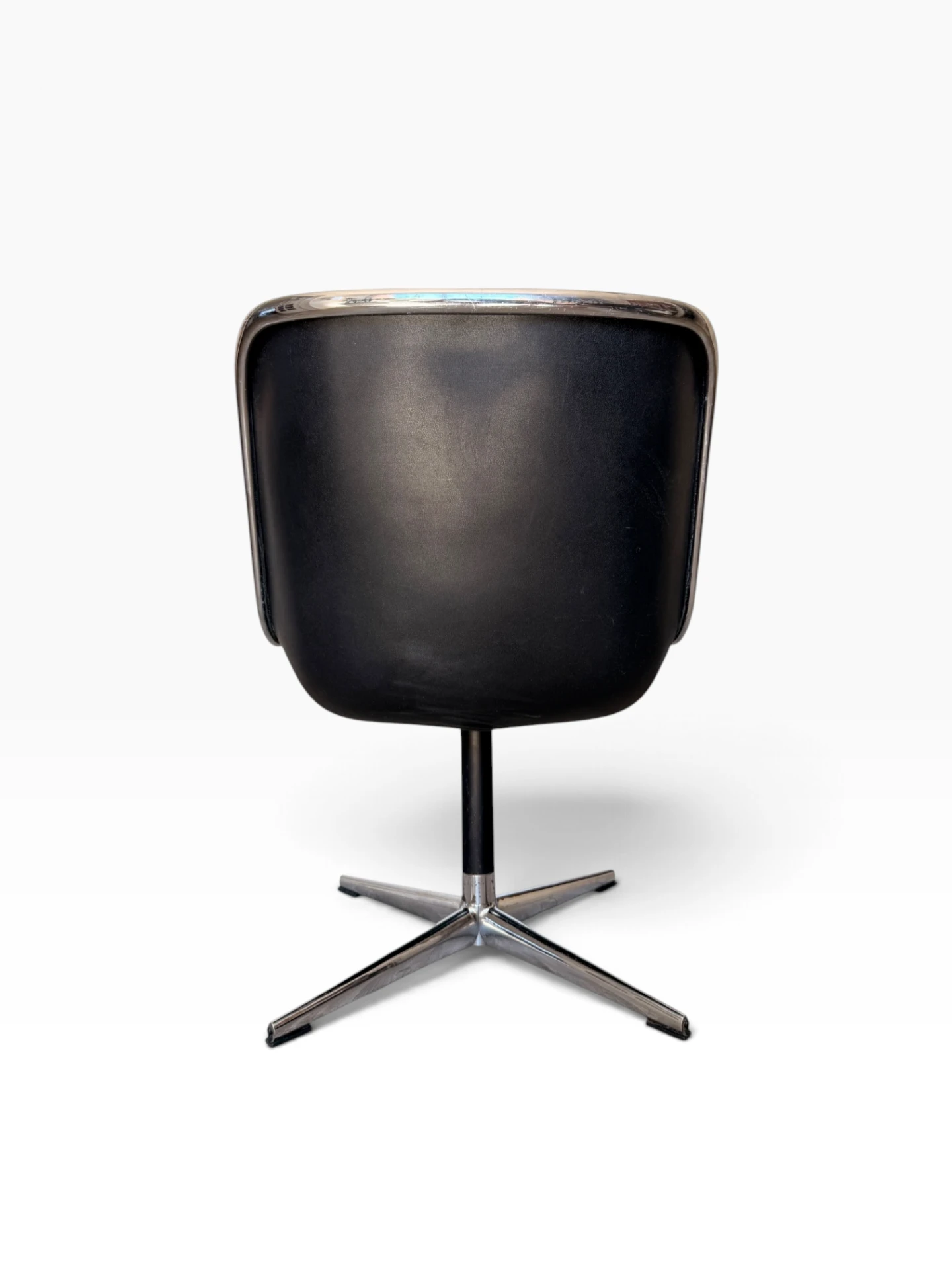
- The base, designed by Pollock himself, pairs a chrome-plated steel column with four tapered legs in chrome-plated cast aluminium, screwed on and fitted with castors or glides; a five-star version also exists. On the office version, swivel, tilt and height are adjusted mechanically, by a threaded rod. The rim is chrome-plated extruded aluminium, the armrests black phenolic plastic, and the very first examples bear a “Knoll Associates” label.
- 1970 – 2000
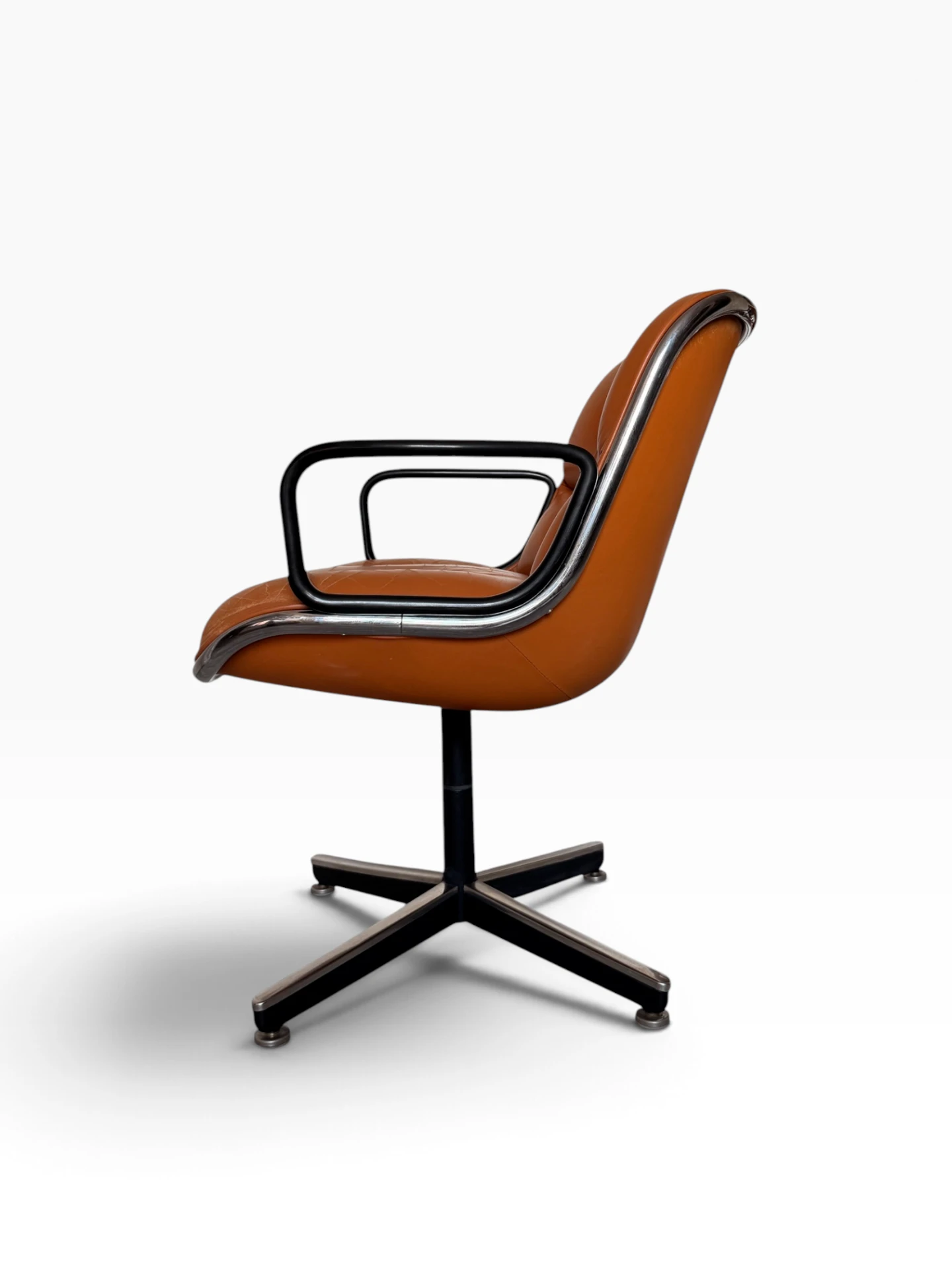
- Around 1969-1971, Knoll adopted in the United States a cheaper base in welded, painted pressed steel with stainless steel caps (four legs for the visitor version, five on castors for the office version). The 1980s brought the one-piece cast aluminium five-star base and the lever-operated gas lift.
- 2000 – today
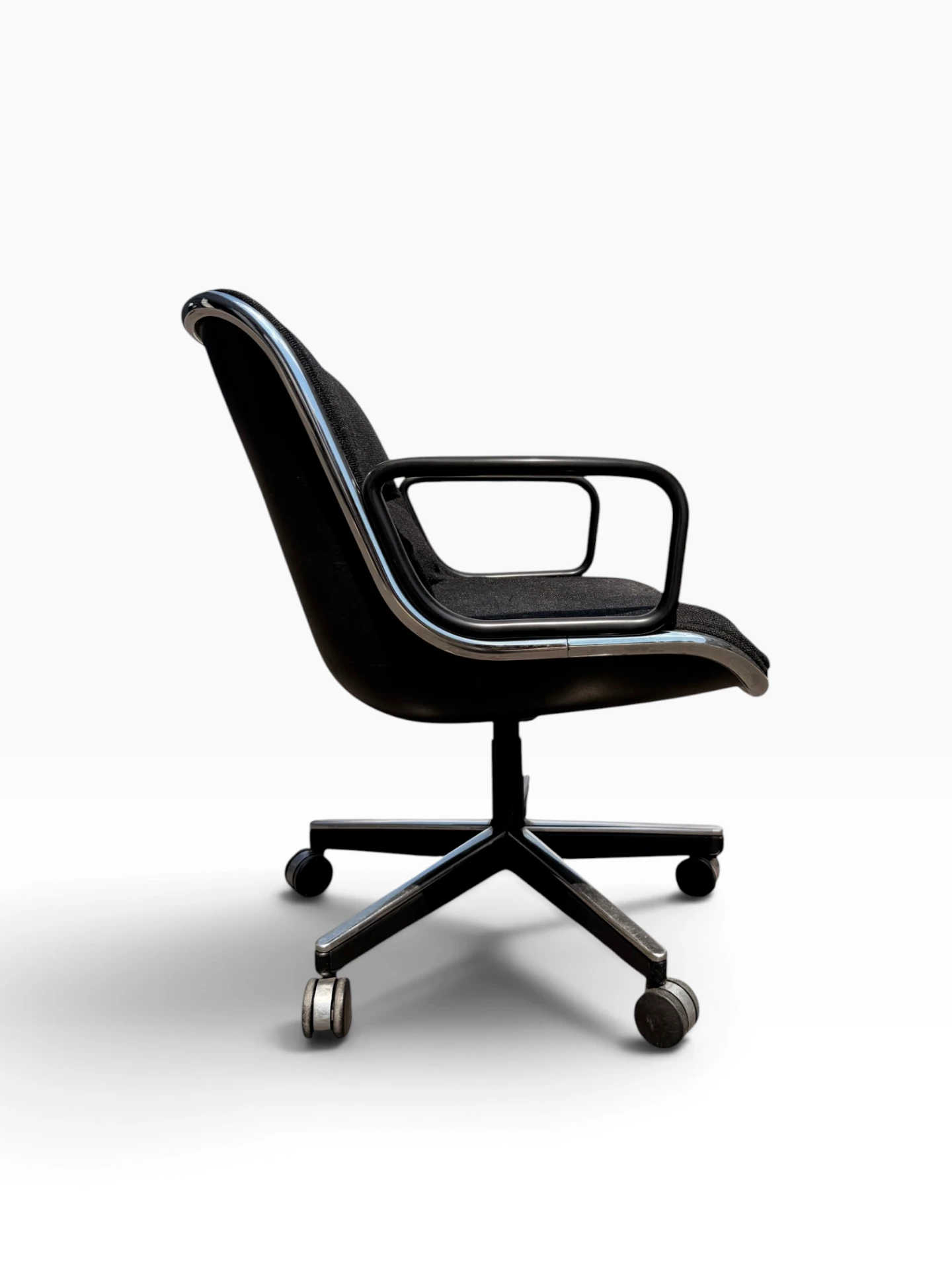
- Still in continuous production, the chair has a thicker polypropylene shell, four-star bases on glides or five-star bases on castors, a swivel-tilt mechanism with tension and pneumatic lift, and over a hundred fabrics and leathers. The armrests, unchanged since 1965, remain fixed.
Leather, fabric and tufting
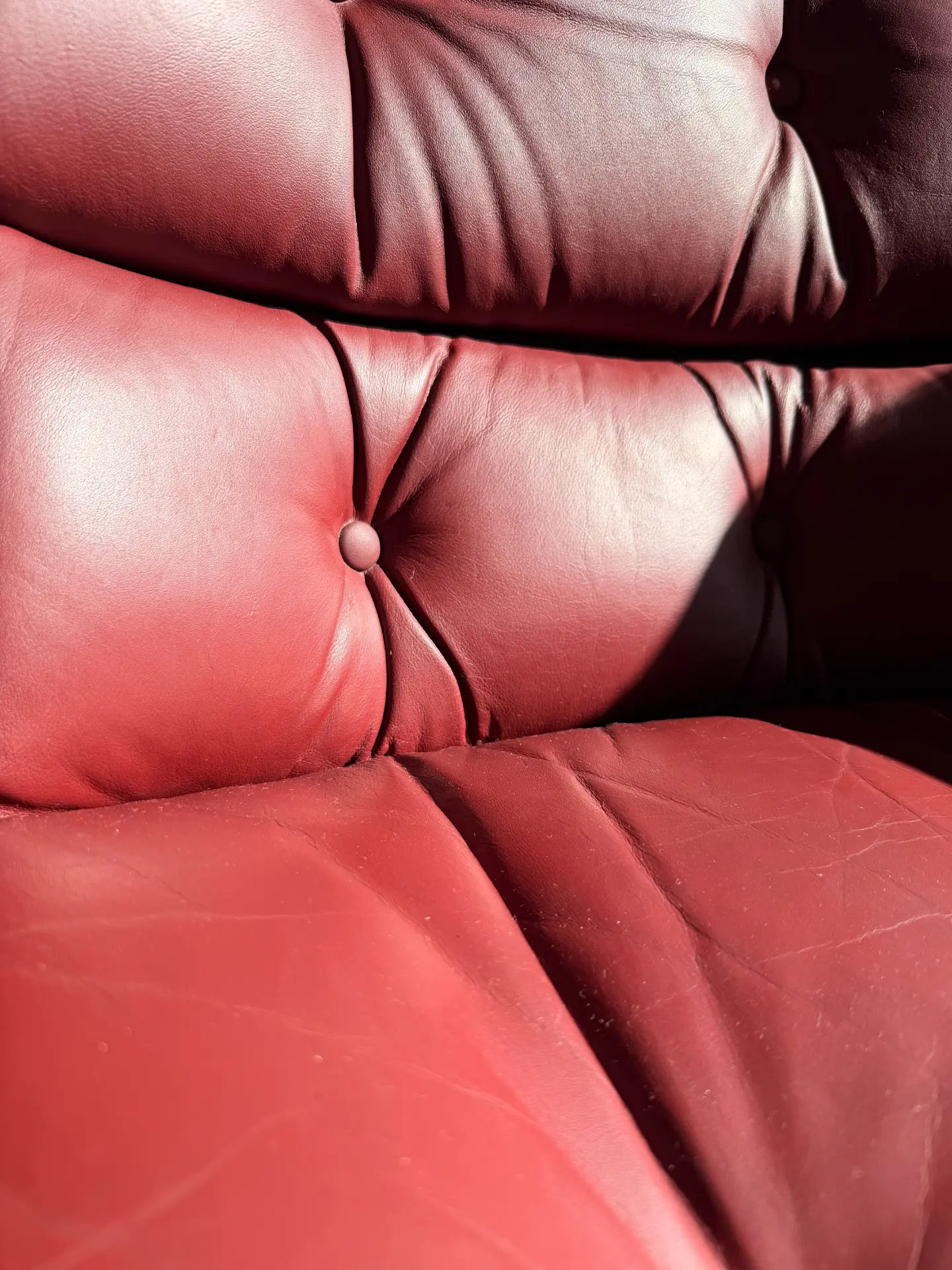
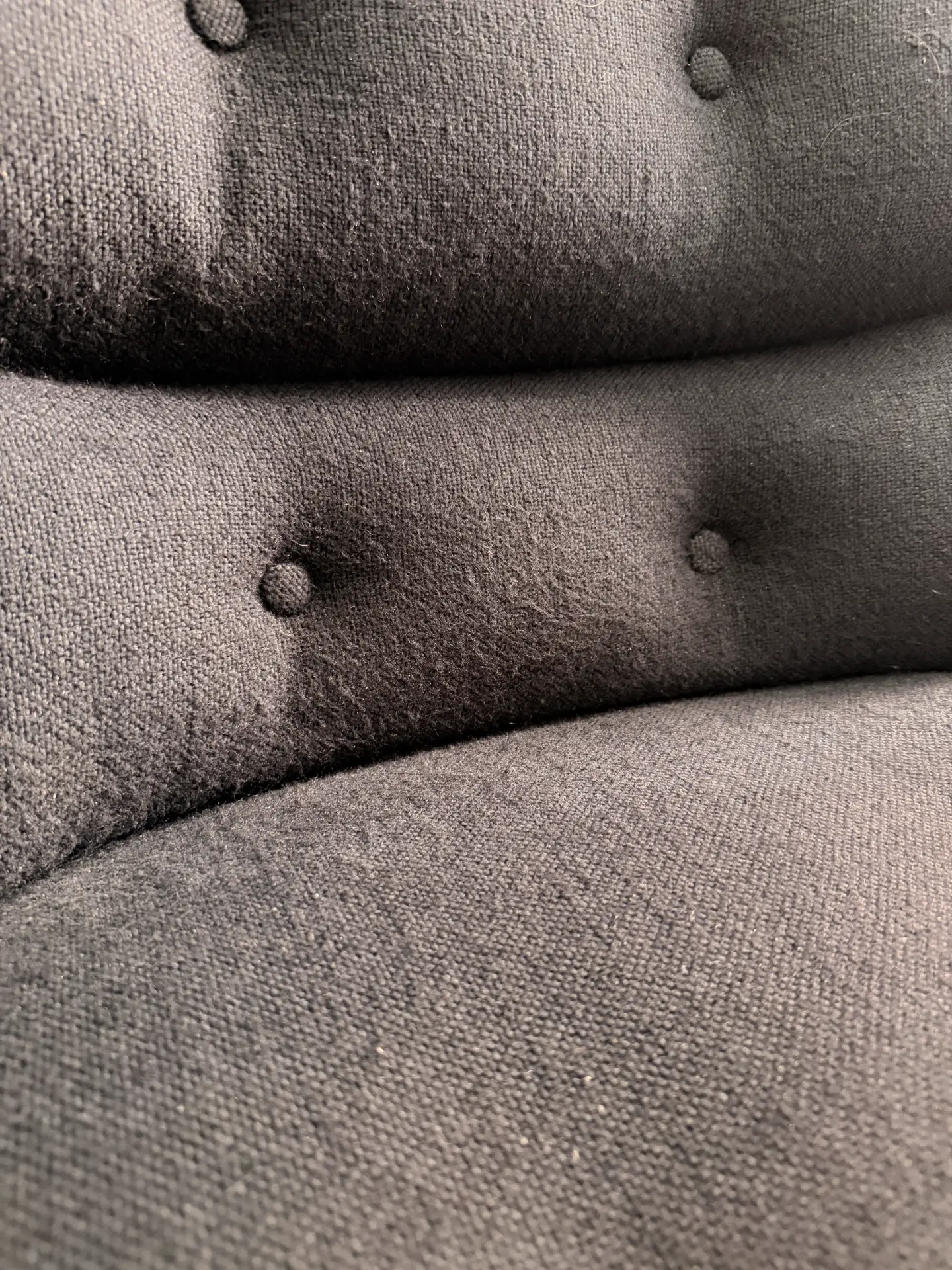
Executive models from the 1960s and 1970s stand out for the exceptional quality of their materials. The upholstery is made of moulded latex foam (replaced by multi-density polyurethane foam from the 1980s), covered with wadding and then leather or fabric: full-grain leather, often vellum or nappa, or upholstery fabric. The chair is still offered in both, today in over a hundred KnollTextiles fabrics and Spinneybeck leathers.
Frequently asked questions
How can I recognise an authentic vintage Charles Pollock chair?
A genuine Pollock is identified by its extruded aluminium rim, which grips the textured plastic shell and the upholstery, and by its black phenolic plastic armrests. A “Knoll Associates” label points to an early example (1965 to the late 1960s), “Knoll International” to one from the 1970s and 1980s, often with a shipping date. Labels are easy to reproduce: what counts is the consistency of the whole (base, mechanism, shell, upholstery, label).
Is the original Pollock chair height-adjustable?
Yes, in its office version: from 1965 the height is adjusted mechanically with a threaded rod, and the tilt is already there. The gas lift only arrived in the 1980s. Visitor versions, fixed or simply swivelling, existed alongside.
What is the original base of the Knoll Pollock chair?
In 1965, a chrome-plated steel column and four tapered legs in chrome-plated cast aluminium, screwed on, on castors or glides; a five-star variant existed. Around 1969-1971, Knoll switched to a welded, painted pressed steel base with stainless steel caps. The one-piece cast aluminium five-star base dates from the 1980s.
Has the Pollock Executive Chair been reissued?
No: Knoll has produced it continuously since 1965.
Looking for a specific piece from this signature?
L’Œil is our bespoke sourcing service. Tell us which piece you are looking for, and we will help you find it.
Our other authentication guides
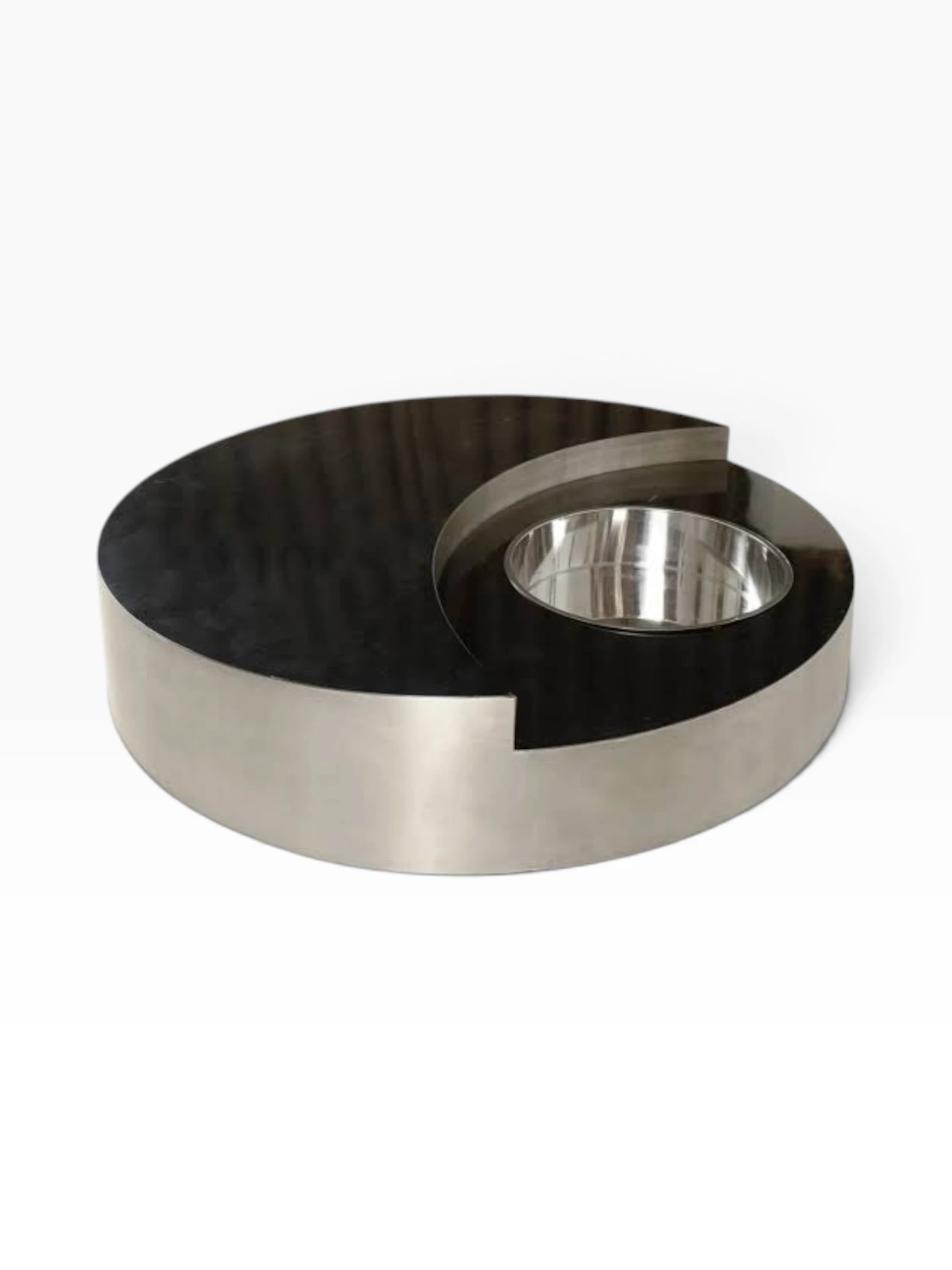 Willy Rizzo Coffee Tables GuideAuthenticate the Alveo, TRG, Yin Yang and sliding models.Read the guide
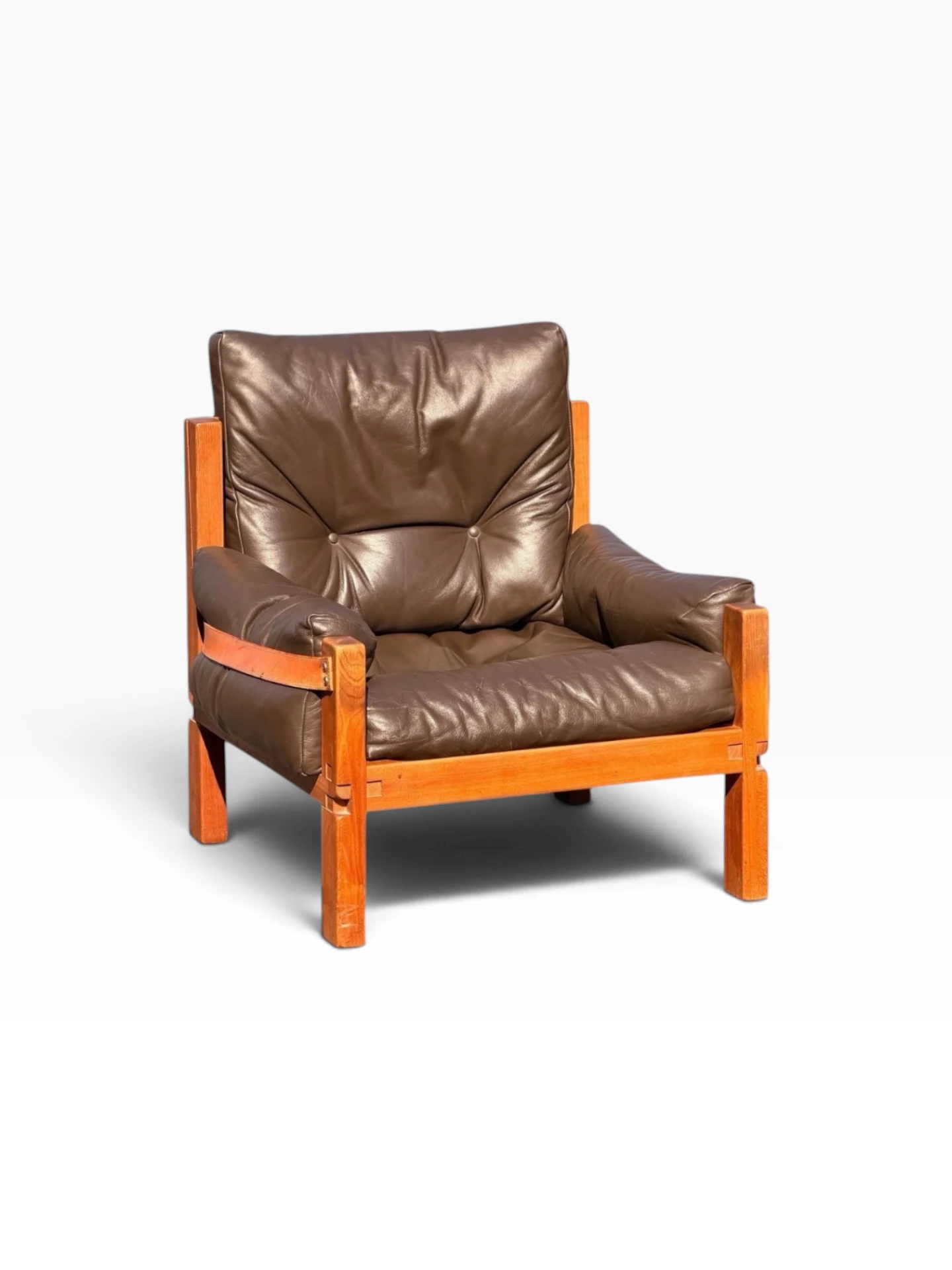 Pierre Chapo Furniture GuideRead the solid elm, the 48x72 joinery and the S15, S22 and S31 models.Read the guide
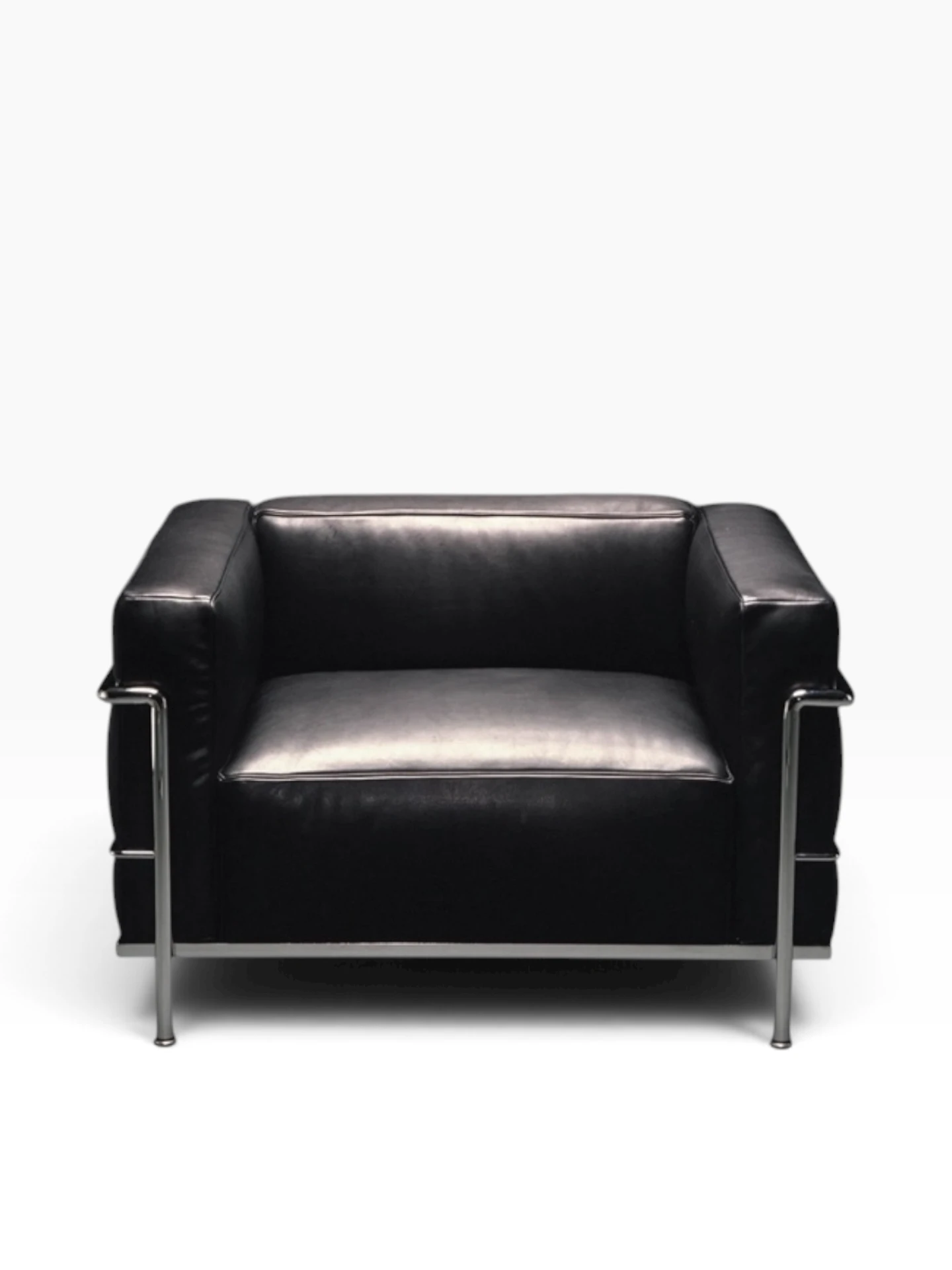 LC Collection Guide · CassinaRecognise authentic LC1, LC2, LC3 and LC4 editions.Read the guide
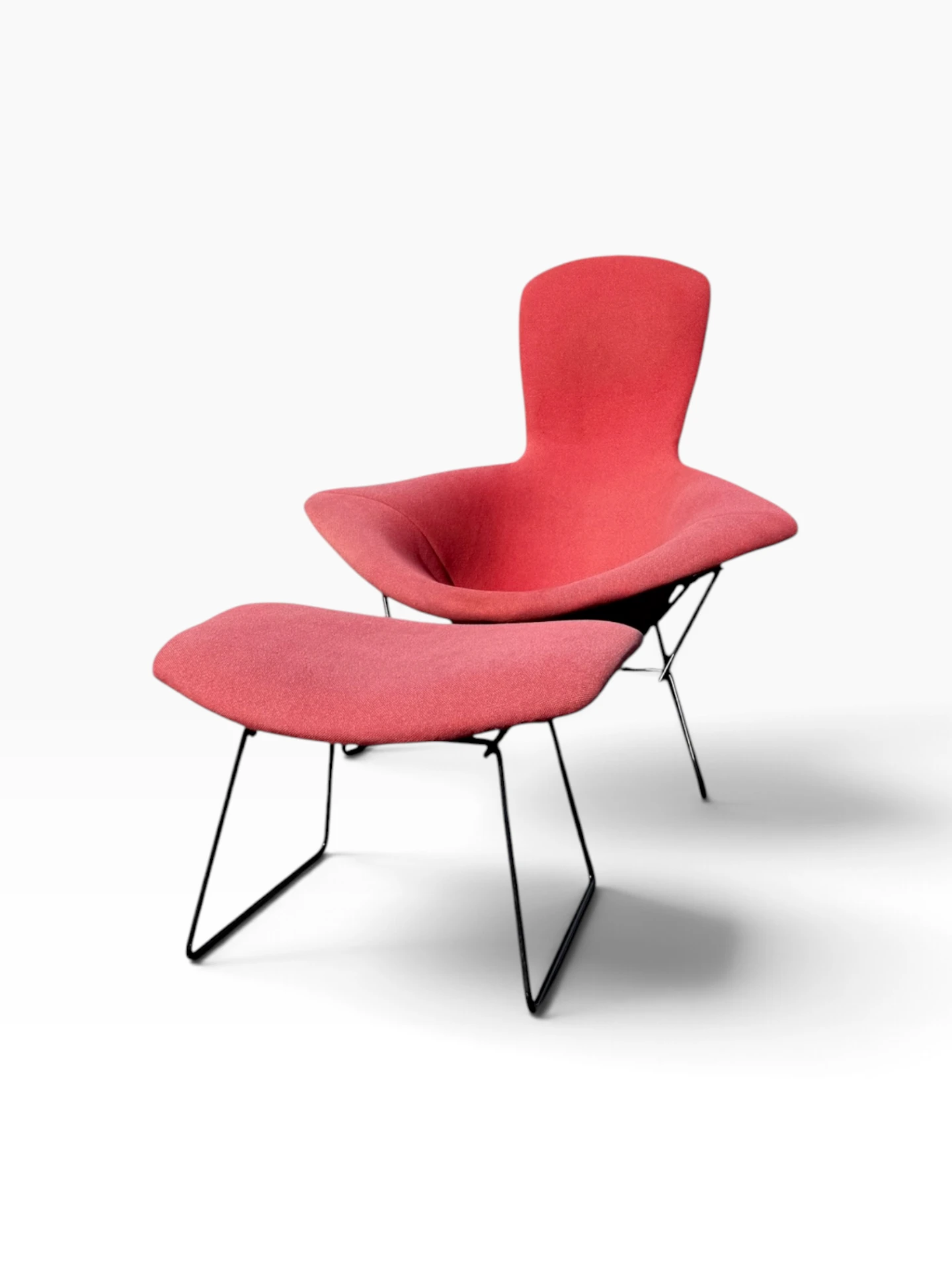 Harry Bertoia Seating GuideExamine the wires, welds and markings of the Diamond, Bird and Side Chair.Read the guide
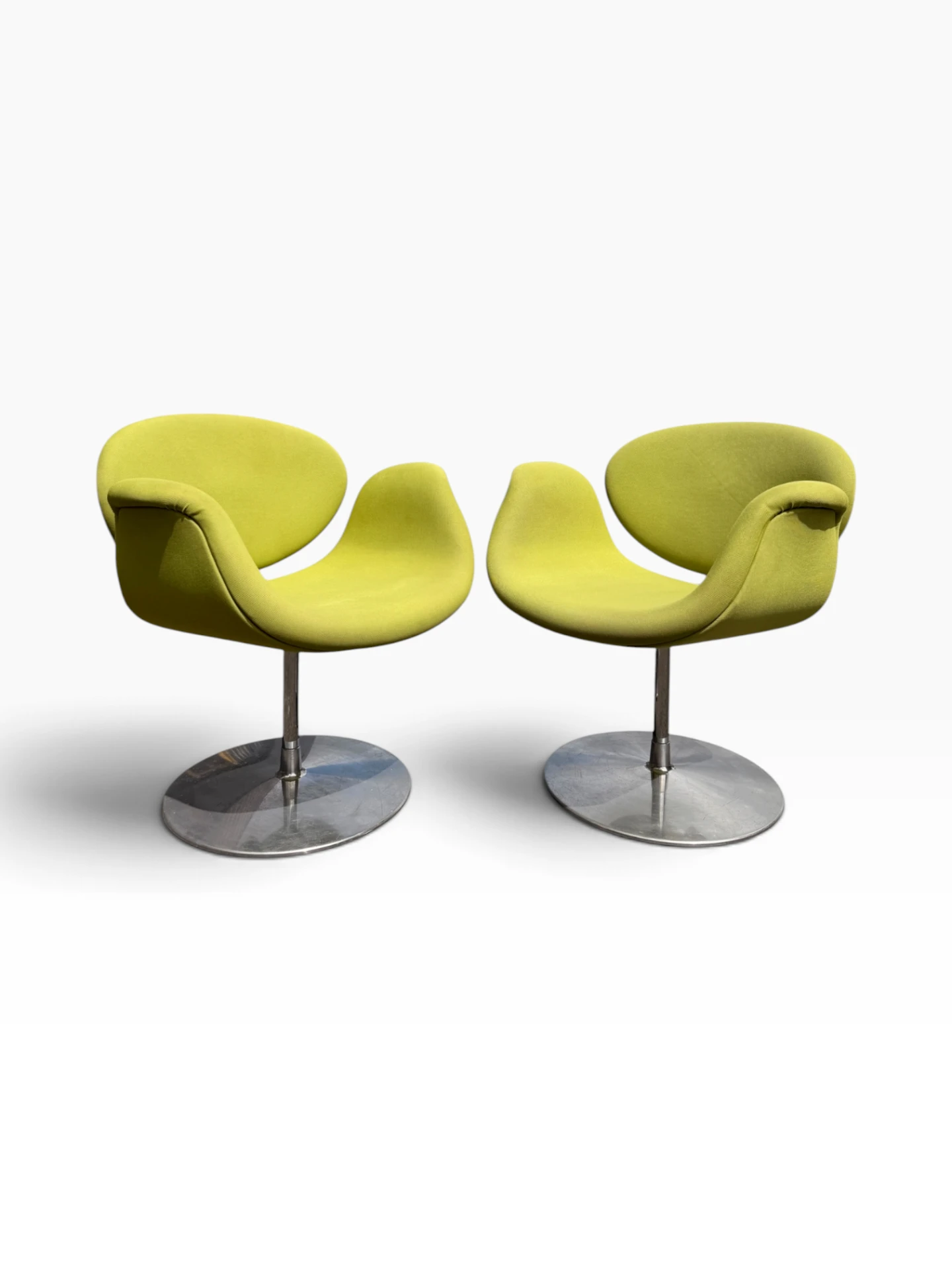 Pierre Paulin Furniture GuideRecognise authentic Pumpkin, Ribbon, Mushroom and Groovy pieces.Read the guide
 Tulip Collection Guide · Eero SaarinenIdentify the Pedestal chairs and tables made by Knoll.Read the guide
 EA Collection Guide · VitraAssess Vitra's Aluminium Group and Soft Pad chairs.Read the guide