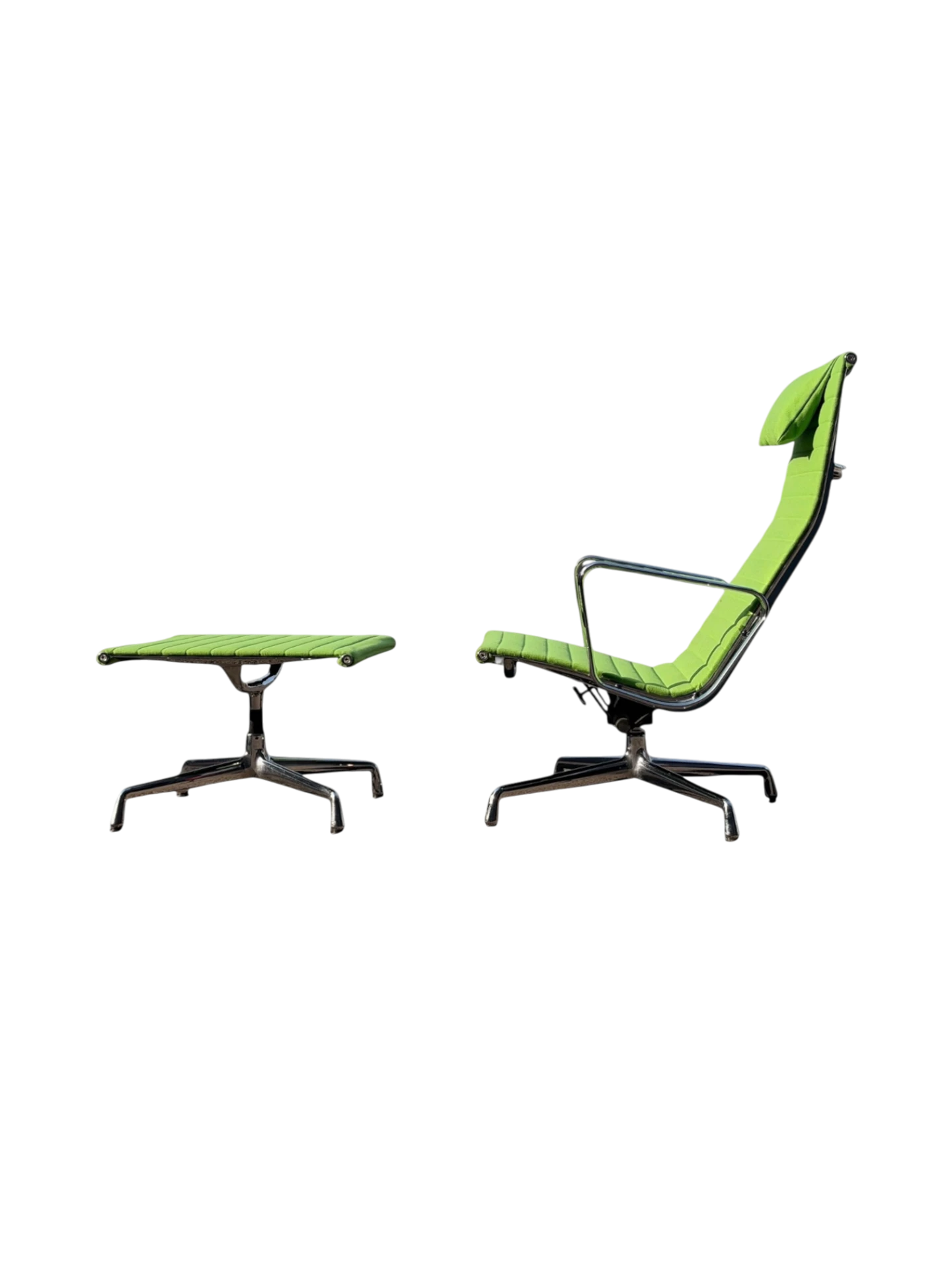
Tension and Aluminium
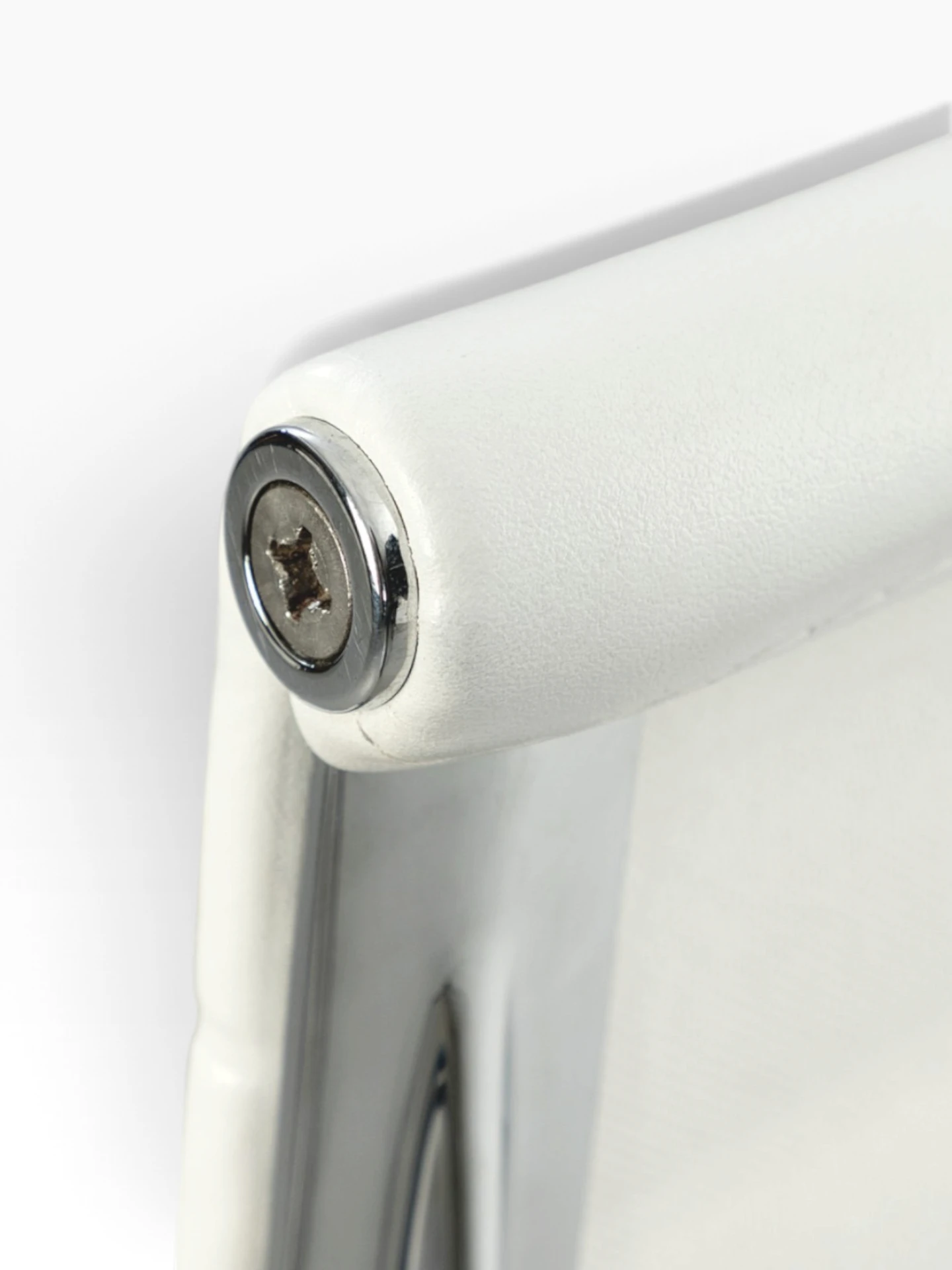
An EA chair is judged first by its construction. The leather or fabric, such as Hopsak, is stretched between the two side profiles: the surface is firm yet keeps some elasticity. No rigid shell does not mean no thickness: the original panel is multi-layered, with foam, Fiberthin and heat-sealed joins. The profiles are now die-cast aluminium; the collection's first pieces were also sand-cast, so no single process holds for every period. The finish is not always shiny: alongside polished aluminium, Vitra offers epoxy finishes in black or colours. A construction inconsistent with the model, such as upholstery glued onto a rigid shell, is an anomaly worth examining; crisp edges and clean casting remain a sign of quality, not proof.
Markings and Labels
Record every marking and every label, then check that they are consistent with the presumed manufacturer and period. No combination is a universal rule:
- The labels
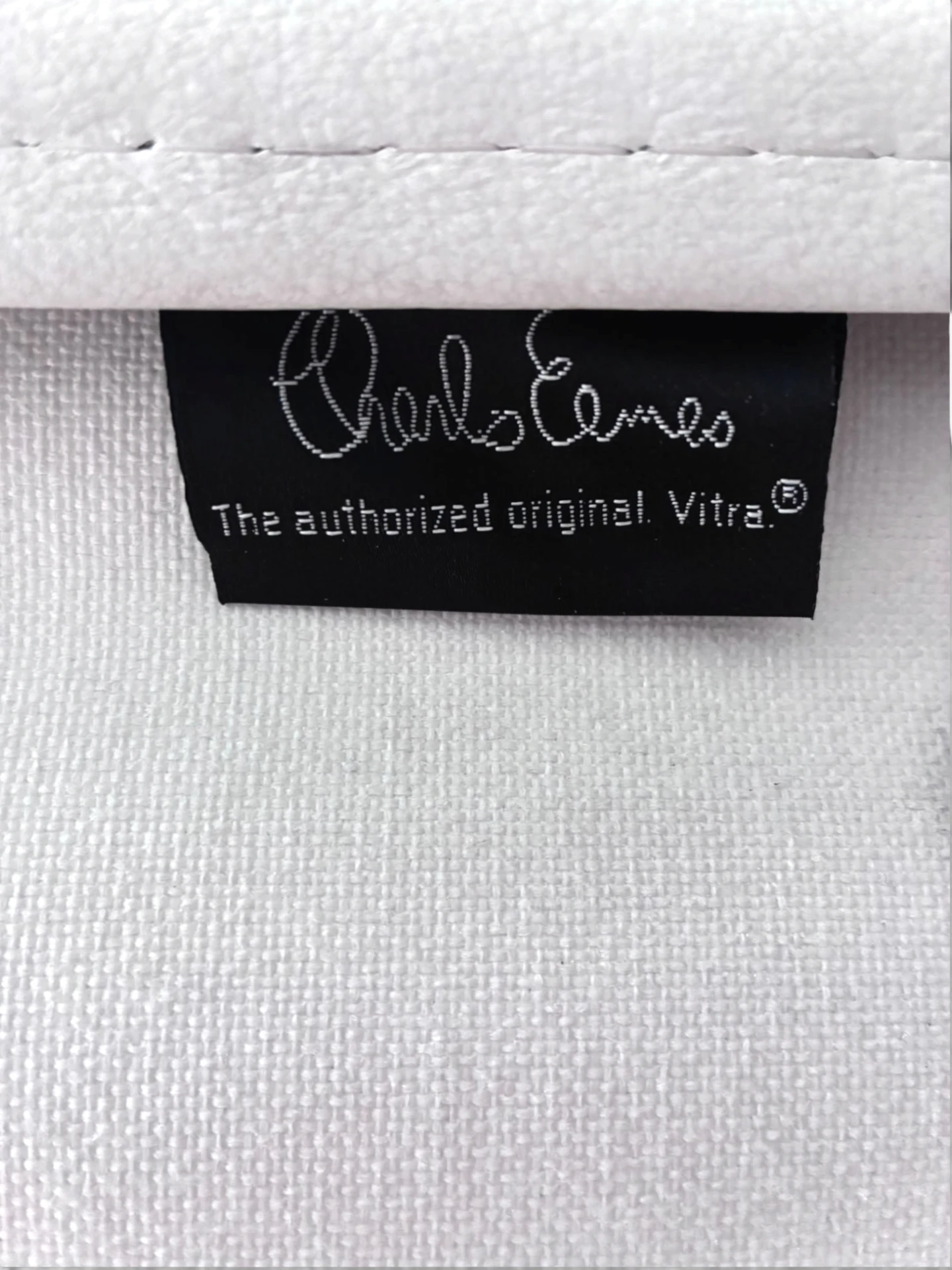
- Distinguish the brand label from the production label. Vitra describes white, roughly rectangular production labels whose design has changed over the years, and which allow the product's details to be traced. A label bearing Charles Eames's signature belongs to a manufacturer and a period, not to the whole series.
- The mechanism
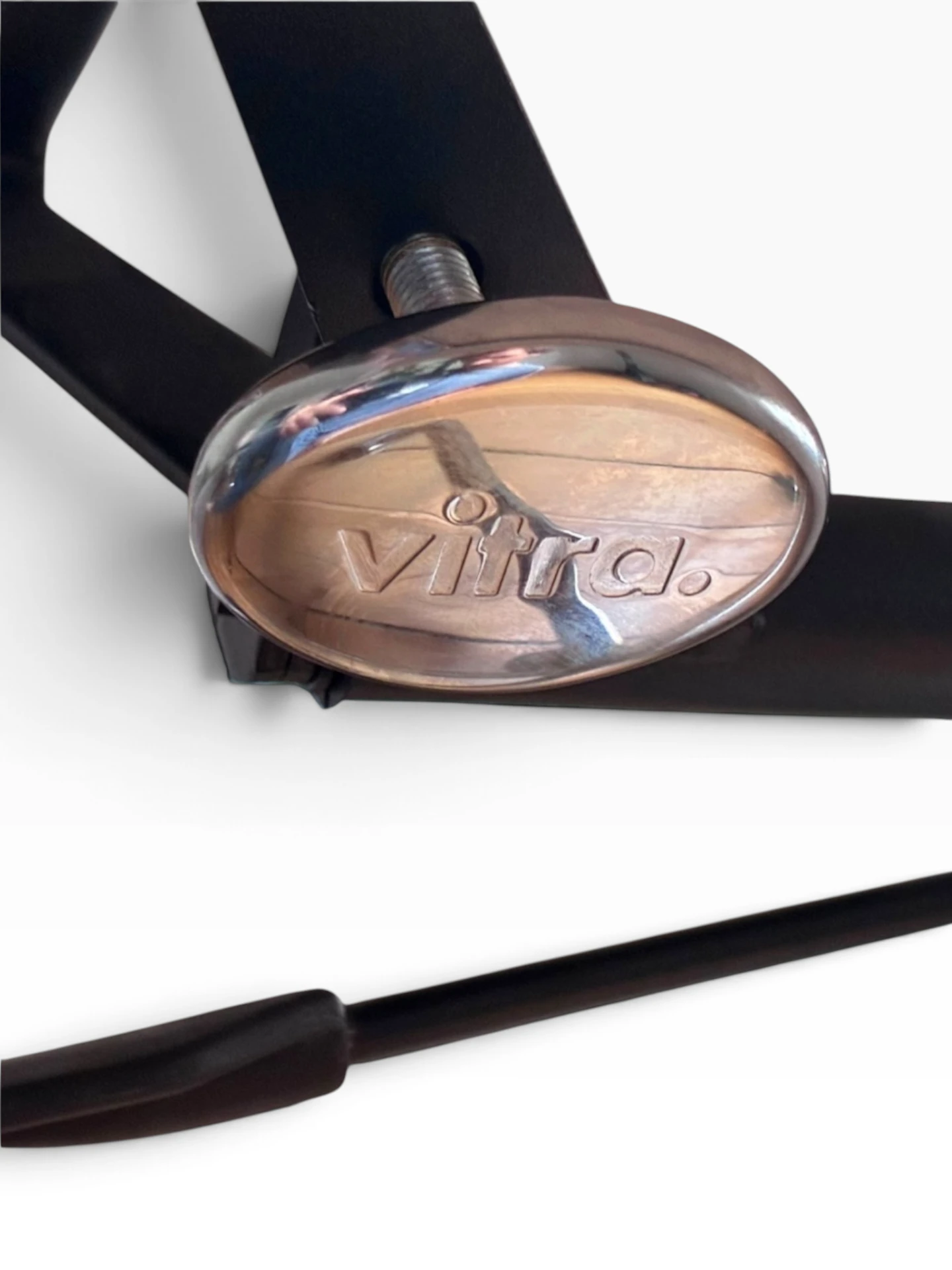
- On reclining models such as the EA 119 or EA 124, record the logos and numbers moulded on the mechanism or knob. A moulded number is not a serial number until its function has been identified.
- Glides and castors
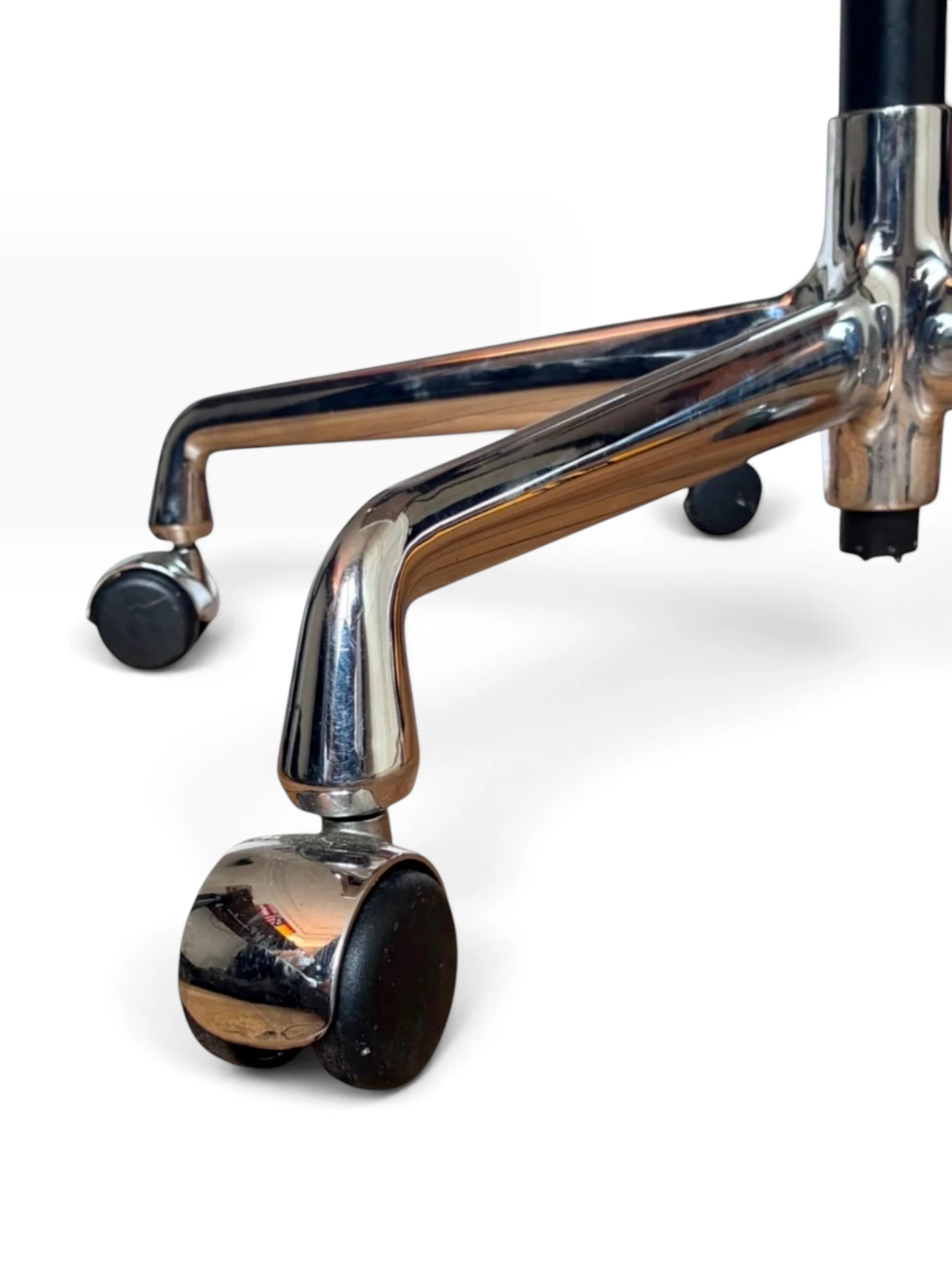
- Vitra sells replacement glides and castors: a marking on a removable part tells you about that part, not about the whole chair.
The Key Variants
These descriptions follow the editions documented by Vitra. The range has evolved, notably its bases and upholstery: a current product sheet is not enough to rule out an older configuration.
- EA 105, 107, 108
- Chairs intended primarily for conference use, on a four-star base, with no castors or height adjustment. The EA 105 is fixed without armrests, the EA 107 fixed with armrests, the EA 108 swivelling with armrests.
- EA 117, 118, 119
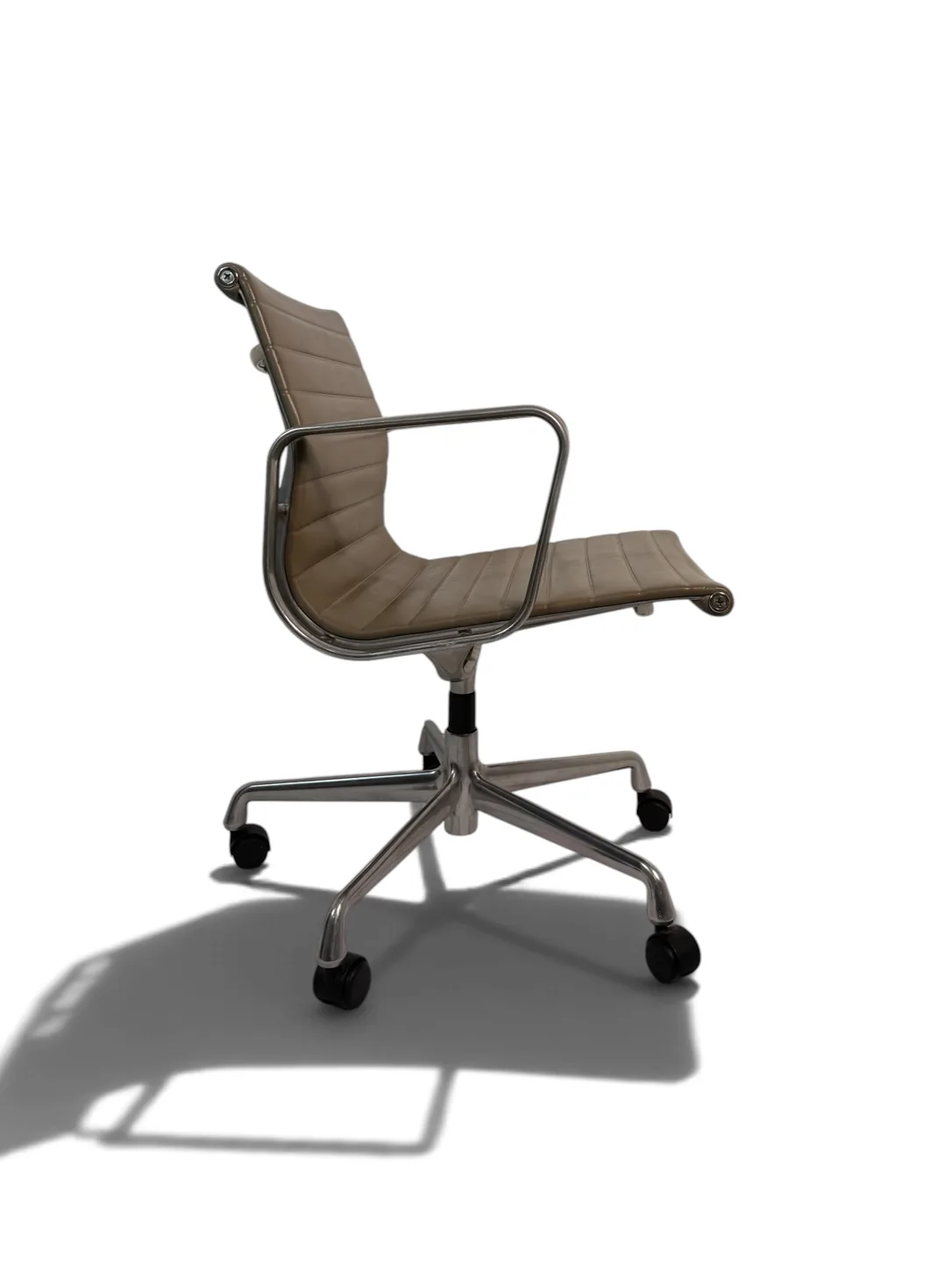
- On a five-star base with castors, with gas-spring height adjustment and an adjustable tilt that locks in the upright position. The EA 117 has a medium-height back; so does the EA 118, with a narrower seat suited to working at a table; the EA 119 has a high back.
- EA 124 and EA 125
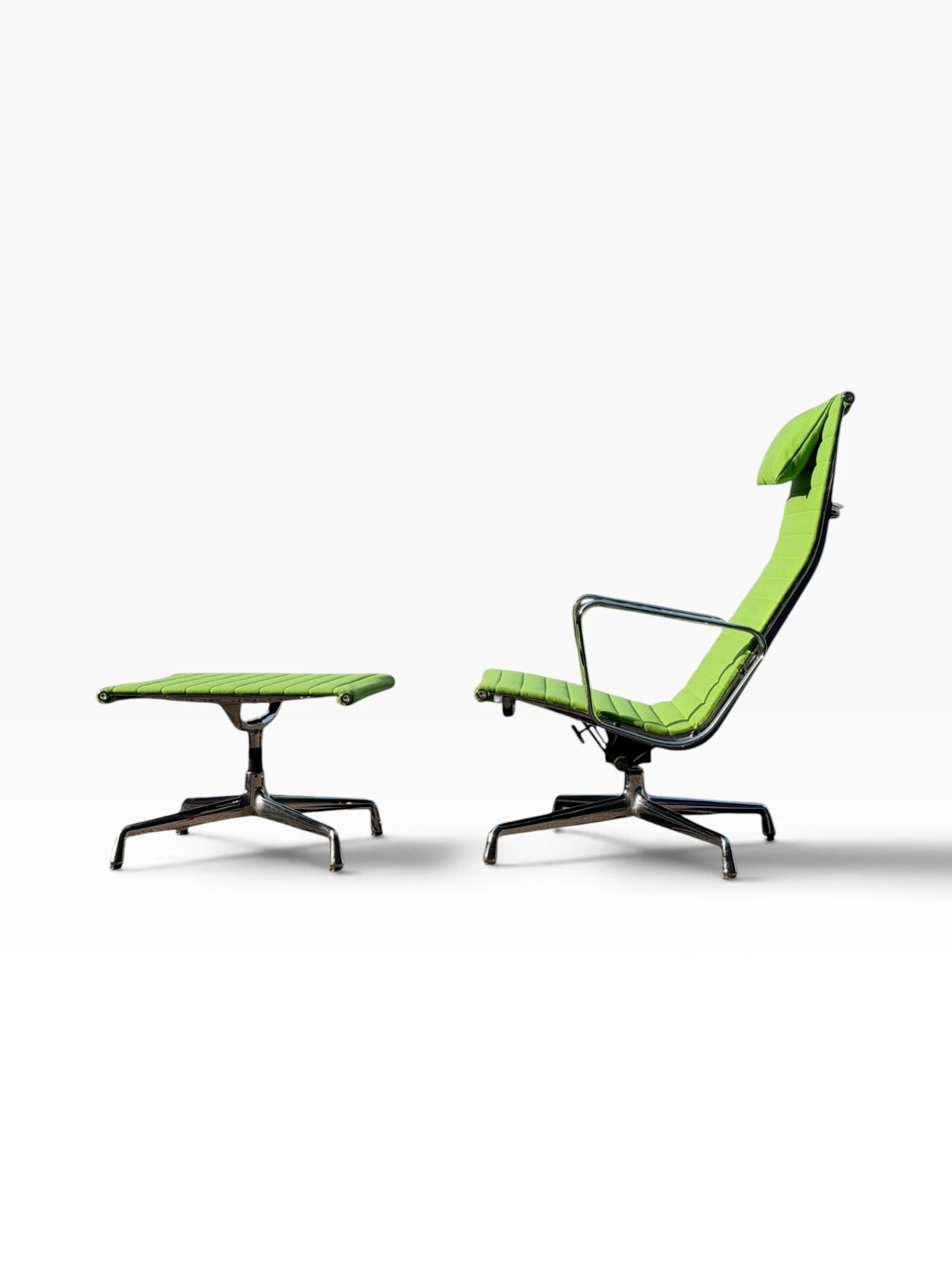
- A swivelling lounge chair, the EA 124 has a high back, a headrest and a tilt adjustable to the user's weight. It pairs with the EA 125 footstool, on a fixed four-star base with no mechanism.
Soft Pad Group (EA 200 Series)
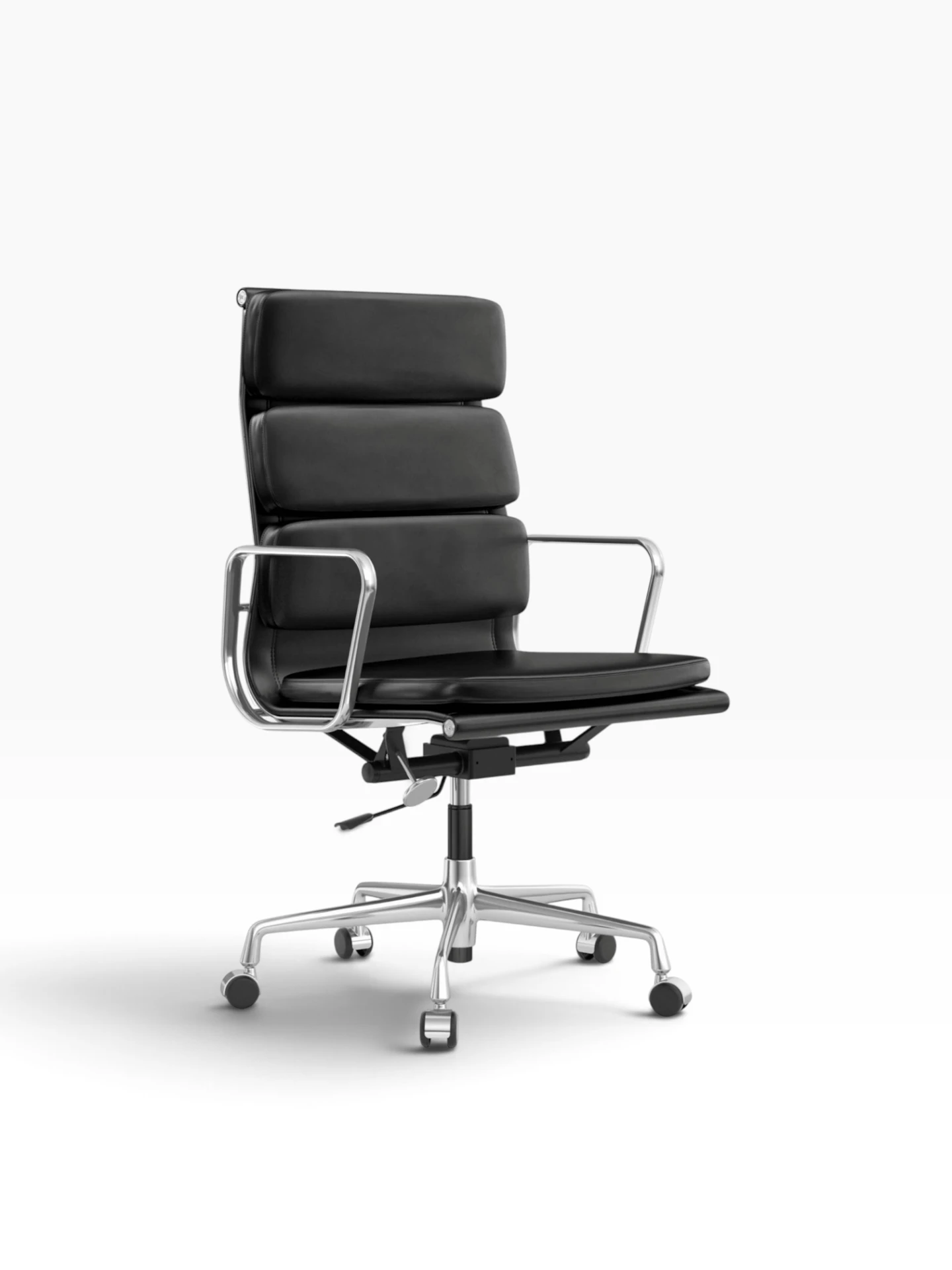
Designed in 1969, this variant, which includes the EA 217, EA 219 and EA 222 among others, follows the construction principle of the Aluminium Group and adds stitched cushions filled with polyurethane foam. Topstitching depends on the version: Vitra describes it on its Premium leather, not on all of them. Sagging padding does not signal a copy, since Vitra's warranty excludes the normal loss of volume of upholstered products: the state of the foam first tells you how well the chair has been kept.
Frequently asked questions
How can I recognise a genuine Eames EA 117 or EA 119 chair made by Vitra?
By cross-checking the construction, the model's features, the markings, the production labels and the provenance. These must match the presumed manufacturer and period of production. None of these clues is enough on its own to establish authenticity.
What is the difference between Vitra and Herman Miller for Eames chairs?
Both are authorised manufacturers. Vitra holds the rights for Europe and the Middle East, Herman Miller, which has produced the collection since 1958, for the rest of the world. Their pieces may differ by model, period and market: compare a piece with its manufacturer's documentation.
How does the EA 124 differ from the other chairs in the range?
The EA 124 is a swivelling lounge chair from the Aluminium Group, with a high back, a headrest and a tilt mechanism adjustable to the user's weight. It can be paired with the EA 125 footstool.
Looking for a specific piece from this signature?
L’Œil is our bespoke sourcing service. Tell us which piece you are looking for, and we will help you find it.
Our other authentication guides
 Guide Charles PollockHow to authenticate and choose a vintage Knoll Executive Chair.Read the guide
 Willy Rizzo Coffee Tables GuideAuthenticate the Alveo, TRG, Yin Yang and sliding models.Read the guide
 Pierre Chapo Furniture GuideRead the solid elm, the 48x72 joinery and the S15, S22 and S31 models.Read the guide
 LC Collection Guide · CassinaRecognise authentic LC1, LC2, LC3 and LC4 editions.Read the guide
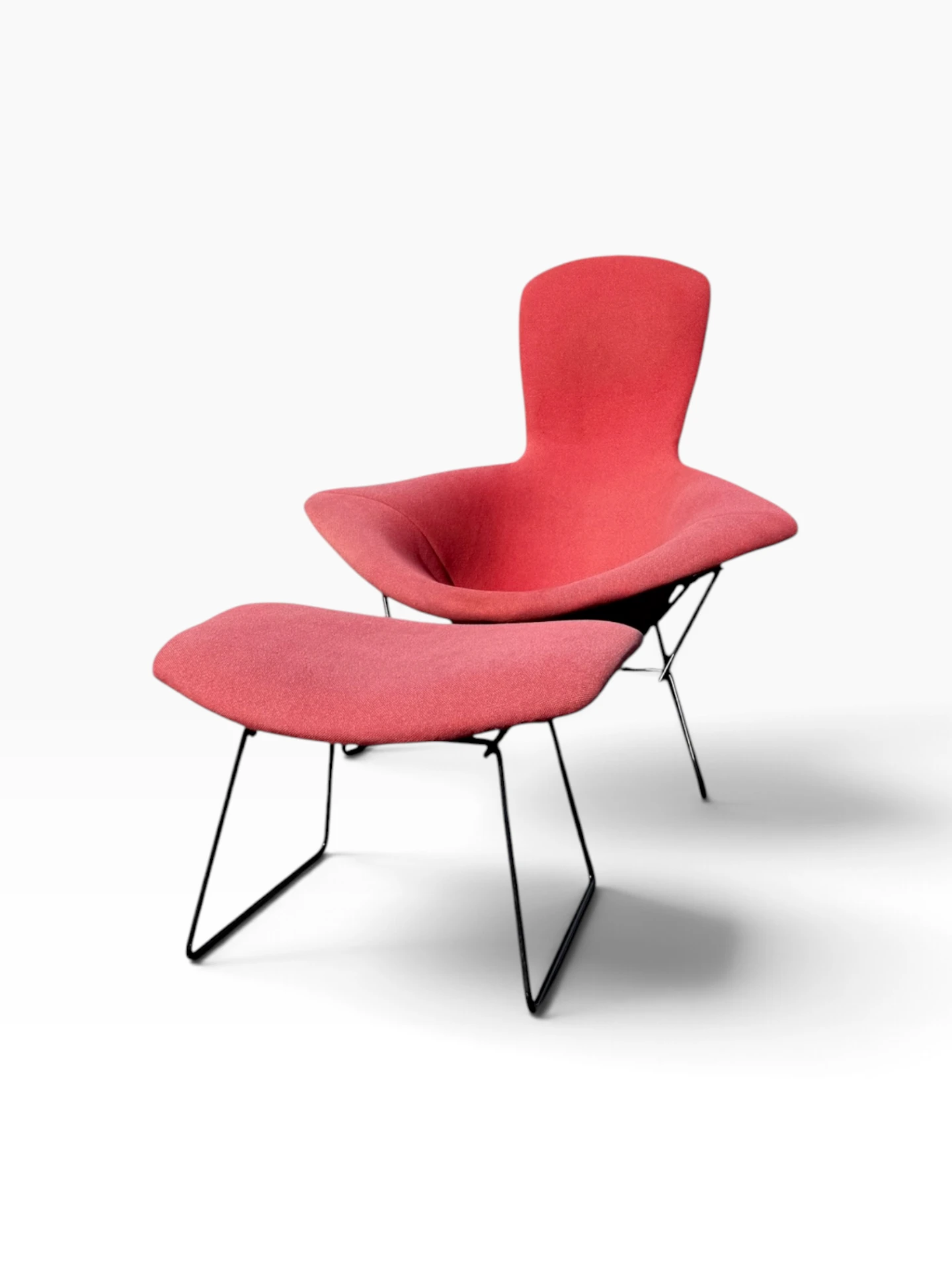 Harry Bertoia Seating GuideExamine the wires, welds and markings of the Diamond, Bird and Side Chair.Read the guide
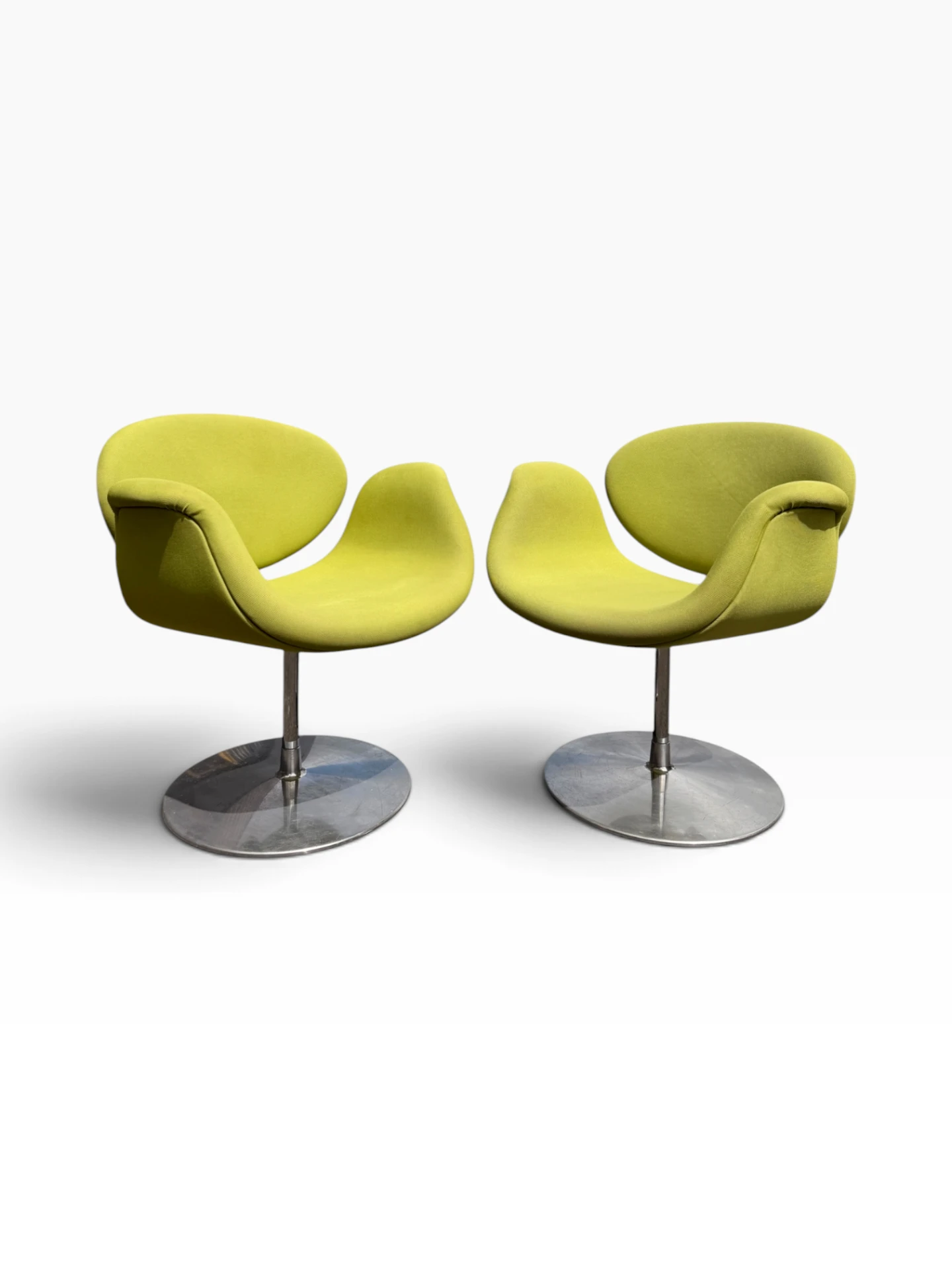 Pierre Paulin Furniture GuideRecognise authentic Pumpkin, Ribbon, Mushroom and Groovy pieces.Read the guide
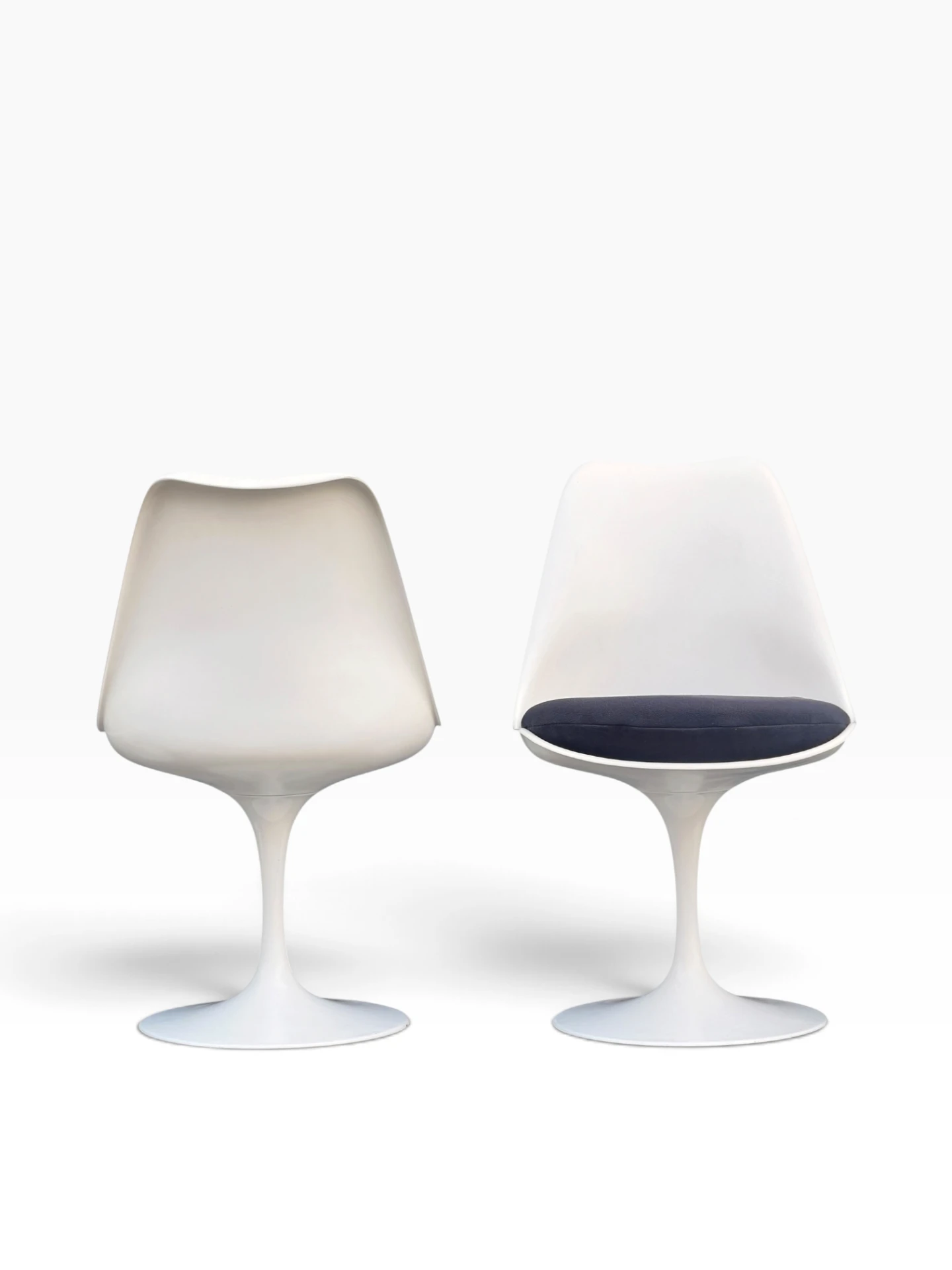 Tulip Collection Guide · Eero SaarinenIdentify the Pedestal chairs and tables made by Knoll.Read the guide