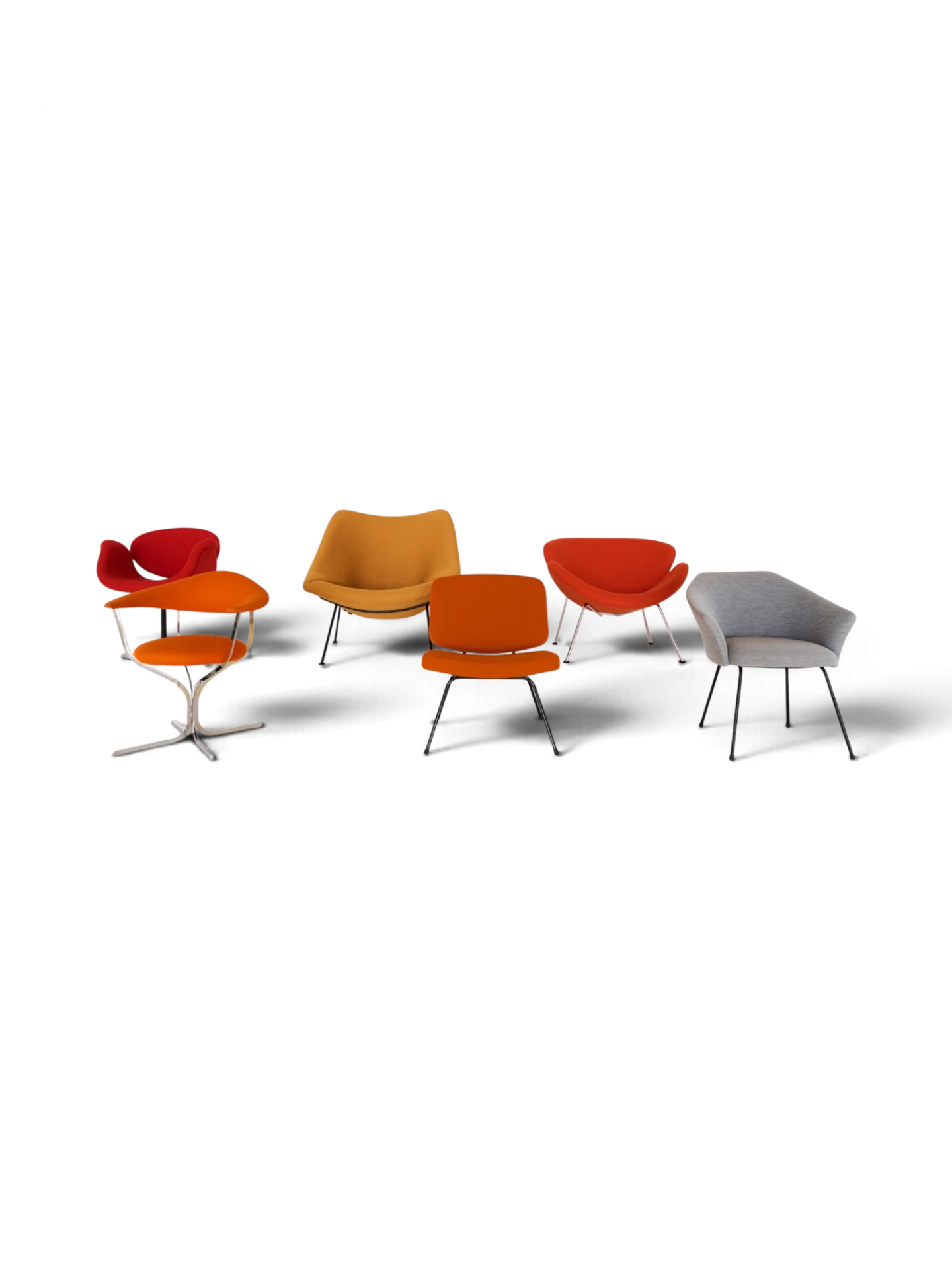
Construction, foam and upholstery
Several emblematic Paulin chairs combine a metal frame, foam padding and stretch upholstery. This construction does not apply to his entire output: Orange Slice has pressed-beech shells, while Ribbon has a tubular frame with horizontal springs and a lacquered wooden base. Wood or springs therefore do not rule out a Paulin attribution.
Materials vary with the model and edition. Historical Mushroom and Ribbon examples are documented with latex foam; the Pirelli foam used in Paulin’s research should not be confused with polyurethane. Stretch textiles were central to his experiments in enveloping seating, but some models also come in leather. Jersey is not necessarily wool, and a supplier’s name such as Kvadrat does not identify a specific fabric.
Compare dimensions, structure, base and upholstery with documentation for the model and production period. Weight, comfort or a neatly fitted cover cannot establish origin on their own. Restoration may have replaced foam and upholstery: distinguish an authentic piece, a vintage edition, an authorised reissue and original upholstery.
Four models, four constructions
- Pumpkin
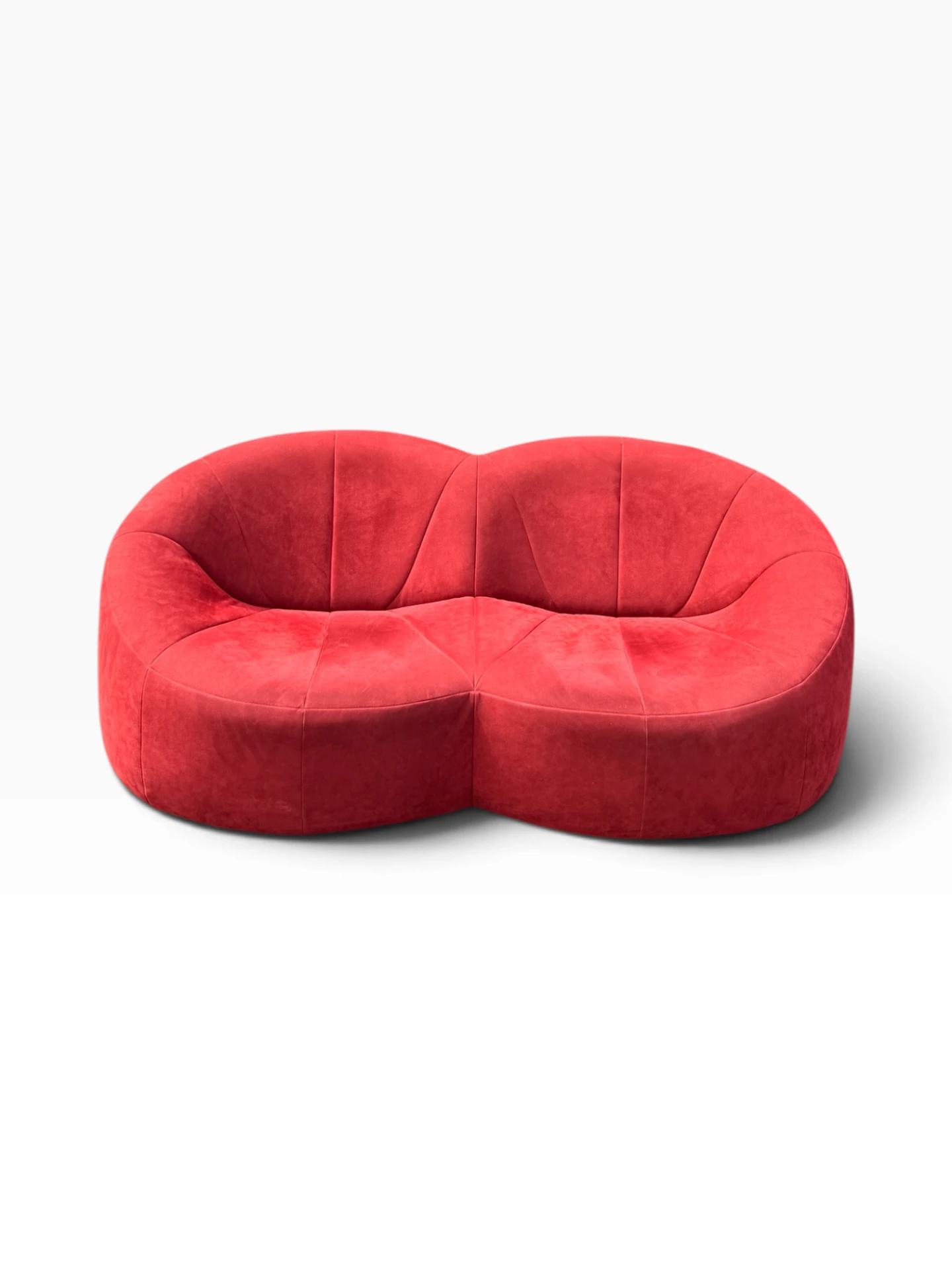
- Launched by Ligne Roset in January 2008, Pumpkin reinterprets seating designed in 1971 for the Pompidous’ private apartments at the Élysée Palace. Its enveloping forms combine foams of different densities and a thermoformed ABS base. Fabric and leather versions exist. Compare dimensions, seams and base with the documented version; the silhouette alone cannot establish origin.
- Ribbon F582
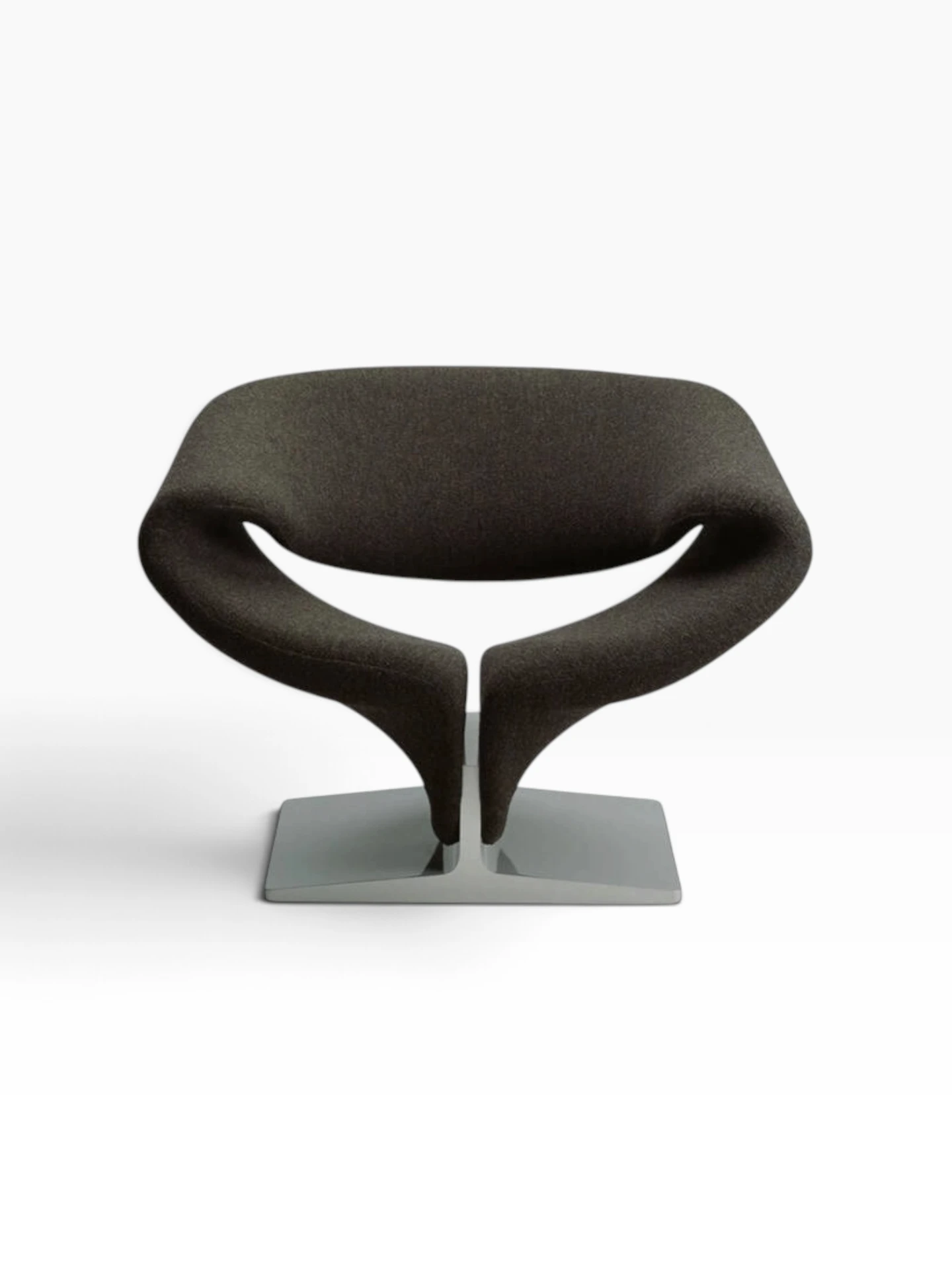
- Produced by Artifort in 1966, Ribbon resembles a folded ribbon. Its construction combines a tubular metal frame, horizontal springs and foam padding on a lacquered plywood base. Base colours are not limited to black and white. Check proportions, base and materials against the example’s production period, allowing for restoration.
- Mushroom F560
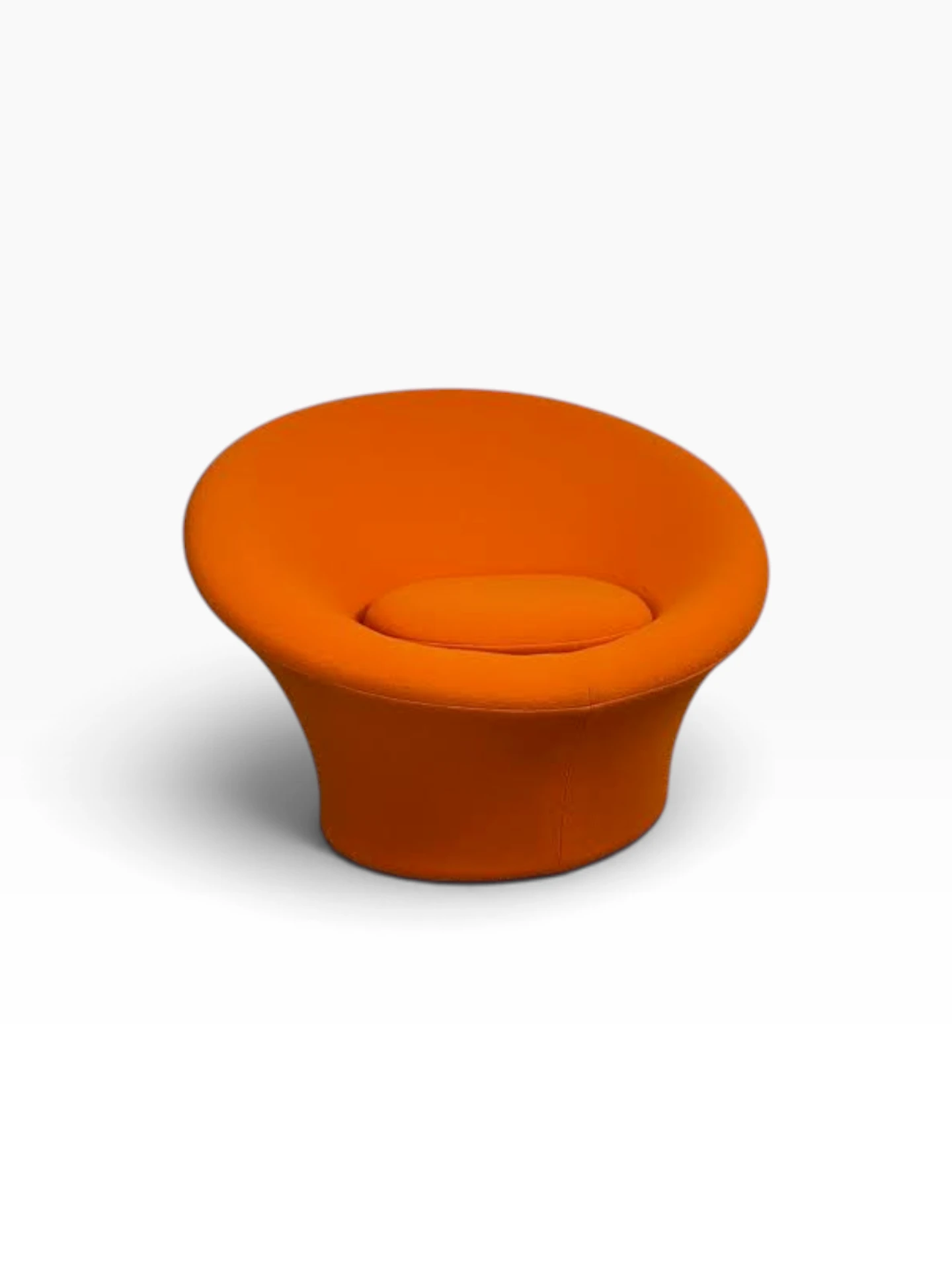
- Artifort dates the Mushroom design to 1960 and documents a seamless, one-piece stretch cover. Historical examples combine a tubular frame with latex foam. This pioneering method is not a rule for all Paulin seating. Distinguish the model’s design date from the individual piece’s production date, and check whether its upholstery has been replaced.
- Little Tulip
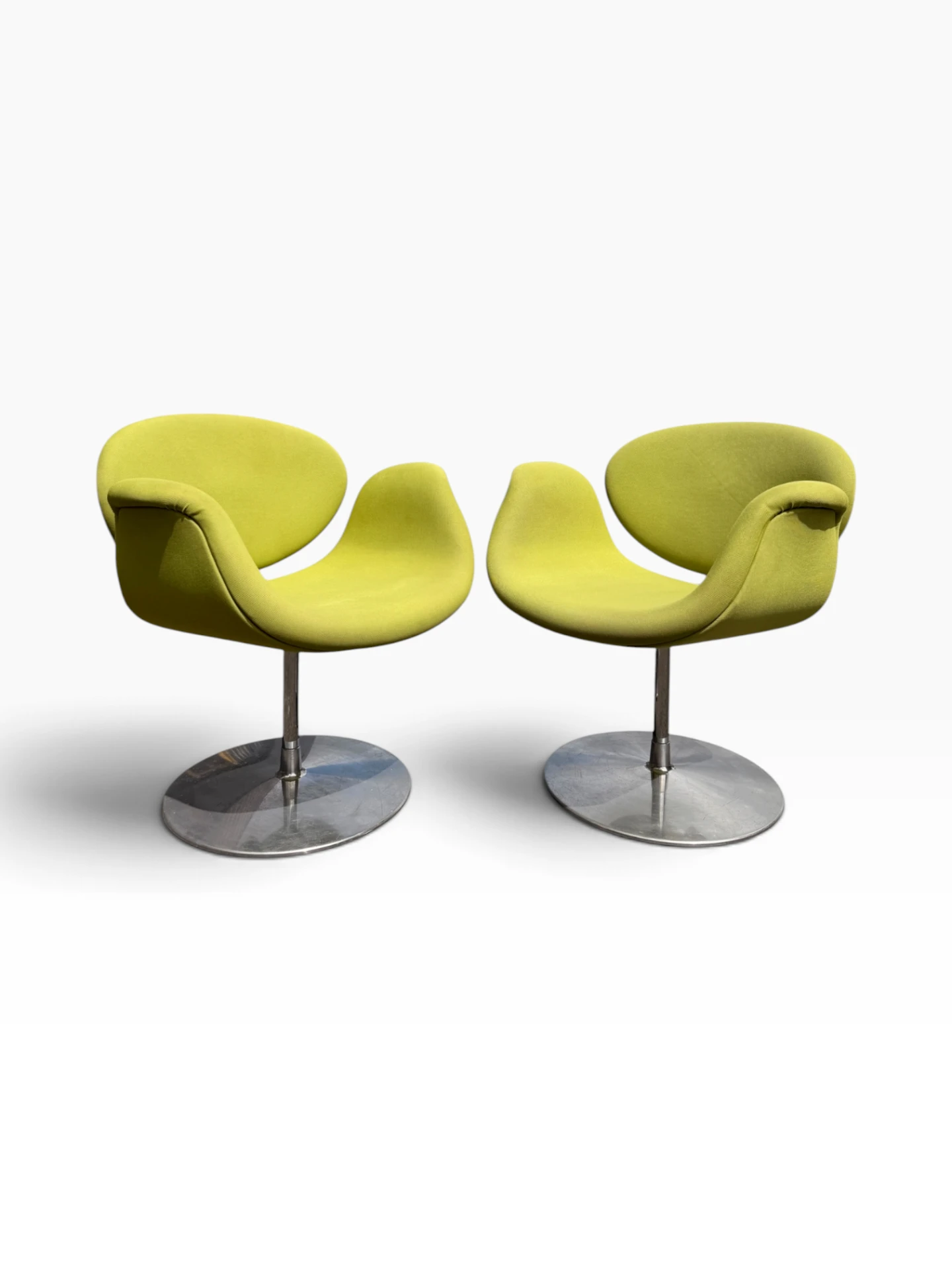
- Designed in 1965 for Artifort and historically referenced F163, Little Tulip is the model pictured here. Its flared armrests evoke tulip petals. Artifort offers fabric and leather upholstery, so a non-stretch covering is not inherently suspect. Compare the version, dimensions and base with the manufacturer’s documentation. This is a different model from Groovy F598.
Plaques, labels and provenance
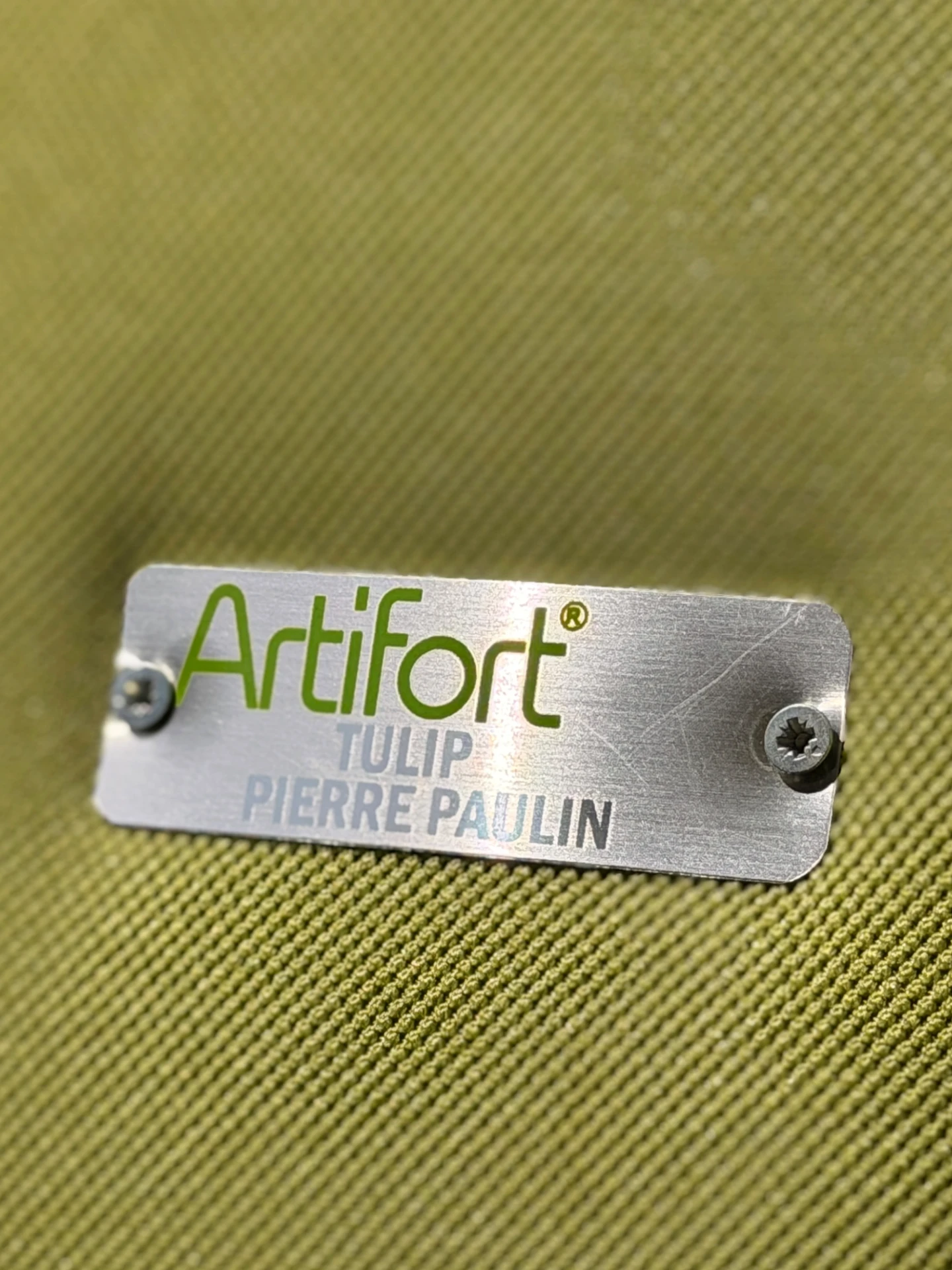
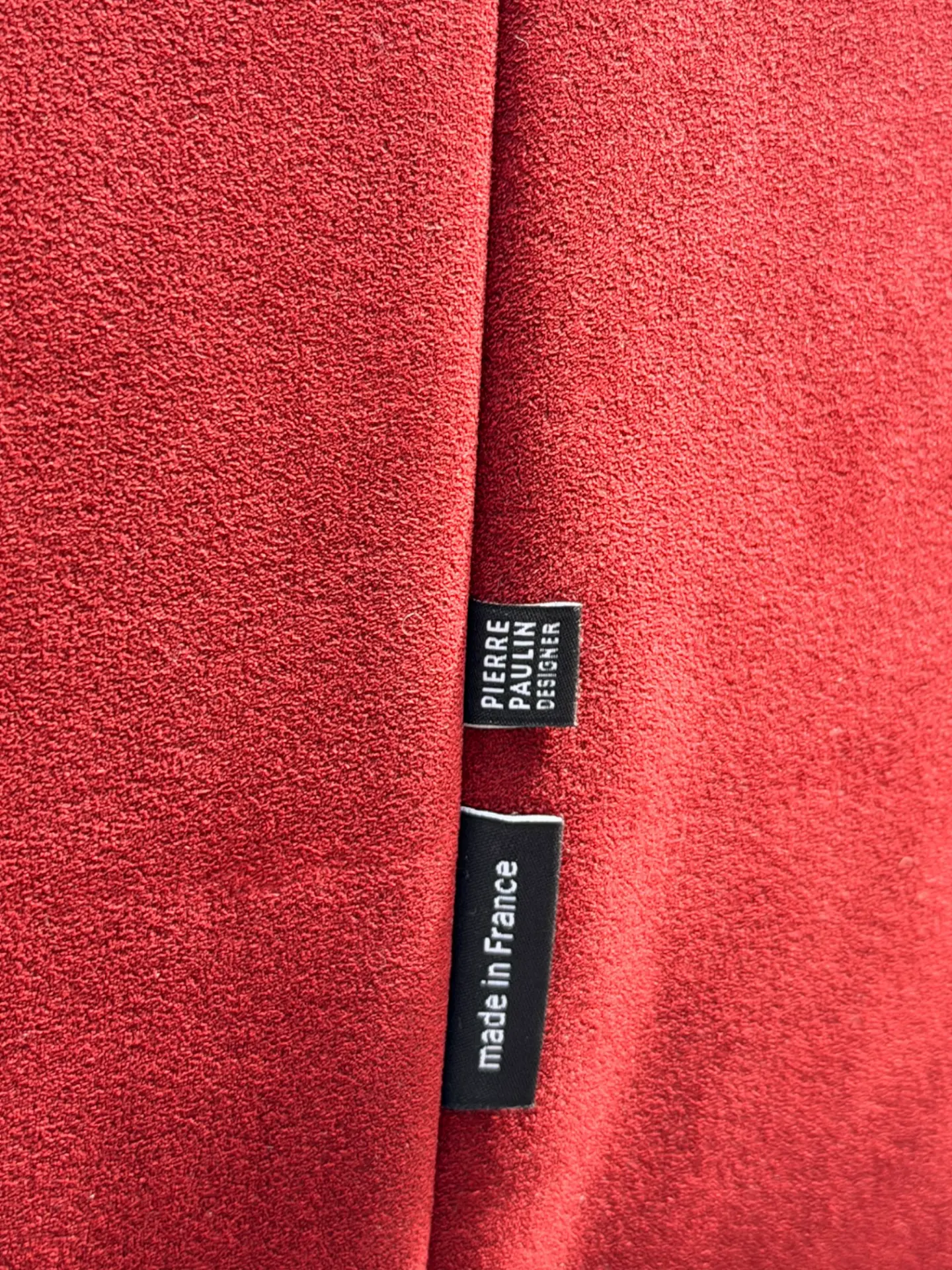
A maker’s mark is a clue, not Pierre Paulin’s personal signature or sufficient proof of authenticity. Its presence or absence must be considered alongside construction, dimensions, provenance and restoration history. The photographs illustrate these points; they do not authenticate the objects pictured.
- Artifort editions
- Documented markings include metal plaques, printed fabric labels and paper labels, notably beneath the seat or base. There is no universal black-and-silver plaque for every model and period. A missing label neither rules out nor confirms an attribution. If in doubt, Artifort’s official FAQ invites owners to submit a photograph for examination.
- Ligne Roset editions
- For Pumpkin, compare markings with the furniture version and available invoices, provenance and restoration records. Label placement should not be treated as an invariable rule. Prepare overall and underside views, dimensions and clear photographs of markings before contacting the manufacturer.
Frequently asked questions
How can I recognise an authentic Pierre Paulin Pumpkin sofa or armchair?
First identify the version of the Ligne Roset collection launched in 2008, reinterpreting the presidential seating of 1971. Compare dimensions, base, seams and upholstery with the relevant documentation, then examine markings and provenance. Shape, comfort or a label cannot establish authenticity in isolation. The manufacturer specifies an ABS base, so plastic is not inherently suspect.
Where should I look for markings on vintage Pierre Paulin seating?
Check beneath the seat and base, taking the model and production period into account. Metal plaques, printed fabric labels and paper labels are documented on Artifort pieces. A maker’s mark is not the designer’s personal signature. Its absence, weight or upholstery quality cannot settle attribution alone; compare dimensions, construction and provenance records.
Is Pierre Paulin seating always upholstered in stretch fabric?
No. Stretch textiles are essential to several models, including Mushroom, but leather versions also exist, notably Pumpkin and Little Tulip. Jersey can use different fibres, and the Kvadrat name alone does not identify a stretch fabric. Check the textile reference and suitability for the model. Replacement upholstery during restoration does not by itself turn an authentic piece into a counterfeit.
Looking for a specific piece from this signature?
L’Œil is our bespoke sourcing service. Tell us which piece you are looking for, and we will help you find it.
Our other authentication guides
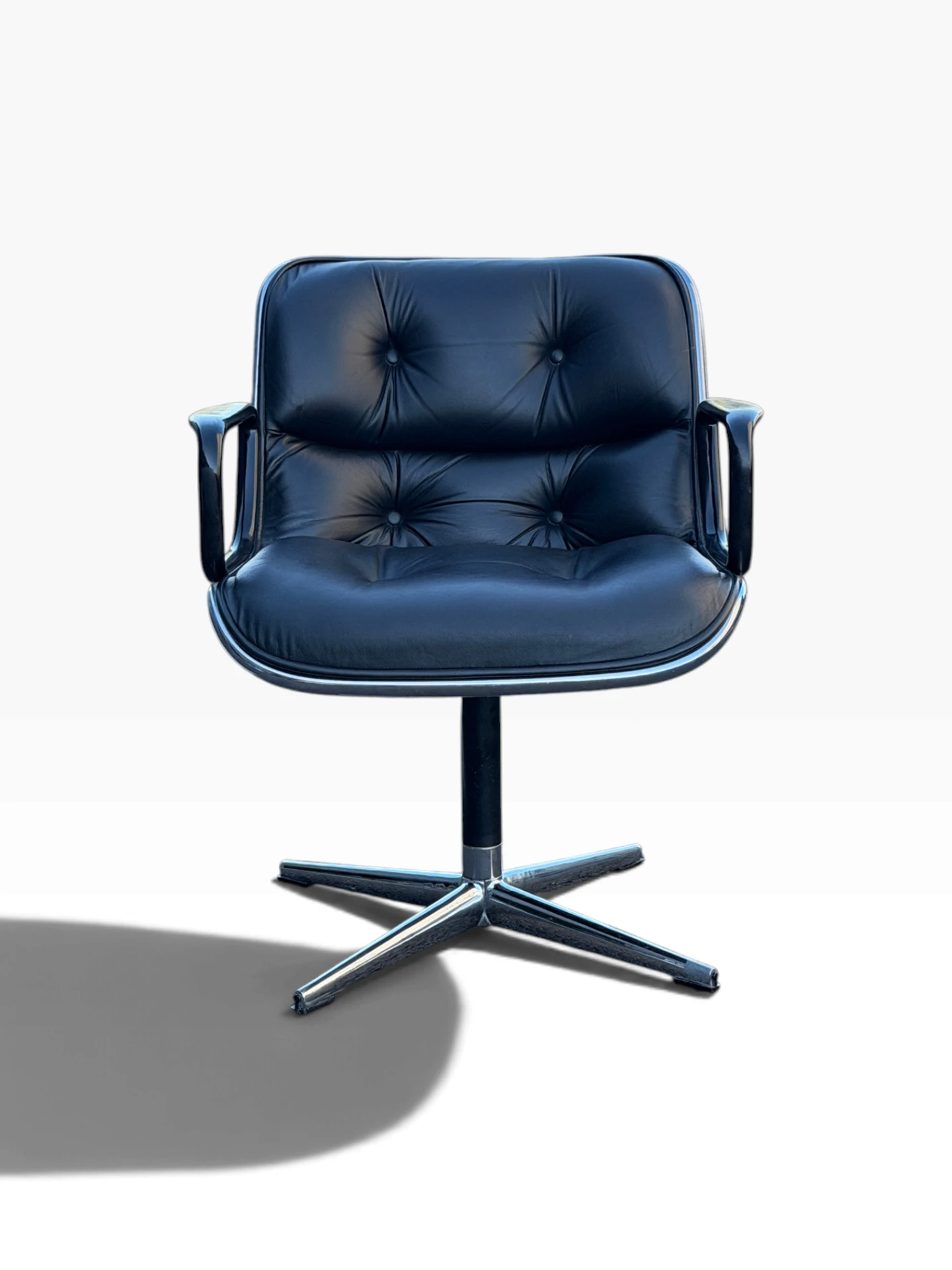 Guide Charles PollockHow to authenticate and choose a vintage Knoll Executive Chair.Read the guide
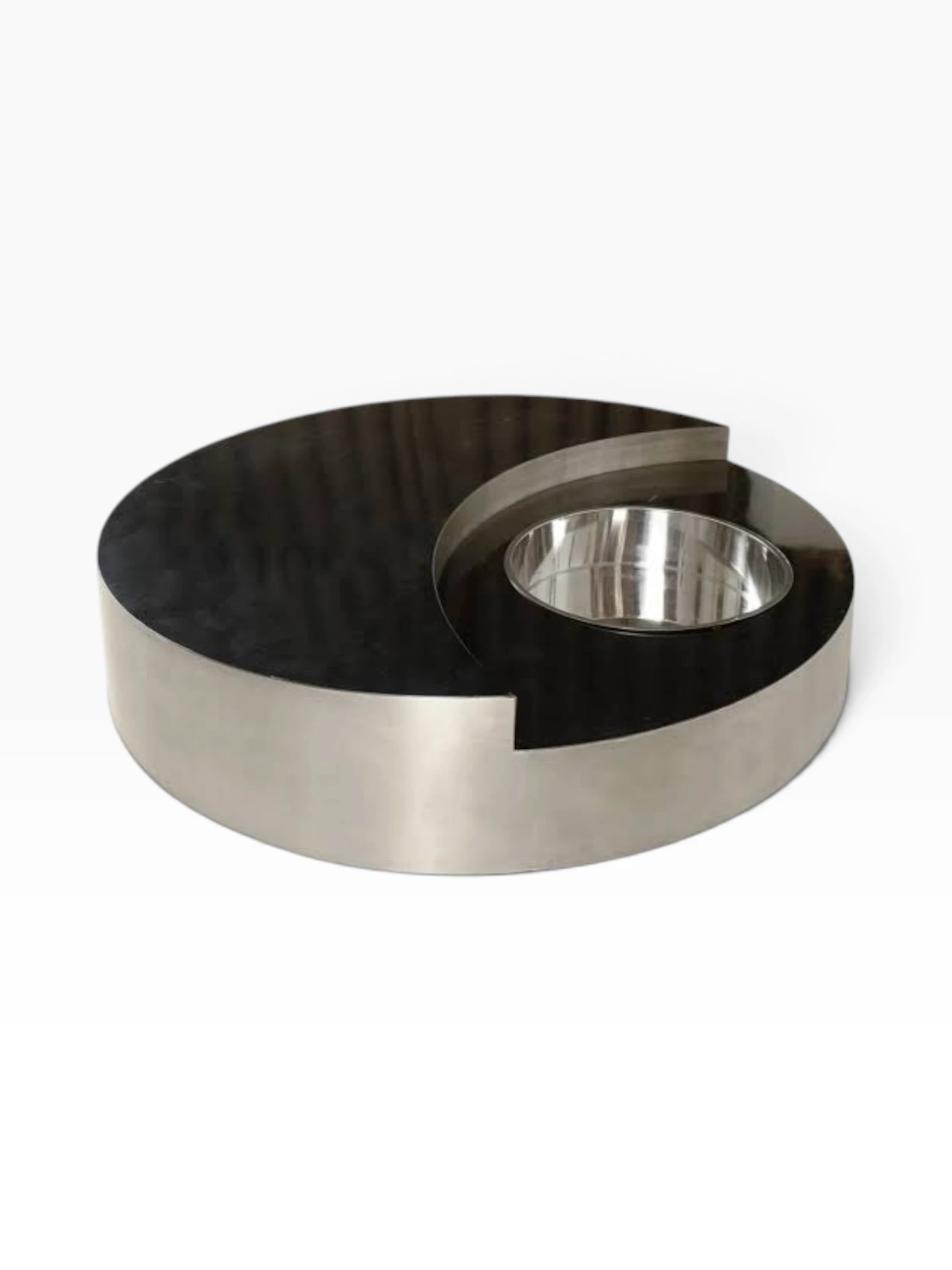 Willy Rizzo Coffee Tables GuideAuthenticate the Alveo, TRG, Yin Yang and sliding models.Read the guide
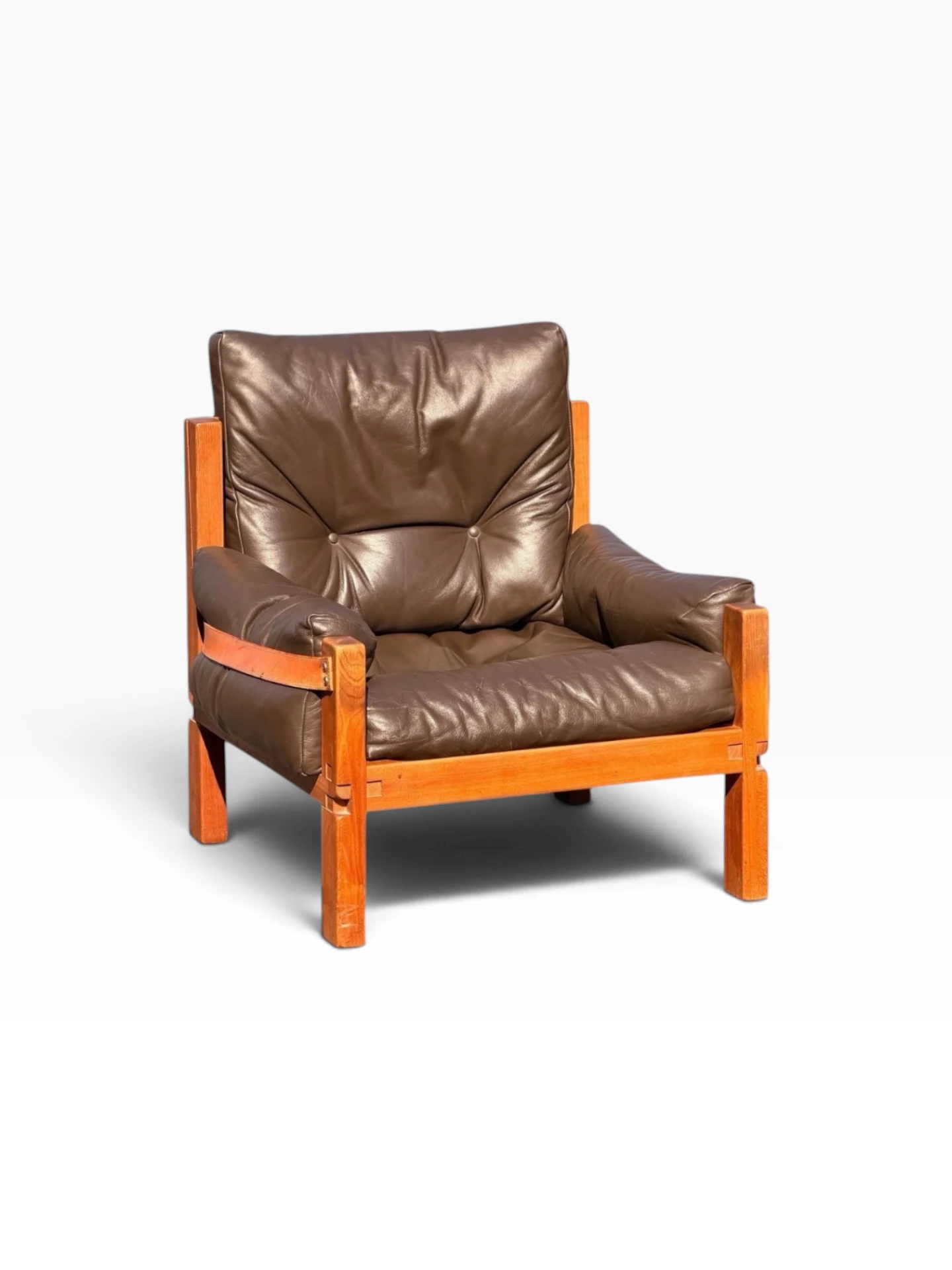 Pierre Chapo Furniture GuideRead the solid elm, the 48x72 joinery and the S15, S22 and S31 models.Read the guide
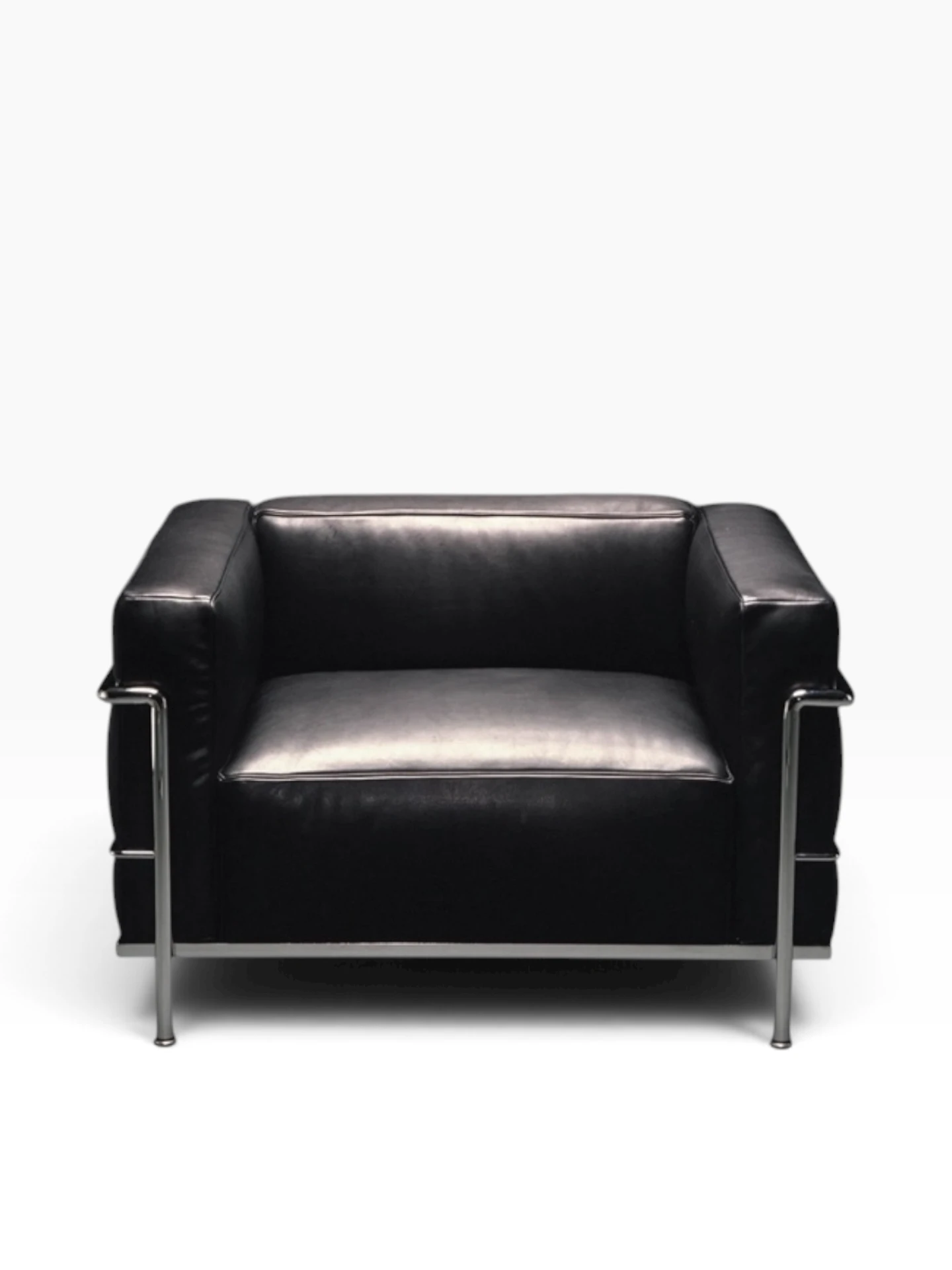 LC Collection Guide · CassinaRecognise authentic LC1, LC2, LC3 and LC4 editions.Read the guide
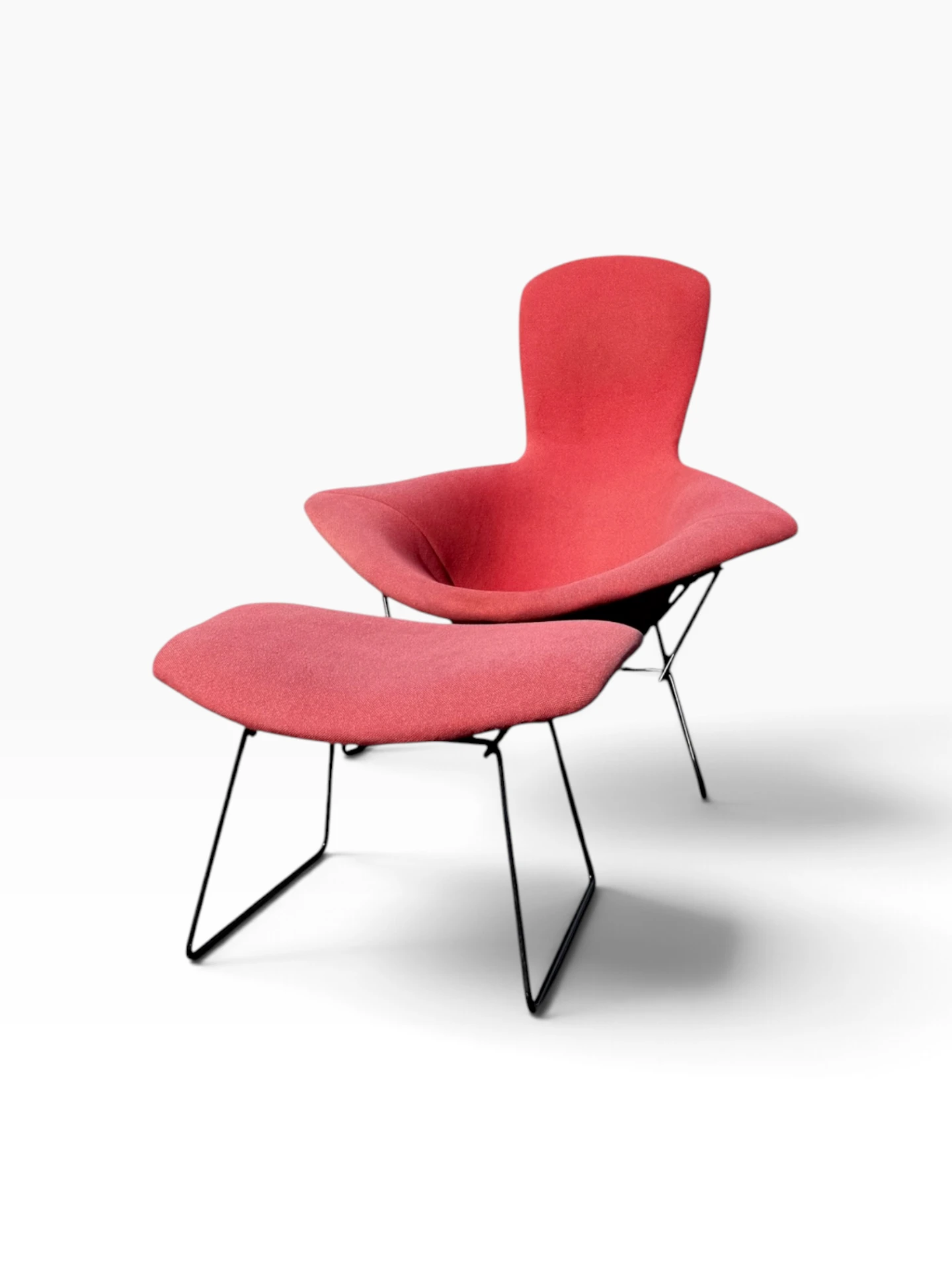 Harry Bertoia Seating GuideExamine the wires, welds and markings of the Diamond, Bird and Side Chair.Read the guide
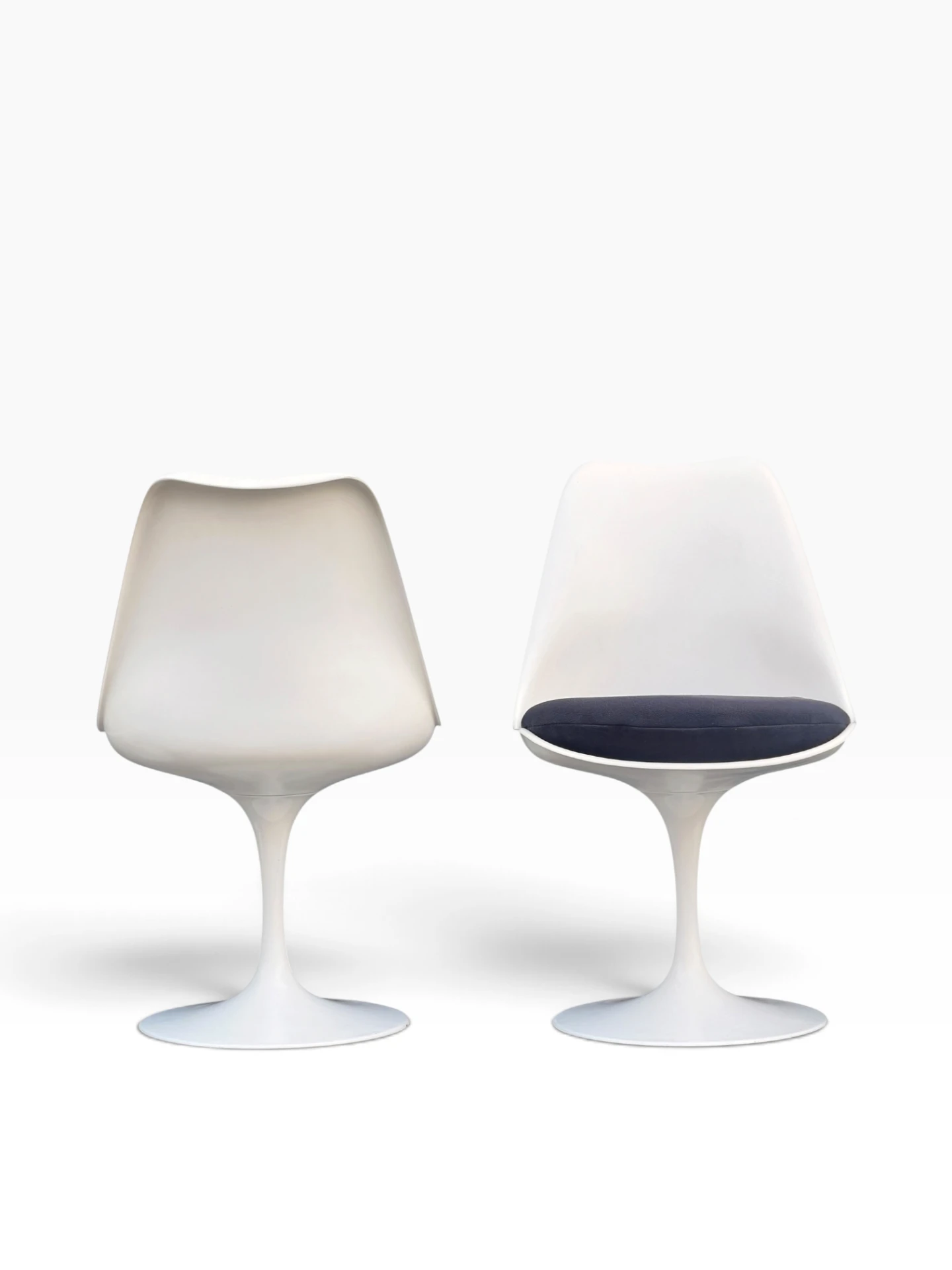 Tulip Collection Guide · Eero SaarinenIdentify the Pedestal chairs and tables made by Knoll.Read the guide
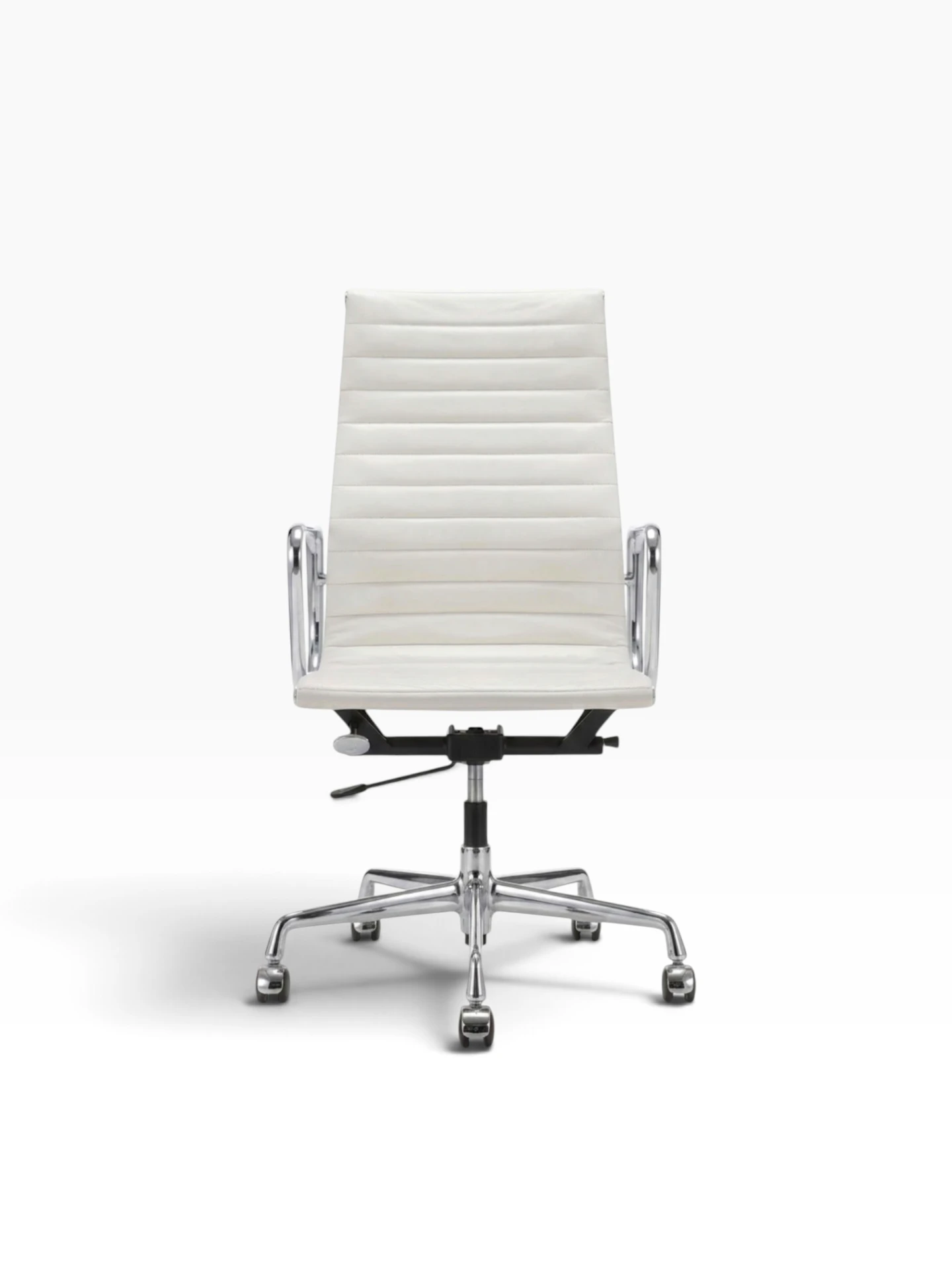 EA Collection Guide · VitraAssess Vitra's Aluminium Group and Soft Pad chairs.Read the guide