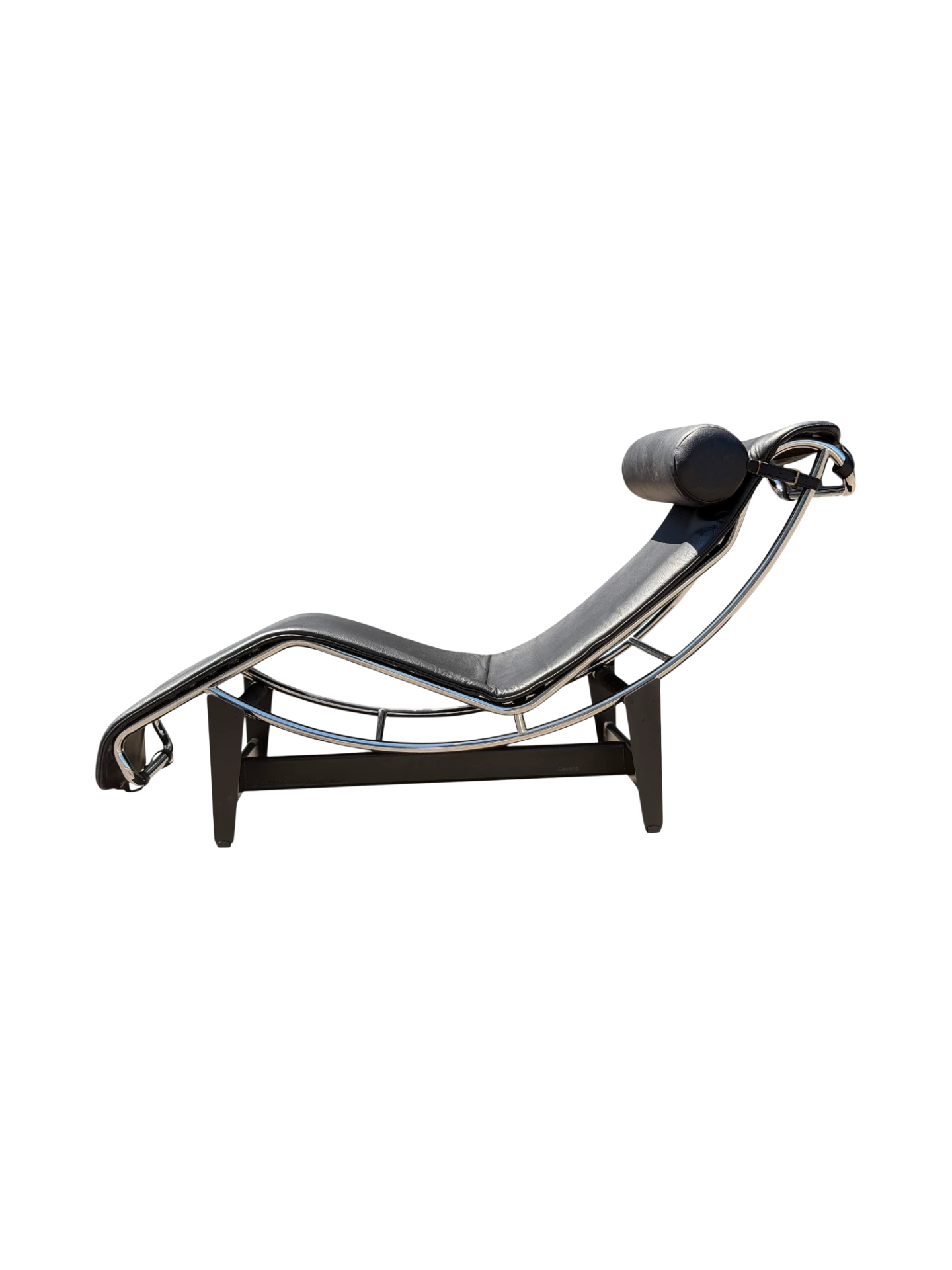
Cassina Markings: Essential Clues to Interpret by Production Period
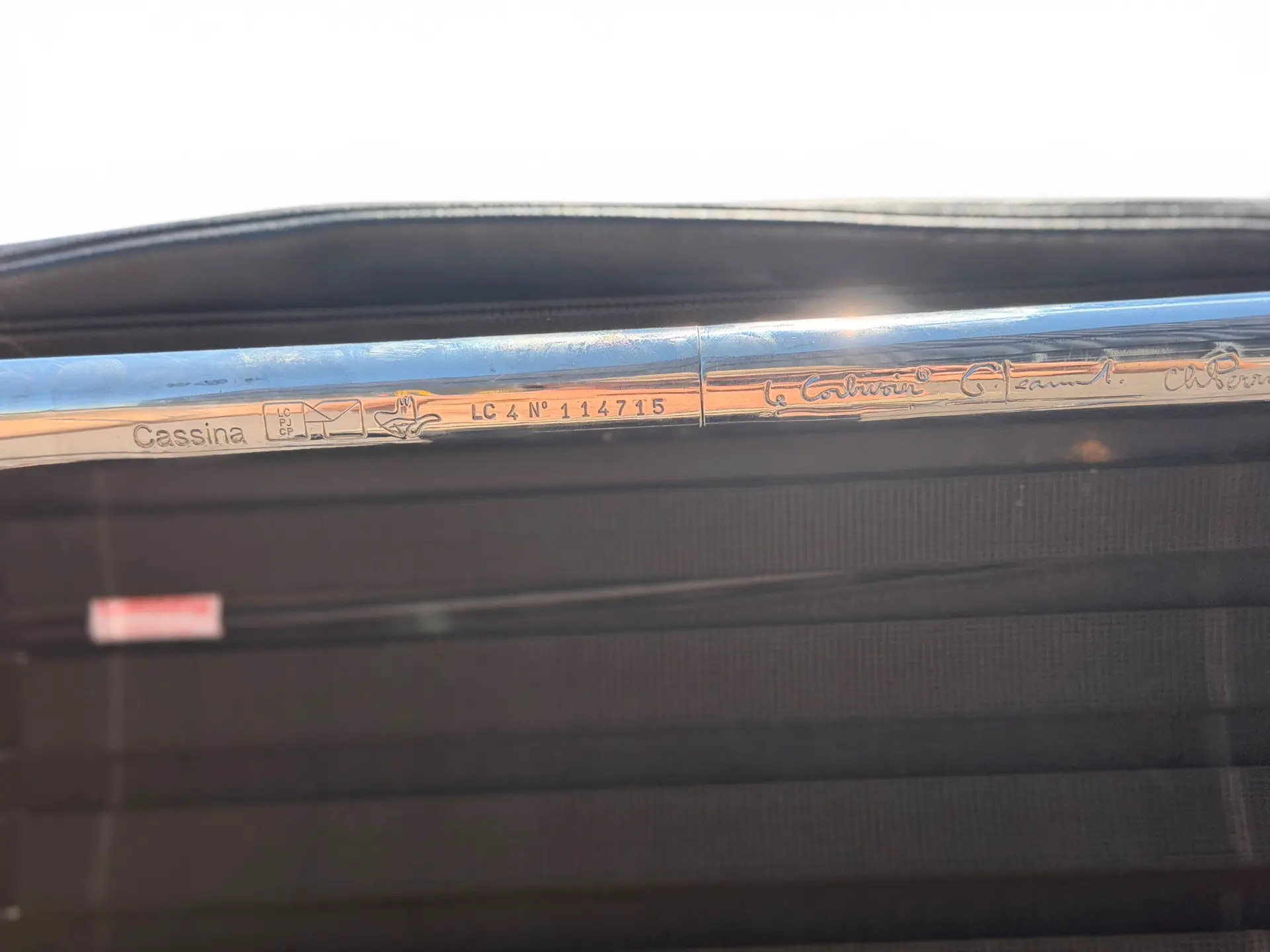
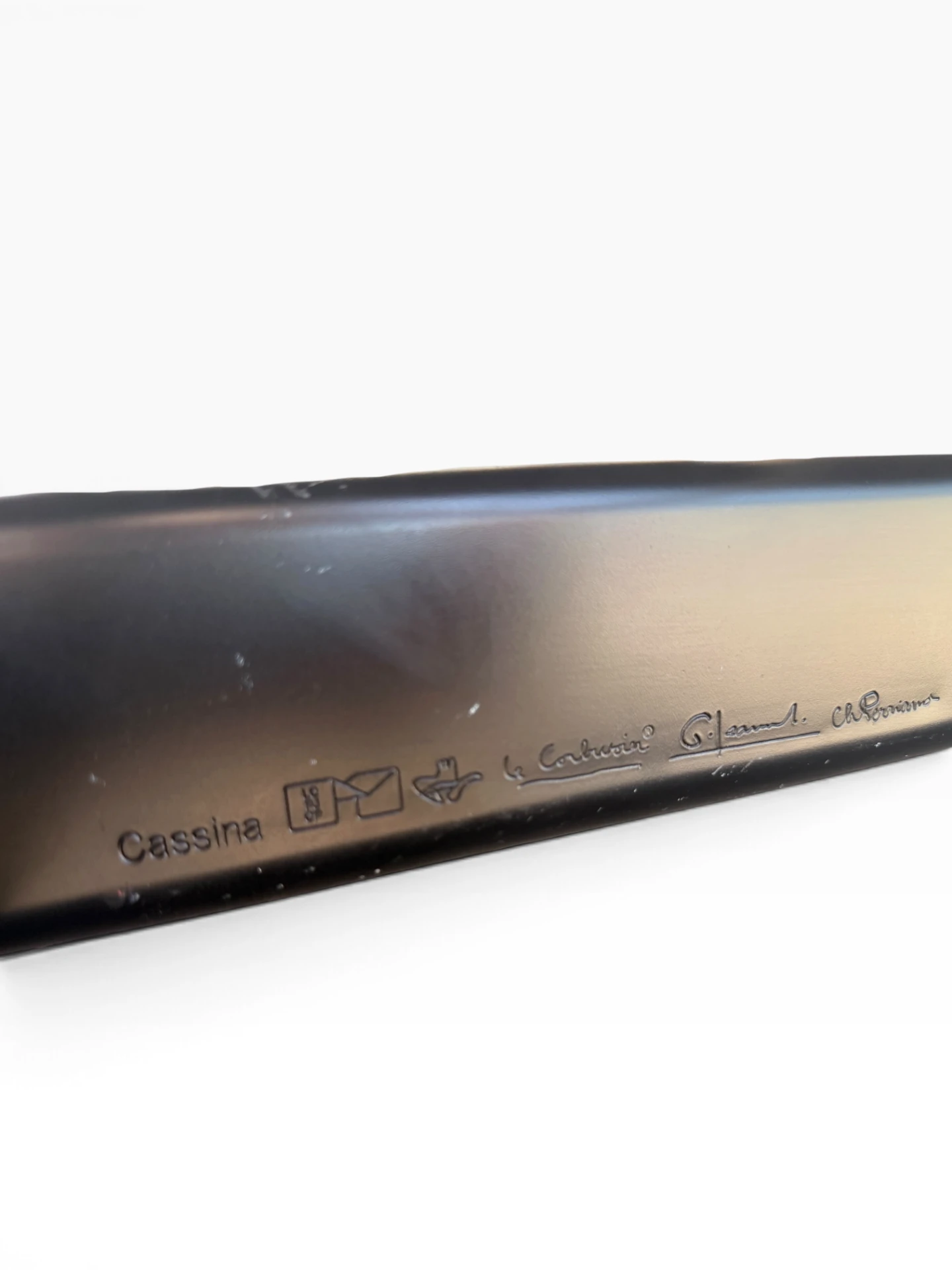
Current Cassina editions carry an indelible marking in the steel that brings together three elements. According to Aram's documentation, this system was built up in stages: the first pieces bore an identification number, Le Corbusier's signature came next, then a red “Maestri” label. A marking must therefore always be read against the period of production:
- The logo
- The logo of the Cassina I Maestri collection, officially launched in 1973: an earlier piece may not carry it.
- The signatures
- Recent markings bring together the signatures of Le Corbusier, Pierre Jeanneret and Charlotte Perriand. Aram dates the introduction of this three-signature marking to early 2010; requiring it on a piece from the 1960s or 1970s would be a mistake.
- The number
- A progressive production number, used from the outset and repeated on the piece's identity card. It places the piece in Cassina's chronology, but the sources consulted provide no public table that systematically converts it into an exact year: dating requires archives or supporting documents. If a number cannot be found, investigate its location, the surface condition and provenance; this alone does not prove a copy. A Cassina label is not inherently suspicious and cannot authenticate the piece by itself. Even when present, numbers and signatures must be consistent with the model, period and construction.
Metal and Weld Finishing
The LC collection rests on a mastery of steel tubing, chrome-plated or lacquered. Cassina welds the tubular corners using its own processes, then brushes and polishes them at length to achieve smooth joints. Trivalent chrome plating (CR3), highlighted for the 2015 fiftieth anniversary, is a development of the process, not a feature of every piece produced since 1965. Joints should show a careful finish consistent with Cassina manufacturing of the period; crude or irregular welds call for further examination.
Key Features of the Signature Models (LC1 to LC4)
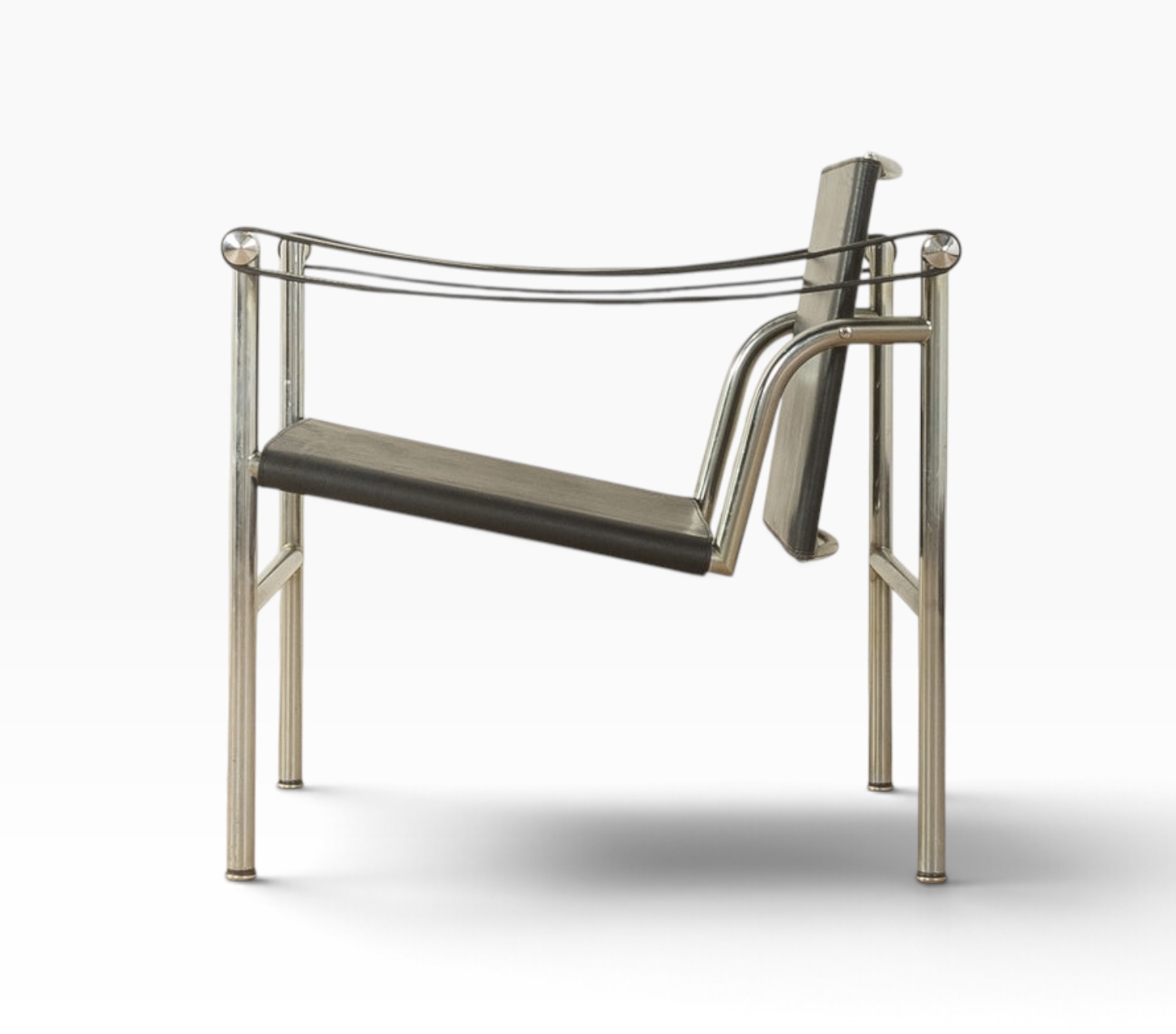
- LC1
- The backrest pivots on its axis. Slight play or noise on an older piece is not enough to call its authenticity into question. The marking is often on the rear frame, but its position should be checked against Cassina's diagram for the version concerned.
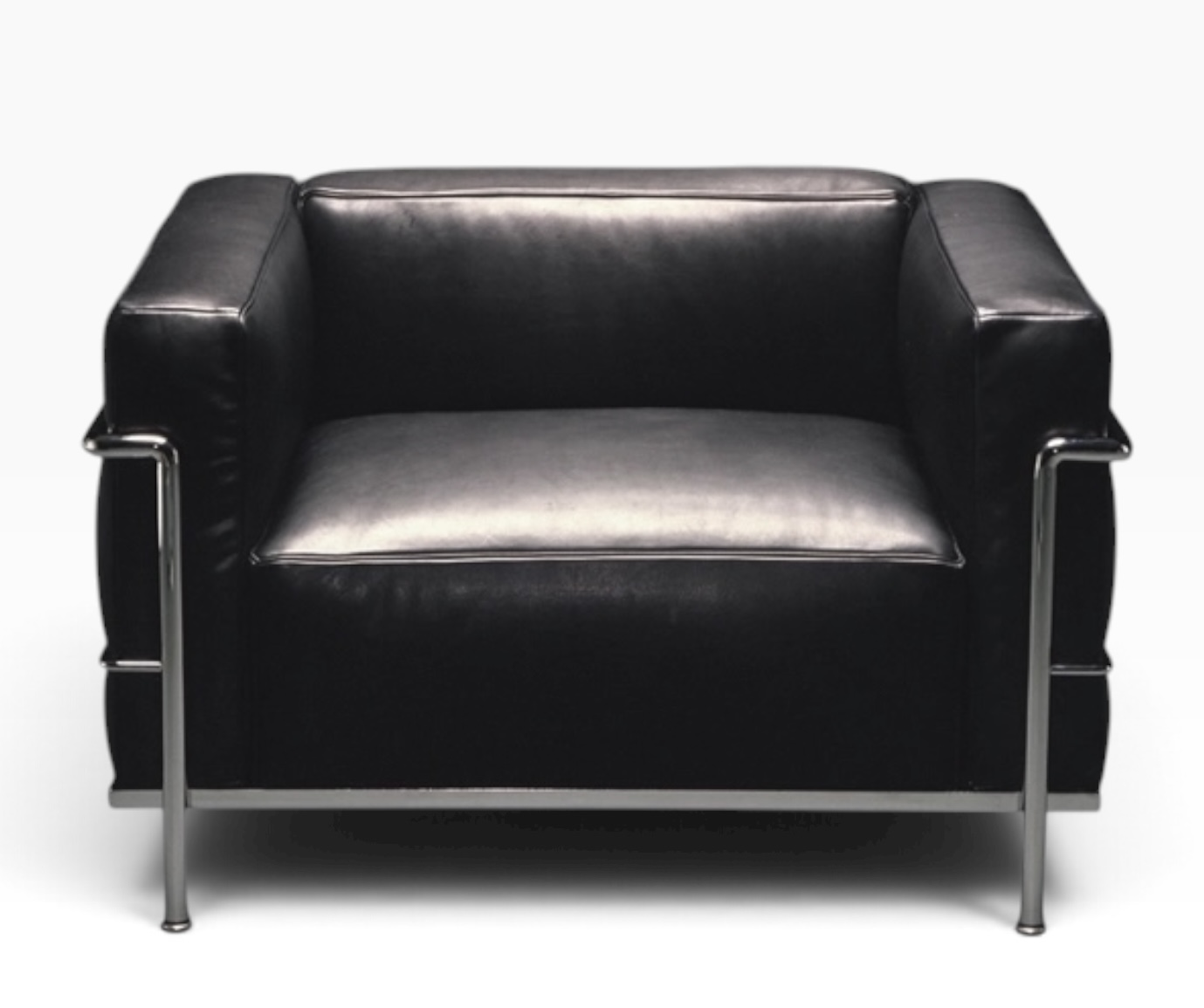
- LC2 & LC3
- The LC2, or Petit Modèle (width 76 × depth 70 cm), is compact and cubic in form, with a higher seat. The LC3, or Grand Modèle (width 99 × depth 73 cm), is wider and has a lower seat. The cushions are independent and the seat frame has elastic straps; any logo on these straps is a supporting clue, not a requirement for every period. Compare the complete dimensions and the tubular frame's markings with the documentation for the version concerned.
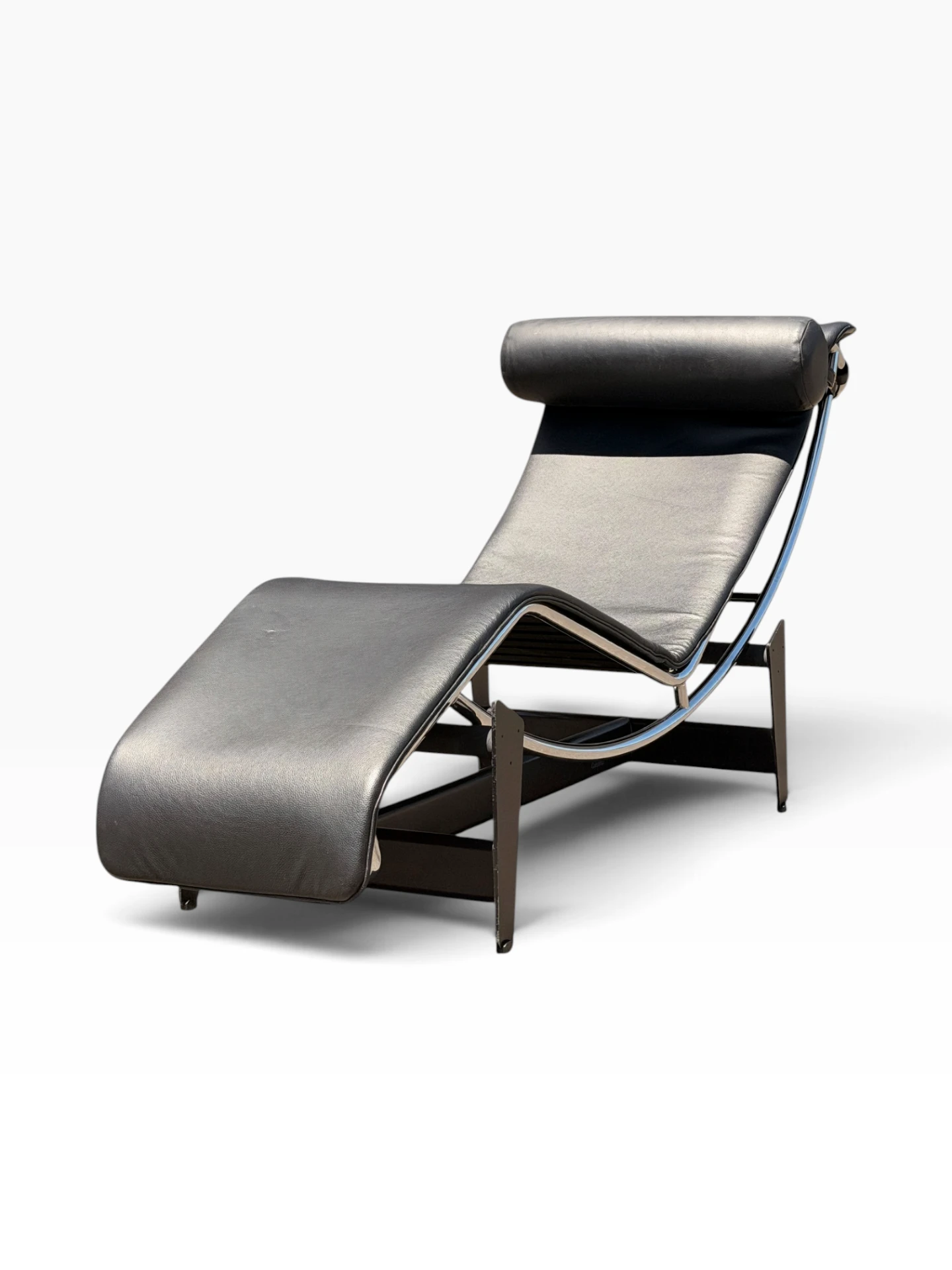
- LC4
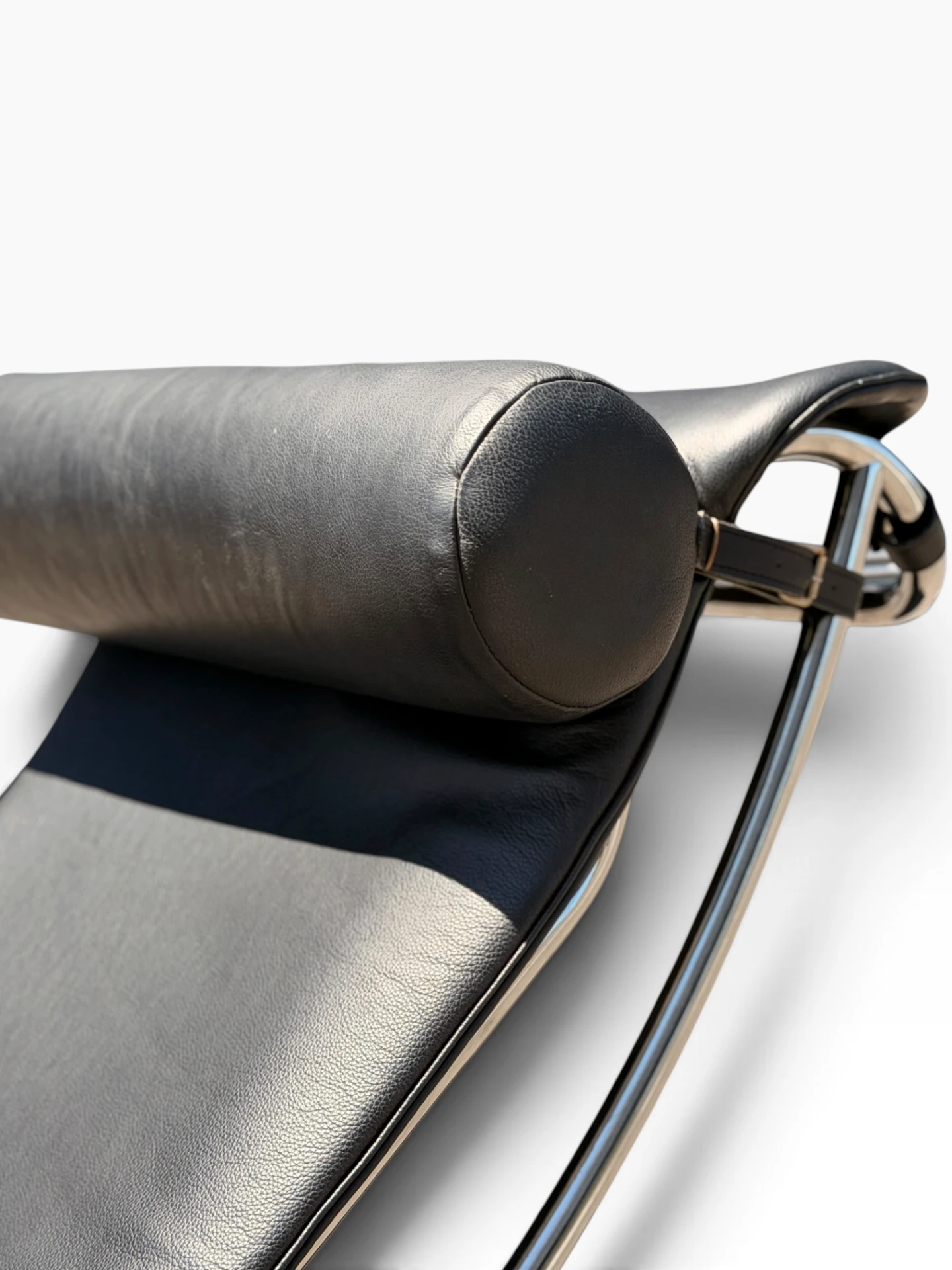
- The cradle's tilt adjusts continuously, with no notches: contact with the rubber-sheathed crossbars holds it in position. Look for markings on the cradle, near the headrest, and on the base, distinguishing the number's location from that of logos and signatures. The black base belongs to the classic version; other authentic finishes exist, including the Villa Church version with a blue crossbar and basalt-grey supports.
Leathers, Fabrics and Stitching
Cassina uses full-grain leathers in several ranges: Naturale, an aniline leather, Scozia, protected by a polyurethane finish, Extra or LCX. These ranges do not justify classifying every historical edition as aniline or semi-aniline. Depending on model and version, the collection also exists in fabric, self-supporting canvas, saddle leather or hair-on hide; material and suppleness alone cannot establish authenticity. Even stitching signals careful upholstery, but conformity of the upholstery, its wear and any reupholstering must be told apart. The absence of creases at cushion corners does not prove authenticity. As for hair-on hides, their patterns vary naturally from one hide to the next: no pattern is a mark of authenticity.
Frequently asked questions
What is the difference between the LC2 and LC3 armchairs?
The LC2, known as the “Petit Modèle”, is a compact, cubic armchair (width 76 × depth 70 cm) with a higher seat. The LC3, or “Grand Modèle” (width 99 × depth 73 cm), offers a wider and lower seat. To identify an individual piece, compare its complete dimensions with the catalogue for its version.
Is every piece signed Le Corbusier made by Cassina?
No. For the LC collection discussed here, Cassina has held exclusive production and distribution rights since 1965, following an initial agreement in 1964. Before that, models were produced by Thonet, Embru-Werke, Wohnbedarf, Bigla or Heidi Weber. A piece with no marking found is therefore neither automatically a copy nor a Cassina: its date, maker and provenance still need to be established.
Where are the markings on an LC4 chaise longue?
On a Cassina LC4, inspect the base and the tubular cradle, particularly near the headrest. The markings and their layout should be compared with documentation for the period and version concerned. Do not confuse the number's location with that of logos and signatures.
Looking for a specific piece from this signature?
L’Œil is our bespoke sourcing service. Tell us which piece you are looking for, and we will help you find it.
Our other authentication guides
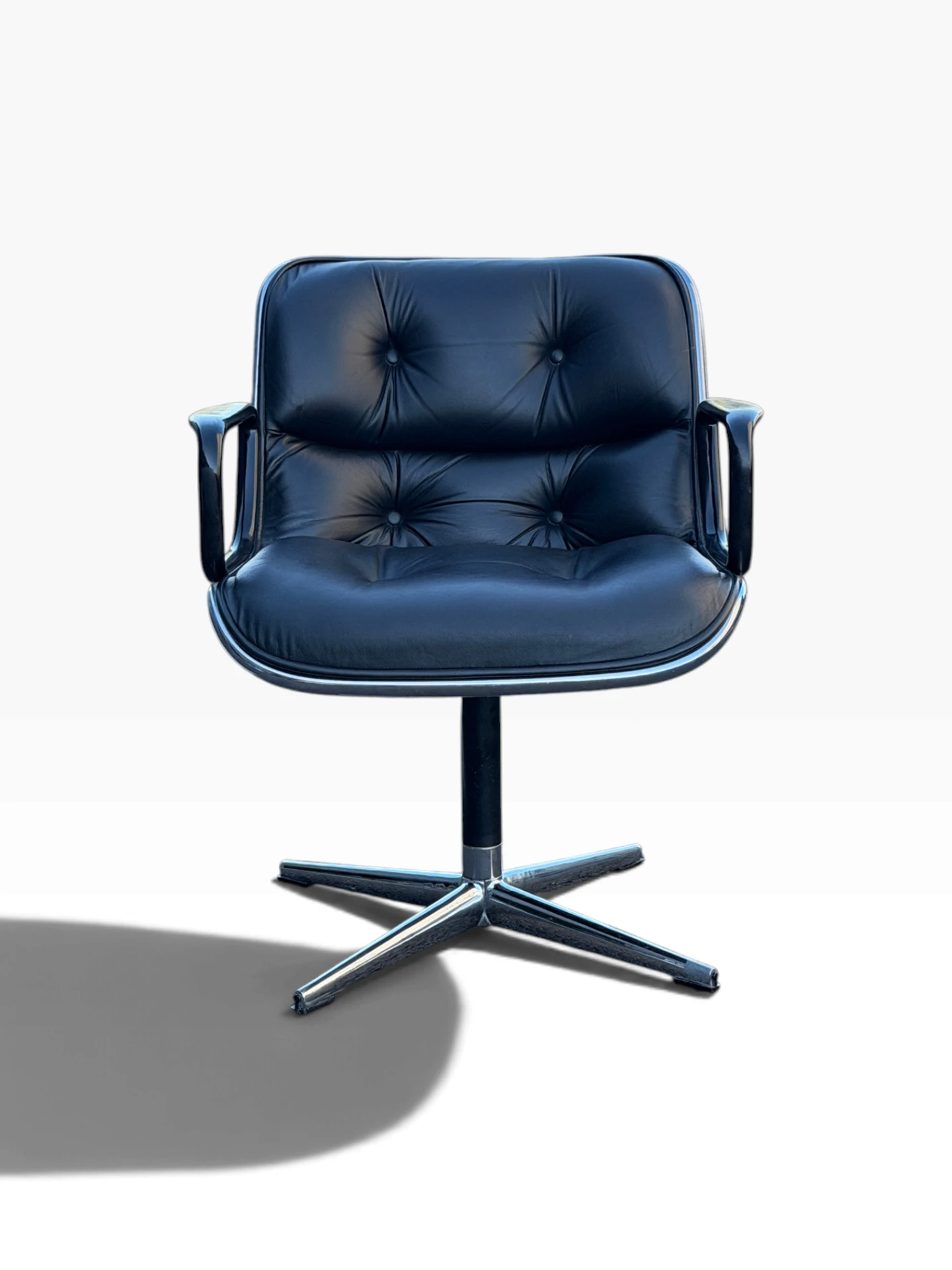 Guide Charles PollockHow to authenticate and choose a vintage Knoll Executive Chair.Read the guide
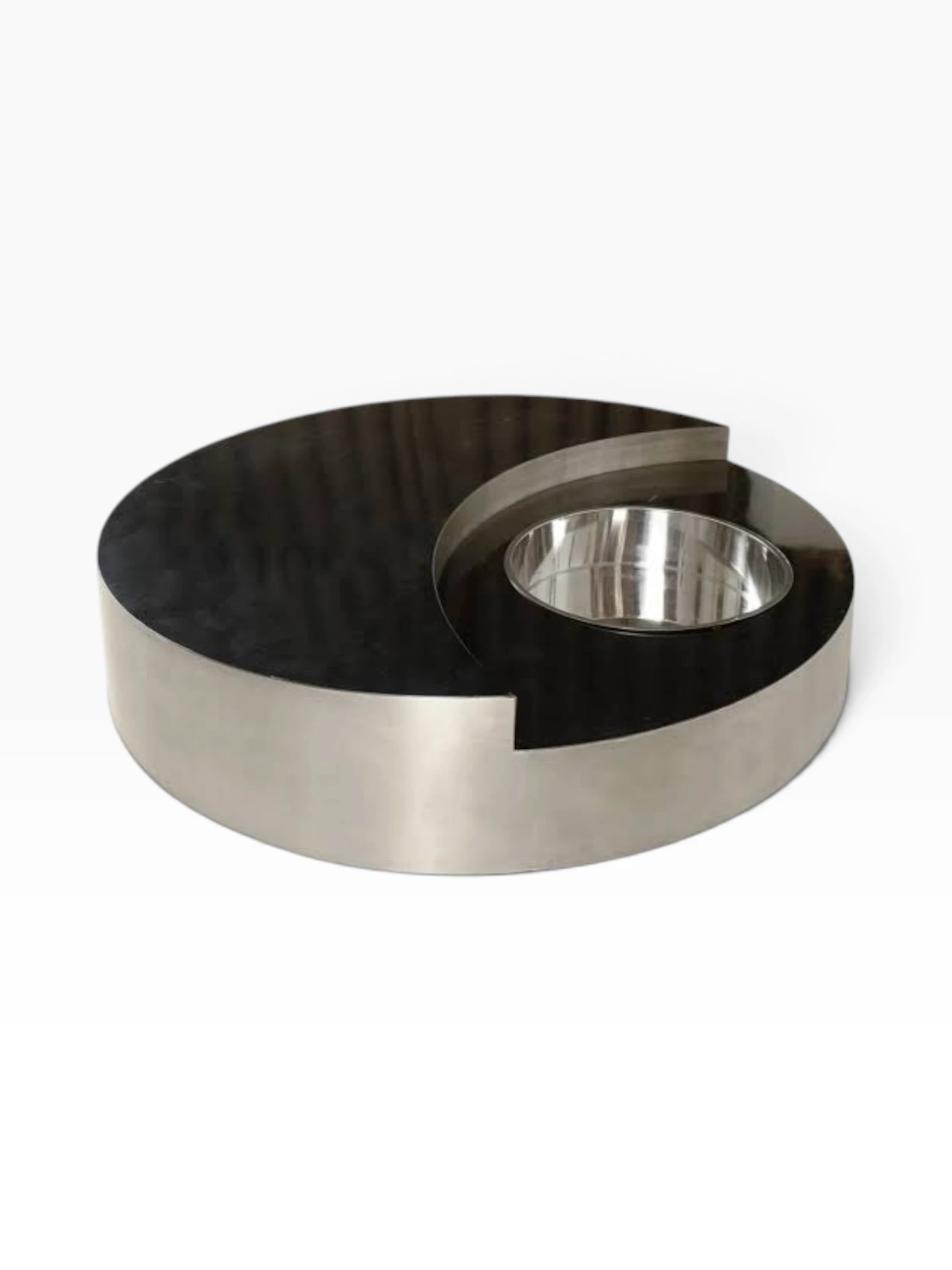 Willy Rizzo Coffee Tables GuideAuthenticate the Alveo, TRG, Yin Yang and sliding models.Read the guide
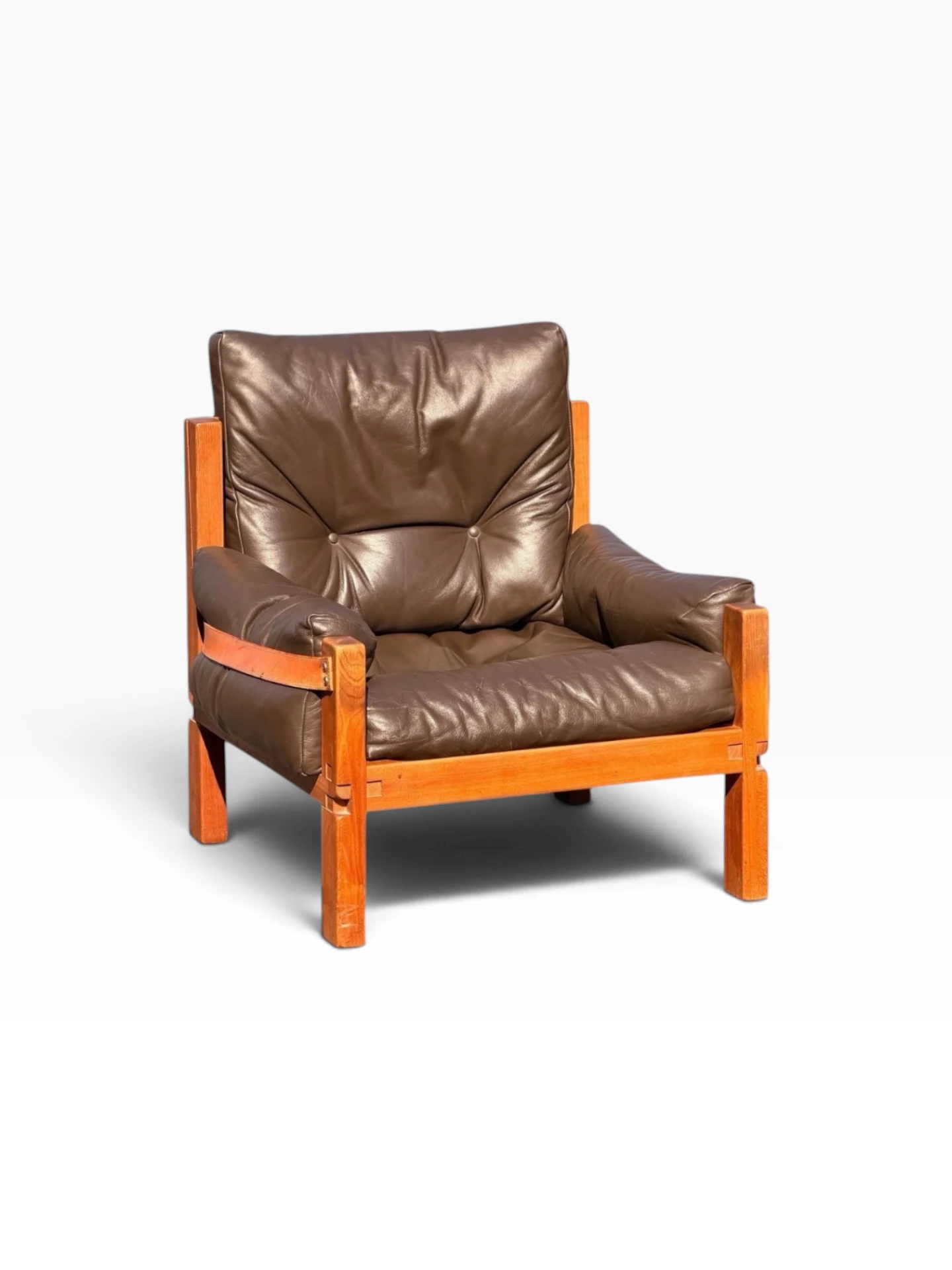 Pierre Chapo Furniture GuideRead the solid elm, the 48x72 joinery and the S15, S22 and S31 models.Read the guide
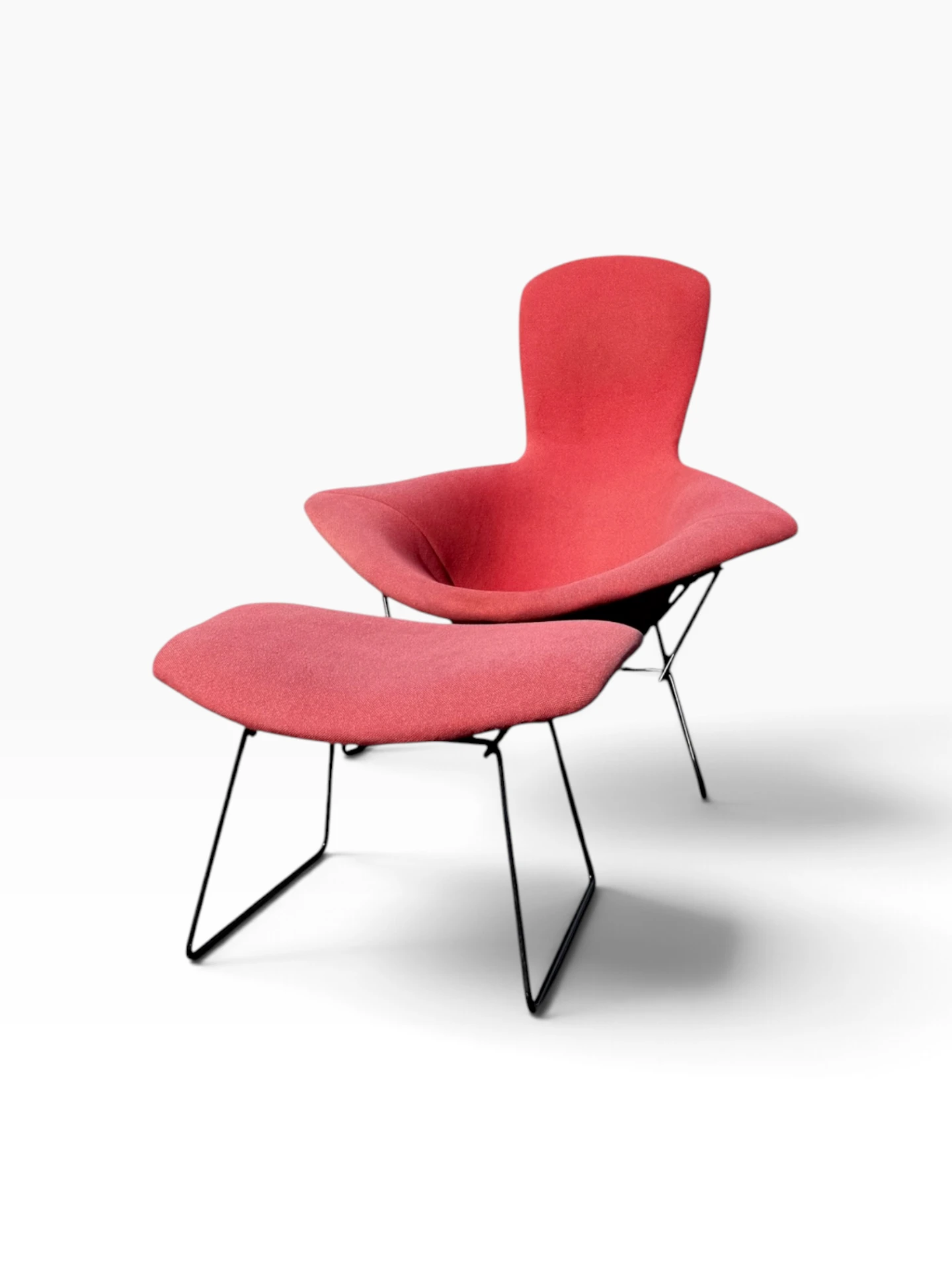 Harry Bertoia Seating GuideExamine the wires, welds and markings of the Diamond, Bird and Side Chair.Read the guide
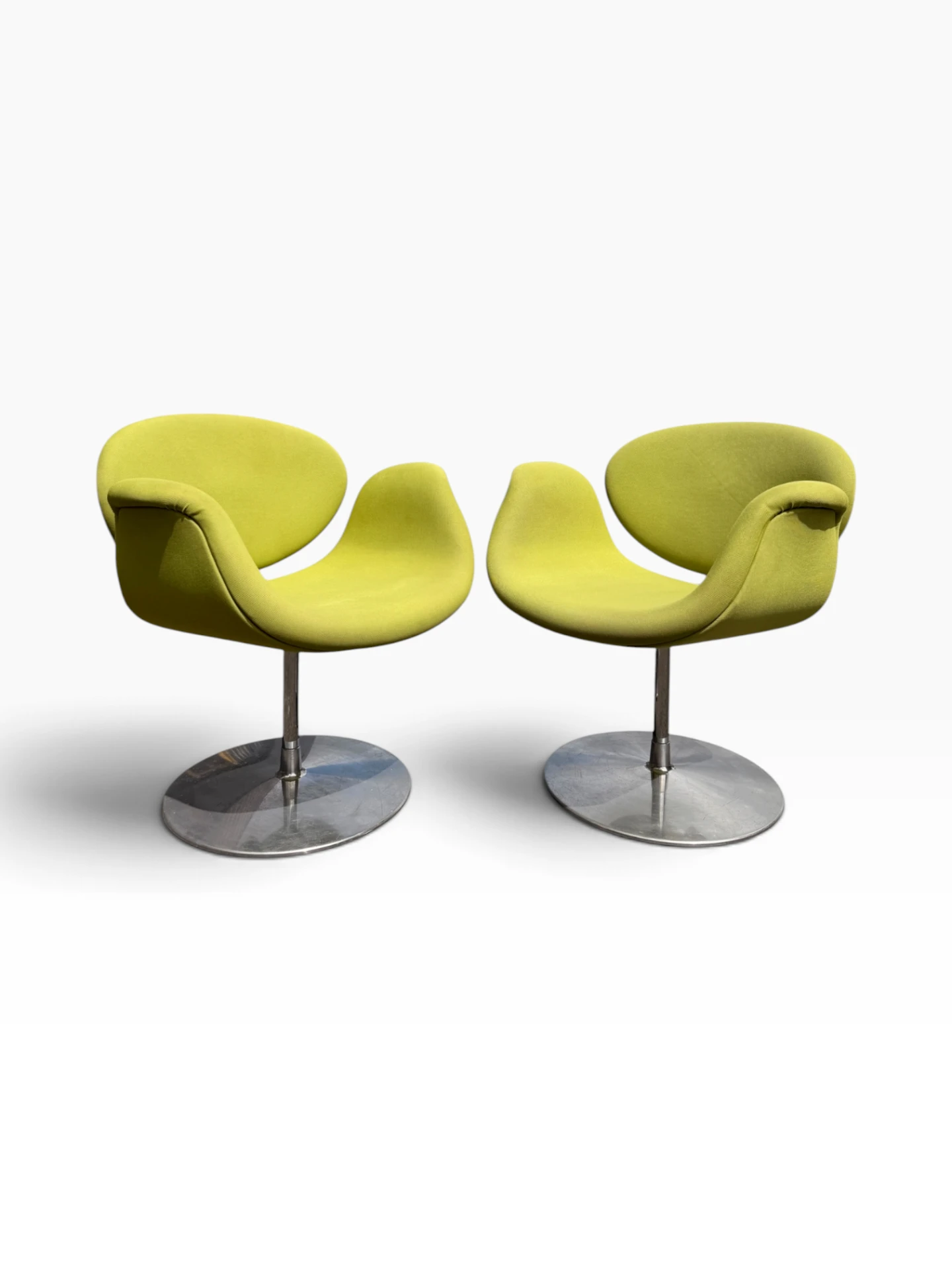 Pierre Paulin Furniture GuideRecognise authentic Pumpkin, Ribbon, Mushroom and Groovy pieces.Read the guide
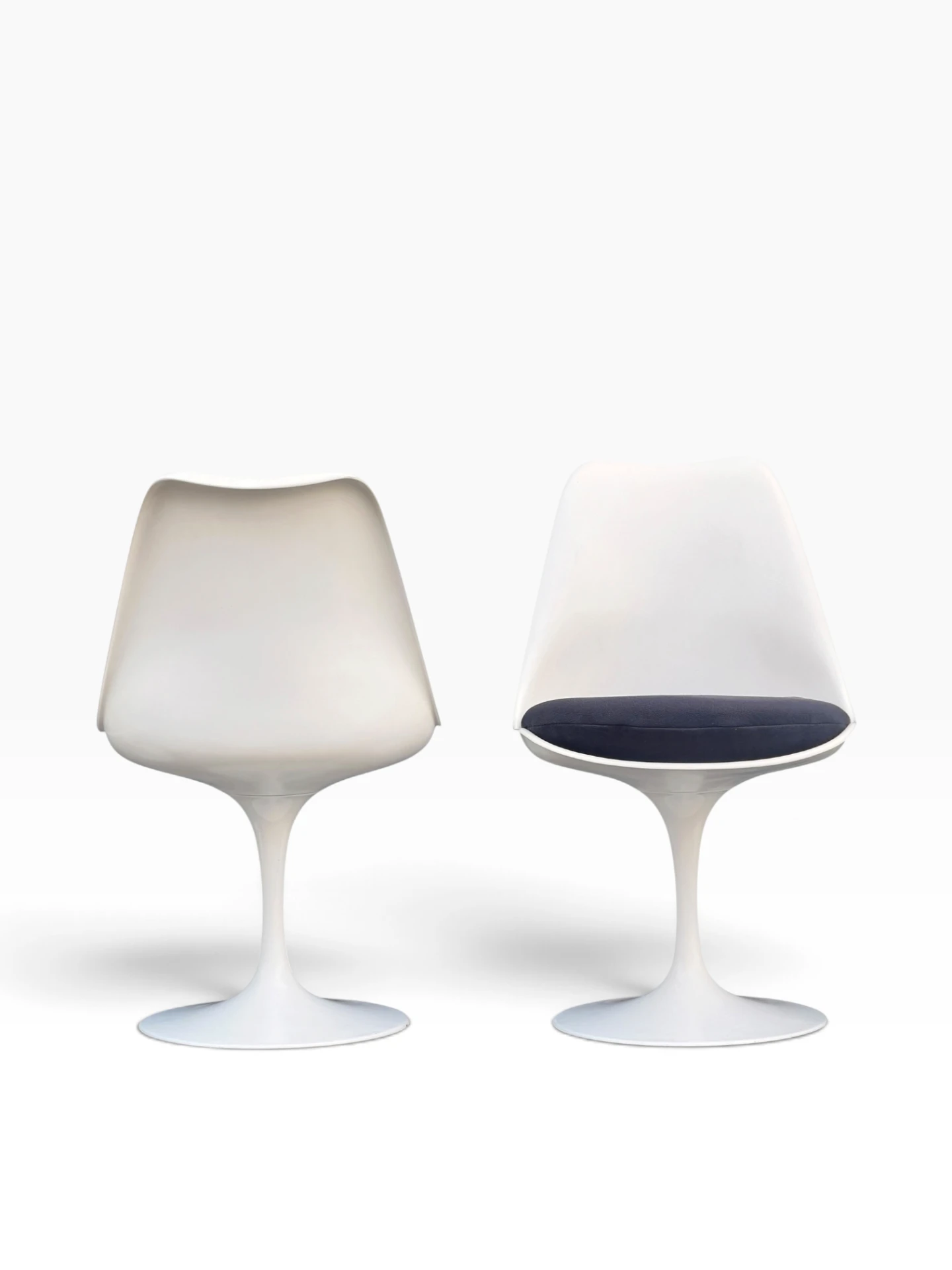 Tulip Collection Guide · Eero SaarinenIdentify the Pedestal chairs and tables made by Knoll.Read the guide
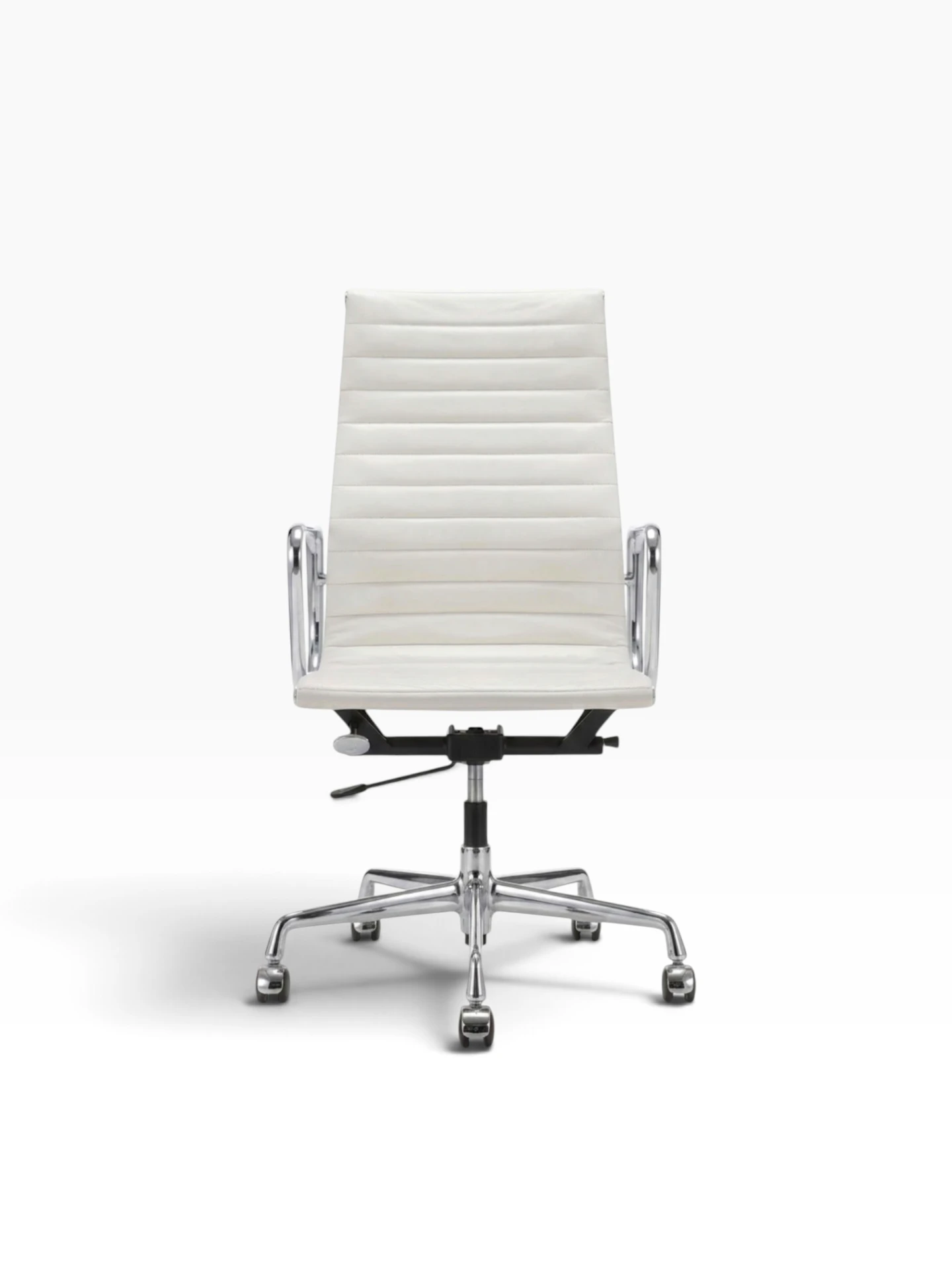 EA Collection Guide · VitraAssess Vitra's Aluminium Group and Soft Pad chairs.Read the guide